

Ready & Packaged Foods
All →Vegetables & Legumes
All →Desserts & Confectionery
All →Meat & Protein
All →Grains & Bakery
All →Beverages
All →Milk & Dairy
All →

Mustard Calories
Spice, antioxidant, low calorie
In season: Spring · Summer · Autumn · Winter
CALORIES
GI
POTASSIUM
FIBER
Quick answer
1 tablespoon (medium) of Mustard (15 g) has 10 calories. That works out to 66 calories per 100 g. It contains 0.9 g of carbs, 0.7 g of protein, 0.5 g of fat and 0.5 g of fiber. Its 165 mg of Sodium covers 7% of the Daily Value. Its glycemic index is 35 (low), so it raises blood sugar slowly.
What is Mustard?
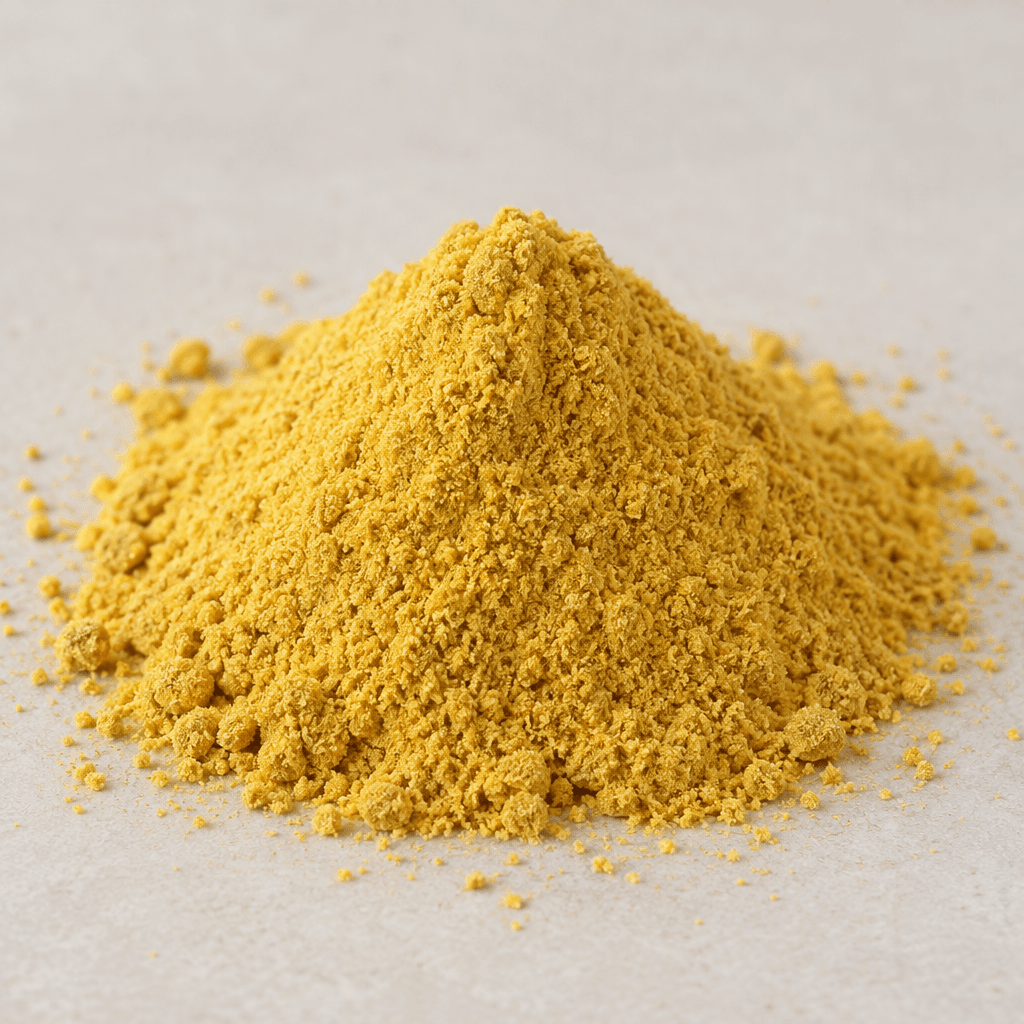
Mustard is made from the seeds of the mustard plant, ground into a fine powder or mixed with liquid to make a spreadable condiment. The dry golden powder shown here has a sharp, slightly bitter aroma; once stirred with water, vinegar or another liquid, its pungency develops. The flavour varies with the seed and preparation, from mild and tangy to hot.
In many English-speaking kitchens, prepared mustard goes into sandwiches, burgers and dressings, while the powder is useful in marinades, sauces and spice blends. It is especially familiar alongside sausages and roasted meats, and a little can brighten beans or vegetables too. Mustard is low in calories in typical small servings, so it adds plenty of flavour without needing much; mix it with vinegar and a touch of honey for a quick dressing.
Mustard Nutrition Facts
Selected: 100 g
66
KCAL / 100G
Carbs
5.8g
· 2% DV
Protein
4.4g
· 9% DV
Fat
3.6g
· 5% DV
Fiber
3.3g
· 12% DV
DV is the share of the daily value covered, on a 2,000 kcal reference diet.
Calories come from: Carbs 32% · Protein 24% · Fat 44%
Mustard Vitamins & Minerals
Vitamins
Biotin
4.2µg · 14% DV
B1
0.1mg · 8% DV
B2
0.1mg · 8% DV
B6
0.1mg · 6% DV
Minerals
Sodium
1100mg · 48% DV
Iron
2mg · 11% DV
Phosphorus
69mg · 10% DV
Magnesium
37mg · 9% DV
How Nutritious Is Mustard?
Nutrient density
Medium
How many vitamins, minerals and how much fiber this food carries per calorie. A high score means a lot of nutrition for few calories.
Satiety score
Medium
An EatBetter score computed from fiber, protein and calorie density. A high score means staying full longer on the same calories.
Both scores are calculated per 100 g and do not change with the selected portion. The satiety score is EatBetter's own calculation, not a clinical measure.
Mustard Glycemic Index
GLYCEMIC INDEX
GLYCEMIC LOAD
Accounts for portion size — a more realistic measure than GI alone.
How to Burn Off Mustard
To burn the 66 calories in 100 g:
🚶
Walking (5 km/h)
🏃
Running (8 km/h)
🚴
Cycling
🏊
Swimming
Times are calculated with the MET equation for a 70 kg adult. Actual burn varies with your weight, age and pace.
Is Mustard Processed?
NOVA 2
Minimally Processed
1. Unprocessed
2. Minimally Processed
3. Processed
4. Ultra-Processed
NOVA classifies foods into 4 groups by industrial processing. NOVA 1 (unprocessed) is the healthiest.
Does Mustard Contain Allergens?
No known major allergens
Which Diets Is Mustard Good For?
Vegan
✓ Suitable
Vegetarian
✓ Suitable
Gluten-Free
✓ Suitable
Dairy-Free
— Not suitable
Mediterranean
✓ Suitable
Paleo
✓ Suitable
Whole30
— Not suitable
DASH
— Not suitable
Keto
✓ Suitable
Low FODMAP
— Not suitable
Mustard Fat Profile
SATURATED
0.2g
MONOUNSATURATED
1.3g
POLYUNSATURATED
1.1g
Omega 6:3 ratio 2.5:1
Below the ideal 4:1 — a good omega balance.
Compare Mustard
Foods Similar to Mustard
Frequently Asked Questions About Mustard
How do you use mustard powder?
Mustard powder works as a seasoning in sauces, dressings, soups, spice rubs, and marinades. Stir it into a little liquid first to prevent clumps, or add it directly to a dish; start with a small amount because its sharpness develops when moistened.
How do you make prepared mustard from mustard powder?
Mix mustard powder with cold water until smooth, then let it stand briefly for its pungent flavor to develop. Add vinegar and salt to make a simple prepared mustard; use more liquid for a thinner sauce and adjust the seasoning to taste.
Is mustard powder the same as mustard seed?
No. Mustard powder is made by grinding mustard seeds, while mustard seeds are used whole or crushed. Powder blends more evenly into sauces and batters, whereas whole seeds add a distinct texture and can release their flavor as you chew.
What does mustard powder taste like?
Mustard powder tastes earthy and savory, with a sharp, pungent bite that becomes more noticeable after it is mixed with liquid. The exact strength varies with the mustard seed used, so add it gradually when seasoning a dish.
What can I use instead of mustard powder?
Ground mustard seed is the closest substitute for mustard powder. Prepared mustard can also add a similar flavor, but it brings liquid, acidity, and sometimes other seasonings, so reduce other liquids in the recipe if its consistency matters.
How should mustard powder be stored?
Keep mustard powder in a tightly sealed container in a cool, dry, dark cupboard. Heat, moisture, and air can weaken its aroma over time, so keep it away from the stove and use a dry spoon when measuring.
Does mustard powder lose its potency?
Yes, mustard powder gradually loses its aroma and pungency during storage. If it smells faint or tastes flat when mixed into a little water, it will contribute less flavor to your recipe; replacing it is more effective than adding a large amount.
Can you cook with mustard powder?
Yes, mustard powder can be added to cooked dishes, including soups, sauces, and vegetable or meat seasonings. Prolonged cooking can soften its sharp flavor, so add some near the end if you want its pungency to stand out.
What is the difference between yellow and brown mustard powder?
Yellow mustard powder is generally milder, while brown mustard powder tends to have a more intense, pungent taste. The exact flavor depends on the seeds used, so check the taste of a small amount before adding more to a recipe.
Is mustard good for you?
Mustard can add strong flavor to food without requiring a large amount, and mustard seeds contain antioxidant compounds. Mustard powder is usually used in small portions, so it is best thought of as a flavorful seasoning rather than a major source of nutrients.
Have another question about Mustard?
Ask the AI nutrition coach — calories, portions, alternatives and more, answered in seconds in the app.

Scan calories with your camera
Instant AI nutrition analysis

Nutrition data compiled from USDA FoodData Central and scientific sources.