

Ready & Packaged Foods
All →Vegetables & Legumes
All →Desserts & Confectionery
All →Meat & Protein
All →Grains & Bakery
All →Beverages
All →Milk & Dairy
All →

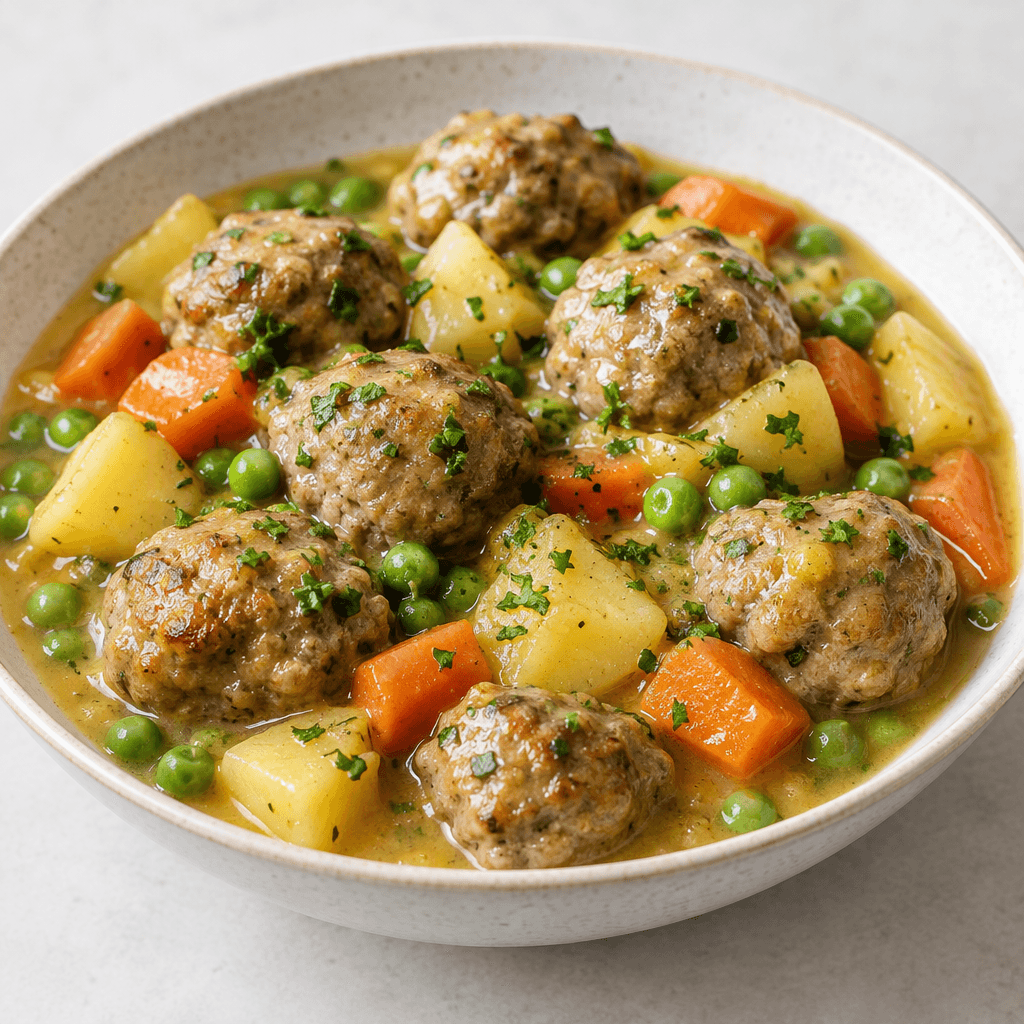
Sour Meatballs Calories
Meatballs in sour sauce, with vegetables
In season: Spring · Autumn · Winter
CALORIES
GI
POTASSIUM
FIBER
Quick answer
4 piece (medium) of Sour Meatballs (120 g) has 144 calories. That works out to 120 calories per 100 g. It contains 12.2 g of carbs, 10.2 g of protein, 6.2 g of fat and 1.9 g of fiber. Its 0.8 µg of B12 covers 33% of the Daily Value. Its glycemic index is 50 (medium), so it raises blood sugar at a moderate pace.
What is Sour Meatballs?
Sour Meatballs is a Turkish home-style dish of small minced-meat meatballs simmered in a tangy broth, often with vegetables such as potatoes, carrots and peas. Lemon commonly gives the broth its sour note, though recipes vary from household to household and by region.
The meatballs are tender and the broth is light and gently tart, making this a spoonable main dish usually served warm, often with bread to mop up the sauce. It brings meat and vegetables together in one meal and provides 8.5 g of protein per 100 g. For a lighter version, use leaner mince and add extra vegetables.
Sour Meatballs Nutrition Facts
Selected: 100 g
120
KCAL / 100G
Carbs
10.2g
· 4% DV
Protein
8.5g
· 17% DV
Fat
5.2g
· 7% DV
Fiber
1.6g
· 6% DV
DV is the share of the daily value covered, on a 2,000 kcal reference diet.
Calories come from: Carbs 34% · Protein 28% · Fat 38%
Sour Meatballs Vitamins & Minerals
Vitamins
B12
0.65µg · 27% DV
Vitamin D
3.2µg · 16% DV
B3
2.1mg · 13% DV
B2
0.12mg · 9% DV
Minerals
Sodium
320mg · 14% DV
Selenium
7.5µg · 14% DV
Phosphorus
78mg · 11% DV
Zinc
1mg · 9% DV
How Nutritious Is Sour Meatballs?
Nutrient density
Medium
How many vitamins, minerals and how much fiber this food carries per calorie. A high score means a lot of nutrition for few calories.
Satiety score
Medium
An EatBetter score computed from fiber, protein and calorie density. A high score means staying full longer on the same calories.
Both scores are calculated per 100 g and do not change with the selected portion. The satiety score is EatBetter's own calculation, not a clinical measure.
Sour Meatballs Glycemic Index
GLYCEMIC INDEX
GLYCEMIC LOAD
Accounts for portion size — a more realistic measure than GI alone.
How to Burn Off Sour Meatballs
To burn the 120 calories in 100 g:
🚶
Walking (5 km/h)
🏃
Running (8 km/h)
🚴
Cycling
🏊
Swimming
Times are calculated with the MET equation for a 70 kg adult. Actual burn varies with your weight, age and pace.
Is Sour Meatballs Processed?
NOVA 2
Minimally Processed
1. Unprocessed
2. Minimally Processed
3. Processed
4. Ultra-Processed
NOVA classifies foods into 4 groups by industrial processing. NOVA 1 (unprocessed) is the healthiest.
Does Sour Meatballs Contain Allergens?
No known major allergens
Which Diets Is Sour Meatballs Good For?
Vegan
— Not suitable
Vegetarian
— Not suitable
Gluten-Free
— Not suitable
Dairy-Free
— Not suitable
Mediterranean
✓ Suitable
Paleo
— Not suitable
Whole30
— Not suitable
DASH
— Not suitable
Keto
— Not suitable
Low FODMAP
— Not suitable
Sour Meatballs Fat Profile
SATURATED
2.1g
MONOUNSATURATED
1.8g
POLYUNSATURATED
0.3g
Omega 6:3 ratio 2.6:1
Below the ideal 4:1 — a good omega balance.
Compare Sour Meatballs
Foods Similar to Sour Meatballs
Frequently Asked Questions About Sour Meatballs
What are Turkish Sour Meatballs?
Turkish Sour Meatballs are small meatballs cooked in a tangy, broth-like sauce, often with vegetables such as potatoes, carrots, and peas. Recipes vary, but lemon juice or an egg-and-lemon dressing gives the dish its characteristic sour finish.
How do you make Sour Meatballs?
To make Sour Meatballs, shape seasoned ground meat into small balls and simmer them with vegetables in broth or water until cooked through. Finish with lemon juice or a tempered egg-and-lemon dressing, adding the dressing gradually so it stays smooth.
What makes Sour Meatballs taste sour?
Lemon is the usual source of the tang in Turkish Sour Meatballs. Some recipes stir lemon juice straight into the cooking liquid, while others use an egg-and-lemon dressing for a richer, slightly thicker sauce.
How do you keep Sour Meatballs from falling apart?
To keep Sour Meatballs intact, mix and shape the meat mixture firmly, then let the balls set briefly before cooking. Add them gently to the simmering liquid and avoid vigorous stirring; a light dusting of flour can also help their surfaces hold together.
Why do Sour Meatballs turn out tough?
Sour Meatballs can turn tough if the meat mixture is overworked or the meatballs simmer too long at a hard boil. Shape them evenly and cook gently; stirring them repeatedly while they cook can also damage their texture.
Are Sour Meatballs a soup or a stew?
Turkish Sour Meatballs are usually served as a hearty, brothy main dish rather than as dry meatballs. The amount of liquid varies by recipe, so some versions feel more like soup and others more like a stew.
What vegetables go in Sour Meatballs?
Potatoes and carrots are common in Turkish Sour Meatballs, and peas are often added too. Cut the vegetables into similar-sized pieces so they cook evenly, and add quicker-cooking vegetables later if needed.
Can you freeze Sour Meatballs?
Yes, Sour Meatballs can be frozen, though potatoes and egg-lemon dressing may change texture after thawing. Cool the dish promptly, freeze it in an airtight container, and add fresh lemon dressing after reheating if you want a smoother finish.
How long do Sour Meatballs last in the fridge?
Cooked Sour Meatballs generally keep for 3–4 days in the refrigerator when chilled promptly and stored in a covered container. Reheat only the portion you plan to eat, and discard the dish if its smell or appearance has changed.
What do you serve with Sour Meatballs?
Turkish Sour Meatballs work well as a complete one-pot meal, with bread for dipping into the tangy broth. You can also serve them with plain rice or bulgur, keeping the side simple so it does not compete with the lemony sauce.
Have another question about Sour Meatballs?
Ask the AI nutrition coach — calories, portions, alternatives and more, answered in seconds in the app.

Scan calories with your camera
Instant AI nutrition analysis

Nutrition data compiled from USDA FoodData Central and scientific sources.