

Ready & Packaged Foods
All →Vegetables & Legumes
All →Desserts & Confectionery
All →Meat & Protein
All →Grains & Bakery
All →Beverages
All →Milk & Dairy
All →

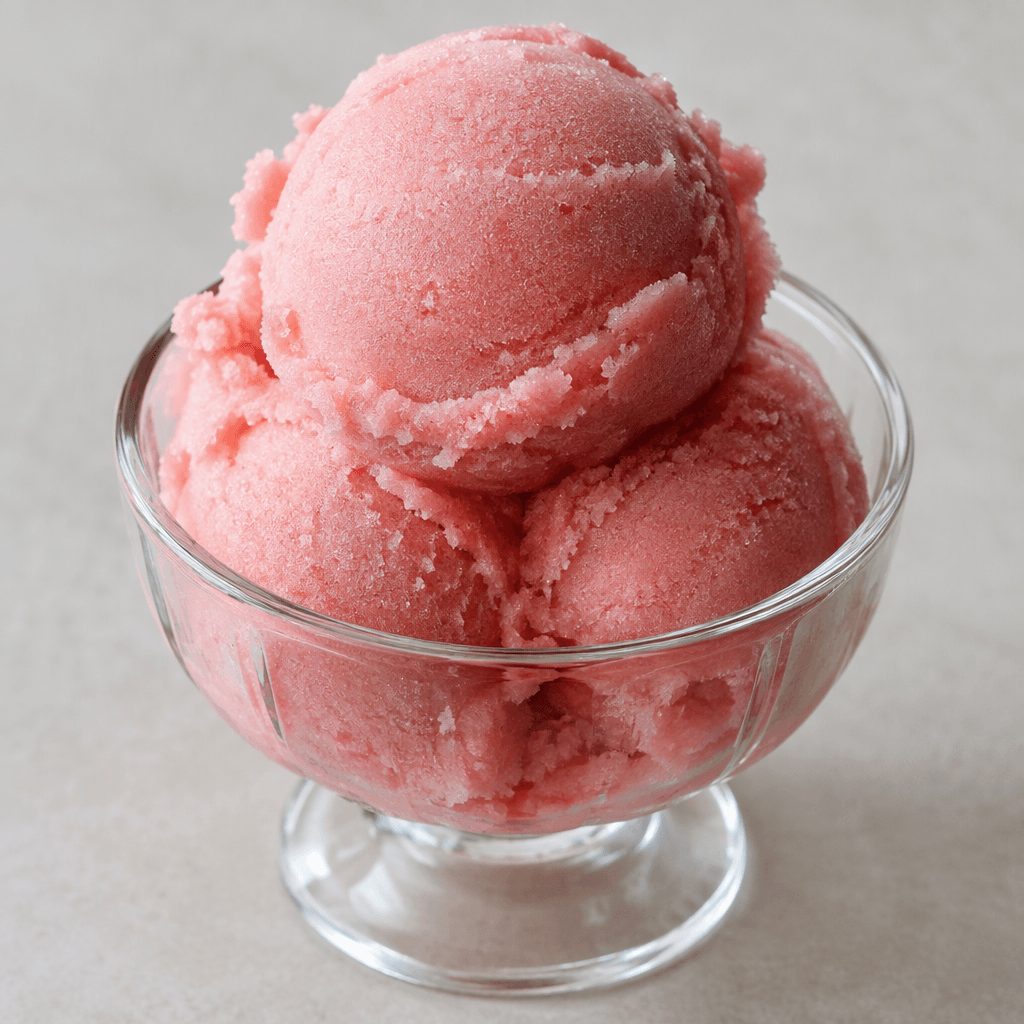
Sherbet Calories
Sweet, refreshing, typically made from fruit juice and sugar, served as a drink or frozen dessert
In season: Spring · Summer
CALORIES
GI
POTASSIUM
FIBER
Quick answer
1 cup (medium) of Sherbet (120 g) has 132 calories. That works out to 110 calories per 100 g. It contains 32.4 g of carbs, 0.2 g of protein, 0.1 g of fat and 0.6 g of fiber. Its 7.2 mg of Vitamin C covers 8% of the Daily Value. Its glycemic index is 65 (high), so it raises blood sugar quickly.
What is Sherbet?
Şerbet is a traditional Turkish sweet drink, made by sweetening fruit juice or an infusion of fruit, flowers or spices. Recipes vary: rose, tamarind, sour cherry and lemon are among the flavours you may encounter. It is usually served chilled, offered to guests or enjoyed alongside a meal; it also appears at celebrations and, in some homes, at Ramadan gatherings.
Its flavour can be fruity, tart or floral, and its texture is generally light and pourable. Şerbet is mostly sugar, with very little protein or fibre, so it is best thought of as a sweet refreshment rather than a nourishing drink. For a less-sweet glass, dilute it with water or use less sugar when preparing it.
Sherbet Nutrition Facts
Selected: 100 g
110
KCAL / 100G
Carbs
27g
· 10% DV
Protein
0.2g
· 0% DV
Fat
0.1g
· 0% DV
Fiber
0.5g
· 2% DV
DV is the share of the daily value covered, on a 2,000 kcal reference diet.
Calories come from: Carbs 98% · Protein 1% · Fat 1%
Sherbet Vitamins & Minerals
Vitamins
Vitamin C
6mg · 7% DV
B1
0.01mg · 1% DV
B2
0.01mg · 1% DV
B3
0.1mg · 1% DV
Minerals
Calcium
8mg · 1% DV
Magnesium
3mg · 1% DV
Phosphorus
5mg · 1% DV
Potassium ⭐
30mg · 1% DV
How Nutritious Is Sherbet?
Nutrient density
Low
How many vitamins, minerals and how much fiber this food carries per calorie. A high score means a lot of nutrition for few calories.
Satiety score
Low
An EatBetter score computed from fiber, protein and calorie density. A high score means staying full longer on the same calories.
Both scores are calculated per 100 g and do not change with the selected portion. The satiety score is EatBetter's own calculation, not a clinical measure.
Sherbet Glycemic Index
GLYCEMIC INDEX
GLYCEMIC LOAD
Accounts for portion size — a more realistic measure than GI alone.
How to Burn Off Sherbet
To burn the 110 calories in 100 g:
🚶
Walking (5 km/h)
🏃
Running (8 km/h)
🚴
Cycling
🏊
Swimming
Times are calculated with the MET equation for a 70 kg adult. Actual burn varies with your weight, age and pace.
Is Sherbet Processed?
NOVA 3
Processed
1. Unprocessed
2. Minimally Processed
3. Processed
4. Ultra-Processed
NOVA classifies foods into 4 groups by industrial processing. NOVA 1 (unprocessed) is the healthiest.
Does Sherbet Contain Allergens?
No known major allergens
Which Diets Is Sherbet Good For?
Vegan
✓ Suitable
Vegetarian
✓ Suitable
Gluten-Free
✓ Suitable
Dairy-Free
— Not suitable
Mediterranean
✓ Suitable
Paleo
— Not suitable
Whole30
— Not suitable
DASH
— Not suitable
Keto
— Not suitable
Low FODMAP
— Not suitable
Sherbet Fat Profile
SATURATED
0.01g
MONOUNSATURATED
0.01g
POLYUNSATURATED
0.01g
Compare Sherbet
Foods Similar to Sherbet
Frequently Asked Questions About Sherbet
What is sherbet made of?
Turkish sherbet is a sweet drink made by mixing water with fruit juice or a flavoured syrup, often sweetened with sugar. Rose, tamarind, sour cherry and spices are common flavours; recipes vary by region and household.
How do you make Turkish sherbet at home?
To make Turkish sherbet, simmer fruit or flavouring with water and sugar, then strain and chill the mixture. Dilute it with cold water to taste before serving; delicate ingredients such as rose petals are better steeped than boiled for a long time.
Is Turkish sherbet the same as sorbet?
No. Turkish sherbet is generally a drink made from a sweet fruit or flower syrup diluted with water, while sorbet is a frozen dessert eaten with a spoon. English speakers sometimes use “sherbet” for a different frozen dessert, so context matters.
Is Turkish sherbet the same as Indian sharbat?
They are closely related sweet drinks, but they are not always made the same way. Turkish sherbet often uses cooked fruit or a flavoured syrup, while Indian sharbat commonly uses ingredients such as rose syrup, citrus or herbs mixed into water.
What are traditional Turkish sherbet flavours?
Traditional Turkish sherbet flavours include rose, tamarind, sour cherry, pomegranate and spices. There is no single official recipe: the fruit, flowers and seasonings used depend on local tradition and what is available.
How did Turkish sherbet become popular?
Sherbet has a long history in Ottoman food culture, where fruit- and flower-flavoured drinks were prepared for meals and hospitality. Recipes varied widely, and the drink remains associated with traditional Turkish refreshments rather than one fixed formula.
How is Turkish sherbet served at a Turkish wedding?
Turkish sherbet may be served to guests as a sweet, refreshing drink at celebrations, including weddings, though customs vary between families and regions. It is usually offered chilled in small glasses, sometimes alongside sweets or a meal.
How do you serve Turkish sherbet syrup?
Dilute Turkish sherbet syrup with cold water before serving; it is usually too concentrated to drink as it is. Add water gradually, tasting as you go, and serve chilled. The ideal dilution depends on how sweet and strong the syrup is.
How long does homemade Turkish sherbet keep in the fridge?
Keep diluted homemade Turkish sherbet covered in the refrigerator and use it within about two to three days. If you prepare a concentrated syrup, store it separately and dilute only the amount you plan to serve.
Can you freeze Turkish sherbet?
Yes, you can freeze Turkish sherbet, but it will become icy rather than remain a pourable drink. Freeze it in a covered container, then let it soften and stir or blend it before serving; for a drink, chilling it is usually simpler.
Have another question about Sherbet?
Ask the AI nutrition coach — calories, portions, alternatives and more, answered in seconds in the app.

Scan calories with your camera
Instant AI nutrition analysis

Nutrition data compiled from USDA FoodData Central and scientific sources.