

Ready & Packaged Foods
All →Vegetables & Legumes
All →Desserts & Confectionery
All →Meat & Protein
All →Grains & Bakery
All →Beverages
All →Milk & Dairy
All →

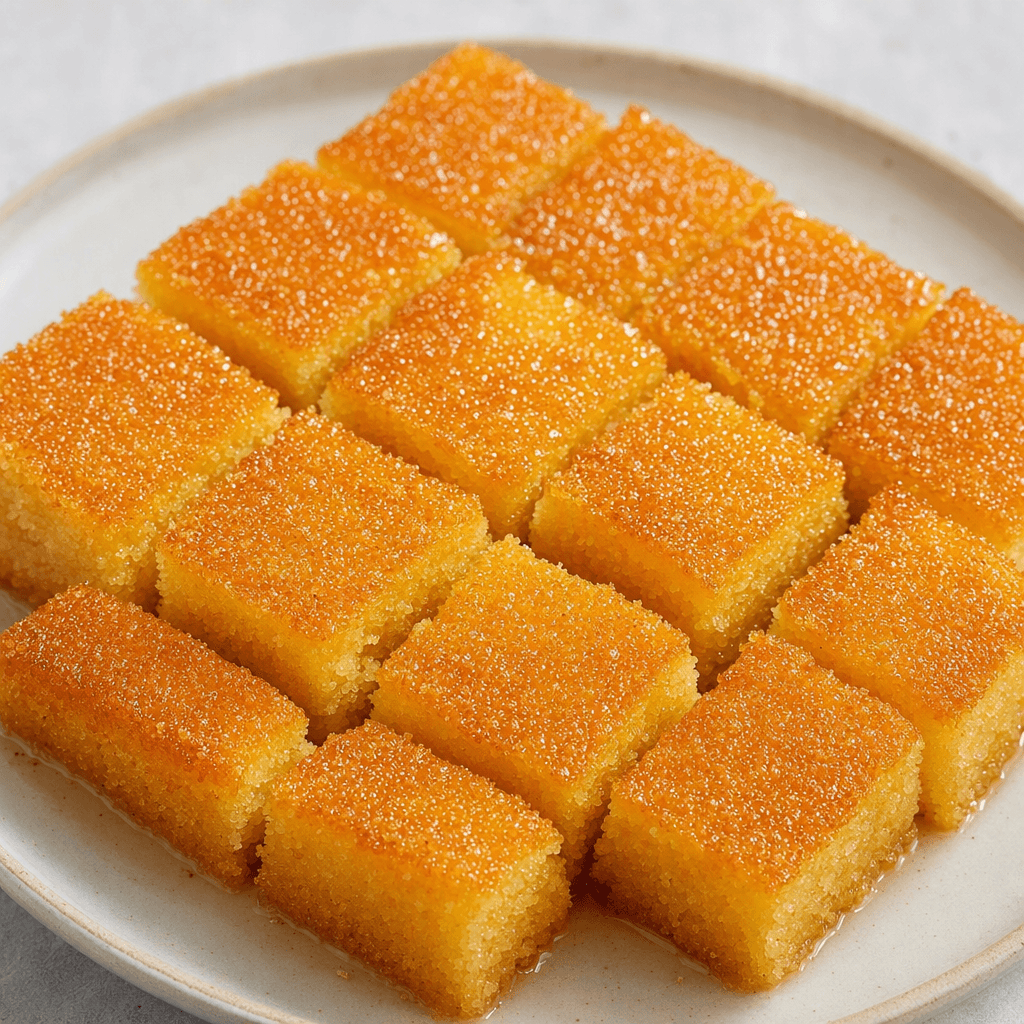
Semolina syrup dessert Calories
Traditional semolina dessert with syrup
In season: Spring · Summer · Autumn · Winter
CALORIES
GI
POTASSIUM
FIBER
Quick answer
1 piece (medium) of Semolina syrup dessert (60 g) has 162 calories. That works out to 270 calories per 100 g. It contains 29.4 g of carbs, 2.5 g of protein, 3.7 g of fat and 0.6 g of fiber. Its glycemic index is 70 (high), so it raises blood sugar quickly.
What is Semolina syrup dessert?
Semolina syrup dessert is a baked semolina cake soaked in sweet syrup; recipes vary, but the crumb is often made tender and porous so it can absorb the syrup. It is especially familiar in Turkish home cooking and bakery counters, where it is baked in a tray and cut into squares once cooled.
The texture is soft and slightly grainy, with a pronounced sweetness. It is usually served at room temperature after a meal, or offered with tea or coffee when guests visit. Semolina syrup dessert is mainly a carbohydrate-rich sweet, with relatively little fibre. If you prefer a less-heavy serving, choose a smaller piece and pair it with unsweetened tea or coffee.
Semolina syrup dessert Nutrition Facts
Selected: 100 g
270
KCAL / 100G
Carbs
49g
· 18% DV
Protein
4.2g
· 8% DV
Fat
6.2g
· 8% DV
Fiber
1g
· 4% DV
DV is the share of the daily value covered, on a 2,000 kcal reference diet.
Calories come from: Carbs 73% · Protein 6% · Fat 21%
Semolina syrup dessert Vitamins & Minerals
Vitamins
B1
0.06mg · 5% DV
Biotin
1.5µg · 5% DV
B3
0.7mg · 4% DV
B5
0.2mg · 4% DV
Minerals
Iron
1mg · 6% DV
Phosphorus
45mg · 6% DV
Selenium
2µg · 4% DV
Magnesium
13mg · 3% DV
How Nutritious Is Semolina syrup dessert?
Nutrient density
Low
How many vitamins, minerals and how much fiber this food carries per calorie. A high score means a lot of nutrition for few calories.
Satiety score
Low
An EatBetter score computed from fiber, protein and calorie density. A high score means staying full longer on the same calories.
Both scores are calculated per 100 g and do not change with the selected portion. The satiety score is EatBetter's own calculation, not a clinical measure.
Semolina syrup dessert Glycemic Index
GLYCEMIC INDEX
GLYCEMIC LOAD
Accounts for portion size — a more realistic measure than GI alone.
How to Burn Off Semolina syrup dessert
To burn the 270 calories in 100 g:
🚶
Walking (5 km/h)
🏃
Running (8 km/h)
🚴
Cycling
🏊
Swimming
Times are calculated with the MET equation for a 70 kg adult. Actual burn varies with your weight, age and pace.
Is Semolina syrup dessert Processed?
NOVA 3
Processed
1. Unprocessed
2. Minimally Processed
3. Processed
4. Ultra-Processed
NOVA classifies foods into 4 groups by industrial processing. NOVA 1 (unprocessed) is the healthiest.
Does Semolina syrup dessert Contain Allergens?
Contains these allergens:
Which Diets Is Semolina syrup dessert Good For?
Vegan
— Not suitable
Vegetarian
✓ Suitable
Gluten-Free
— Not suitable
Dairy-Free
— Not suitable
Mediterranean
✓ Suitable
Paleo
— Not suitable
Whole30
— Not suitable
DASH
— Not suitable
Keto
— Not suitable
Low FODMAP
— Not suitable
Semolina syrup dessert Fat Profile
SATURATED
2.1g
MONOUNSATURATED
2.2g
POLYUNSATURATED
1.4g
Omega 6:3 ratio 120:1
Above the ideal 4:1 (120:1).
Compare Semolina syrup dessert
Foods Similar to Semolina syrup dessert
Frequently Asked Questions About Semolina syrup dessert
What is semolina syrup dessert?
Semolina syrup dessert is a baked semolina cake soaked in sweet syrup, often made with eggs and yogurt or milk. The Turkish version is commonly associated with revani, while similar cakes have different names and variations across the Mediterranean and Middle East.
How do you make semolina syrup dessert?
Semolina syrup dessert is made by baking a semolina-based batter, then soaking the cake with syrup. Letting the baked cake rest briefly before adding the syrup and allowing it time to absorb helps give the finished dessert an even texture.
Should the syrup be hot or cold for semolina syrup dessert?
For semolina syrup dessert, a common method is to pour cooled syrup over the hot cake. The temperature contrast helps the cake absorb the syrup, but some recipes reverse the temperatures, so follow the method specified in the recipe you are using.
Why is my semolina syrup dessert not absorbing the syrup?
Semolina syrup dessert may not absorb syrup if the cake is underbaked, the syrup is too thick, or the cake and syrup are at the same temperature. Bake the cake through, use the temperature combination your recipe calls for, and let it rest before serving.
Is semolina syrup dessert the same as revani?
Semolina syrup dessert may refer to revani, a Turkish semolina cake soaked in syrup, but the terms are not interchangeable in every recipe. Similar desserts vary by region in their ingredients, texture, and names.
What is the difference between semolina syrup dessert and basbousa?
Semolina syrup dessert and basbousa are related syrup-soaked semolina cakes, but their recipes and textures differ by region. Basbousa is often denser and may include coconut, while Turkish-style versions associated with revani are typically lighter and more cake-like.
How should you store semolina syrup dessert?
Store semolina syrup dessert covered in the refrigerator, especially if the recipe includes dairy or eggs. Let a serving sit out briefly before eating if you prefer a softer texture, since chilling can make the cake feel firmer.
Can you freeze semolina syrup dessert?
Yes, semolina syrup dessert can be frozen, although thawing may make its syrup-soaked texture softer or more crumbly. Wrap portions airtight, thaw them in the refrigerator, and avoid repeatedly thawing and refreezing the cake.
Can you make semolina syrup dessert less sweet?
Yes, you can make semolina syrup dessert less sweet by reducing the syrup or pouring on only as much as the cake absorbs. The result will be less moist and less traditionally syrupy, so avoid cutting the syrup so much that the cake turns dry.
What do you serve with semolina syrup dessert?
Semolina syrup dessert is often served with unsweetened tea or coffee, which balances its sweetness. A little chopped pistachio or coconut on top adds texture, and the cake can be served at room temperature or slightly chilled.
Have another question about Semolina syrup dessert?
Ask the AI nutrition coach — calories, portions, alternatives and more, answered in seconds in the app.

Scan calories with your camera
Instant AI nutrition analysis

Nutrition data compiled from USDA FoodData Central and scientific sources.