

Ready & Packaged Foods
All →Vegetables & Legumes
All →Desserts & Confectionery
All →Meat & Protein
All →Grains & Bakery
All →Beverages
All →Milk & Dairy
All →

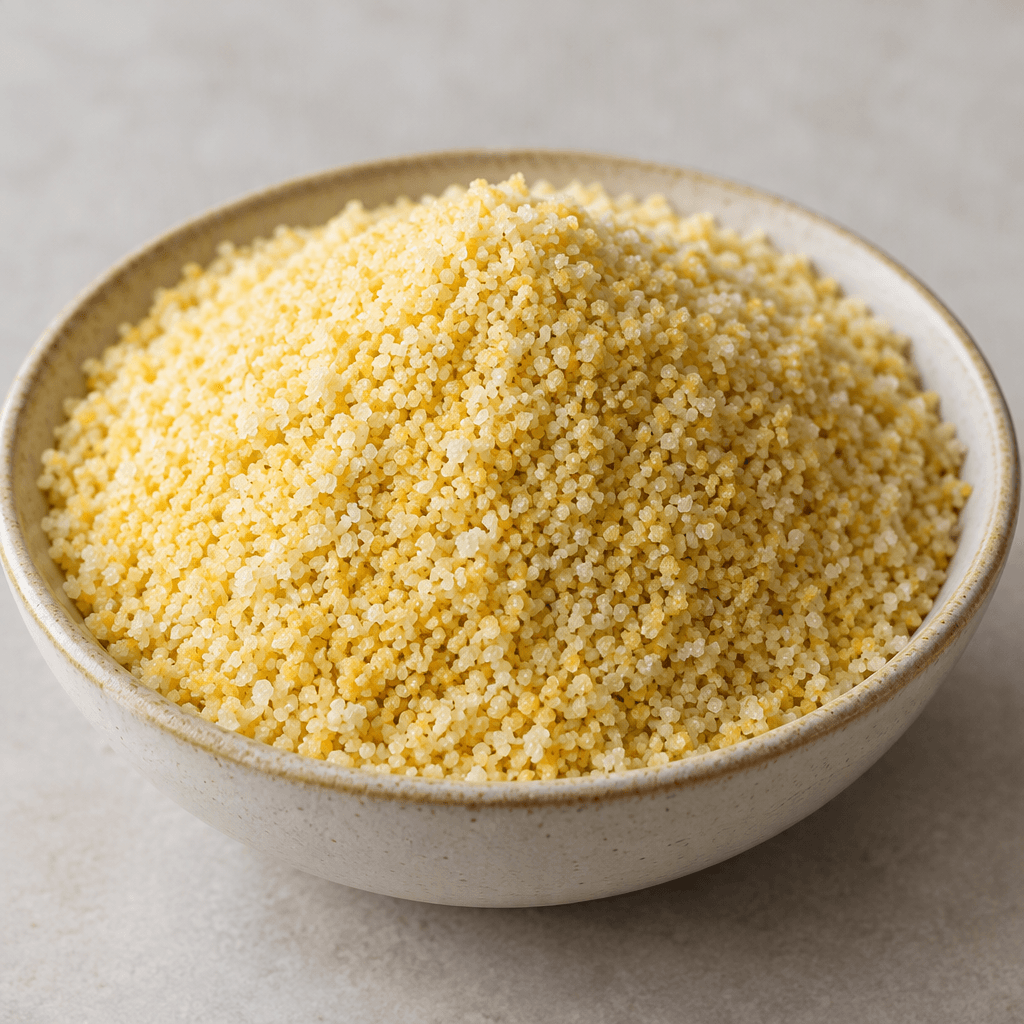
Semolina Calories
B vitamins, energy source, low fat
In season: Spring · Summer · Autumn · Winter
CALORIES
GI
POTASSIUM
FIBER
Quick answer
1 cup (medium) of Semolina (167 g) has 601 calories. That works out to 360 calories per 100 g. It contains 121.6 g of carbs, 21.2 g of protein, 1.8 g of fat and 6.5 g of fiber. Its 50.1 µg of Selenium covers 91% of the Daily Value. Its glycemic index is 66 (high), so it raises blood sugar quickly.
What is Semolina?
Semolina is a coarse grind of wheat, usually durum wheat, with golden, sandy grains. It is best known as the foundation of many dried pastas, and is also used for couscous, breads and sweet puddings. The exact dishes vary by region, but its firm texture makes it useful in both savoury cooking and baking.
Cooked with milk or water, semolina softens into a smooth, filling porridge; in pasta dough it helps give noodles their characteristic bite. It is mainly a source of carbohydrates, with some protein and little fat. For a simple breakfast, simmer it into porridge and top with fruit or nuts; use a lighter hand with sugar in desserts if you prefer less sweetness.
Semolina Nutrition Facts
Selected: 100 g
360
KCAL / 100G
Carbs
72.8g
· 26% DV
Protein
12.7g
· 25% DV
Fat
1.1g
· 1% DV
Fiber
3.9g
· 14% DV
DV is the share of the daily value covered, on a 2,000 kcal reference diet.
Calories come from: Carbs 83% · Protein 14% · Fat 3%
Semolina Vitamins & Minerals
Vitamins
B1
0.14mg · 12% DV
B5
0.5mg · 10% DV
B3
1.5mg · 9% DV
B6
0.12mg · 7% DV
Minerals
Selenium
30µg · 55% DV
Manganese
1mg · 43% DV
Phosphorus
136mg · 19% DV
Magnesium
47mg · 11% DV
How Nutritious Is Semolina?
Nutrient density
Medium
How many vitamins, minerals and how much fiber this food carries per calorie. A high score means a lot of nutrition for few calories.
Satiety score
Medium
An EatBetter score computed from fiber, protein and calorie density. A high score means staying full longer on the same calories.
Both scores are calculated per 100 g and do not change with the selected portion. The satiety score is EatBetter's own calculation, not a clinical measure.
Semolina Glycemic Index
GLYCEMIC INDEX
GLYCEMIC LOAD
Accounts for portion size — a more realistic measure than GI alone.
How to Burn Off Semolina
To burn the 360 calories in 100 g:
🚶
Walking (5 km/h)
🏃
Running (8 km/h)
🚴
Cycling
🏊
Swimming
Times are calculated with the MET equation for a 70 kg adult. Actual burn varies with your weight, age and pace.
Is Semolina Processed?
NOVA 2
Minimally Processed
1. Unprocessed
2. Minimally Processed
3. Processed
4. Ultra-Processed
NOVA classifies foods into 4 groups by industrial processing. NOVA 1 (unprocessed) is the healthiest.
Does Semolina Contain Allergens?
Contains these allergens:
Which Diets Is Semolina Good For?
Vegan
✓ Suitable
Vegetarian
✓ Suitable
Gluten-Free
— Not suitable
Dairy-Free
— Not suitable
Mediterranean
✓ Suitable
Paleo
— Not suitable
Whole30
— Not suitable
DASH
— Not suitable
Keto
— Not suitable
Low FODMAP
— Not suitable
Semolina Fat Profile
SATURATED
0.2g
MONOUNSATURATED
0.1g
POLYUNSATURATED
0.4g
Omega 6:3 ratio 20:1
Above the ideal 4:1 (20:1).
Compare Semolina
Foods Similar to Semolina
Frequently Asked Questions About Semolina
What is semolina made from?
Semolina is usually made by milling durum wheat into coarse, golden granules. It is used in pasta, porridge, breads, and desserts; the word can also describe different grades of grind depending on the product and region.
Is semolina the same as durum flour?
No. Semolina is generally coarser than durum flour, which is milled more finely. Both can come from durum wheat, but their texture affects how they behave in pasta dough, baking, and other recipes.
How do you cook semolina porridge without lumps?
To make smooth semolina porridge, whisk the semolina gradually into warm milk or water rather than tipping it in all at once. Keep stirring over gentle heat as it thickens, then serve with fruit, spices, or another topping.
Can you use semolina to make pasta?
Yes, durum semolina is a traditional choice for pasta because its coarse particles and strong wheat structure make a firm dough. Combine it with water or eggs according to the recipe, then knead thoroughly before shaping.
Is couscous made from semolina?
Yes, traditional couscous is made by rolling semolina, usually from durum wheat, with water into small granules and steaming them. Store-bought couscous is often pre-steamed, so it usually needs only rehydrating rather than extended cooking.
Can semolina replace flour in a recipe?
Sometimes, but semolina is not a direct one-for-one substitute for all-purpose flour. Its coarser texture absorbs liquid differently and can make baked goods denser; it works best in recipes designed for semolina or when replacing only part of the flour.
How do you keep semolina porridge from getting too thick?
Add more warm milk or water gradually while stirring if semolina porridge becomes too thick. Semolina continues to absorb liquid as it stands, so serve it soon after cooking or loosen it again before reheating.
How should you store semolina after opening?
Keep opened semolina in an airtight container in a cool, dry cupboard, away from heat and moisture. Use a clean, dry scoop each time; discard it if you notice insects, damp clumps, or an unusual smell.
Can you use semolina to stop pizza dough sticking?
Yes, a light dusting of semolina on a peel can help pizza dough slide onto the oven surface. Use only a little, since excess granules may burn and leave a gritty texture on the bottom of the crust.
Is semolina porridge a good choice before bed?
Semolina porridge can be eaten in the evening, but it is not a sleep aid. A large or sweet serving may feel heavy for some people, so choose a portion that sits comfortably and avoid adding more sugar than you want.
Have another question about Semolina?
Ask the AI nutrition coach — calories, portions, alternatives and more, answered in seconds in the app.

Scan calories with your camera
Instant AI nutrition analysis

Nutrition data compiled from USDA FoodData Central and scientific sources.