

Ready & Packaged Foods
All →Vegetables & Legumes
All →Desserts & Confectionery
All →Meat & Protein
All →Grains & Bakery
All →Beverages
All →Milk & Dairy
All →

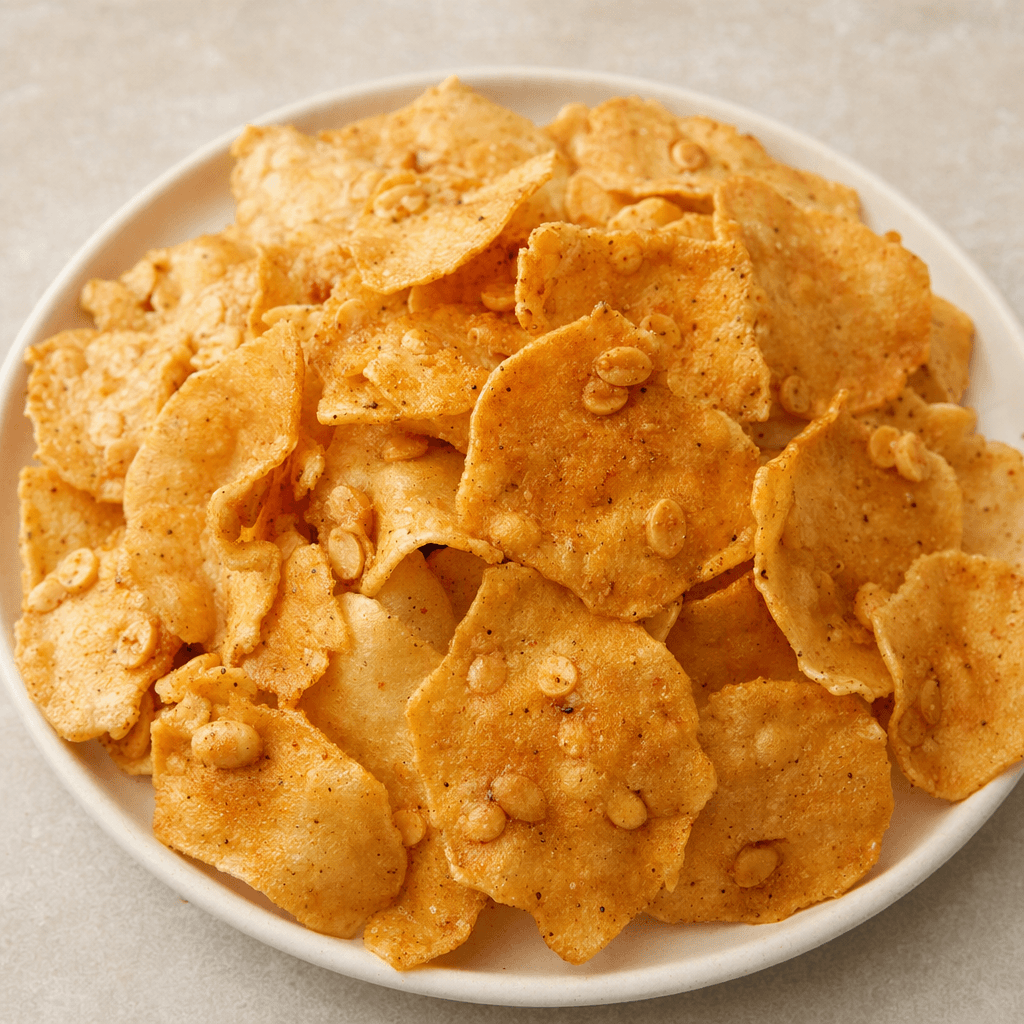
Seasoned Peanut Chips Calories
Crunchy, seasoned peanut snack
In season: Spring · Summer · Autumn · Winter
CALORIES
GI
POTASSIUM
FIBER
Quick answer
1 serving (medium) of Seasoned Peanut Chips (30 g) has 162 calories. That works out to 540 calories per 100 g. It contains 9.6 g of carbs, 5.4 g of protein, 11.4 g of fat and 2 g of fiber. Its 0.3 mg of Copper covers 37% of the Daily Value. Its glycemic index is 25 (low), so it raises blood sugar slowly.
What is Seasoned Peanut Chips?
Seasoned peanut chips are a savoury snack made with peanuts and a crisp, seasoned coating. They are typically golden-brown, irregular pieces with a crunchy bite; the name alone does not point to a particular regional origin or preparation method.
They work well as an everyday nibble, served in a small bowl on their own or alongside drinks, and can also be added to a casual snack spread. Their seasoning gives them a more pronounced savoury taste than plain peanuts. They provide protein, but are also energy-dense, so a modest portion makes a practical snack. Pair them with fresh vegetables or fruit if you want something lighter and more varied.
Seasoned Peanut Chips Nutrition Facts
Selected: 100 g
540
KCAL / 100G
Carbs
32g
· 12% DV
Protein
18g
· 36% DV
Fat
38g
· 49% DV
Fiber
6.5g
· 23% DV
DV is the share of the daily value covered, on a 2,000 kcal reference diet.
Calories come from: Carbs 24% · Protein 13% · Fat 63%
Seasoned Peanut Chips Vitamins & Minerals
Vitamins
B3
12mg · 75% DV
Biotin
18µg · 60% DV
Vitamin E
6.5mg · 43% DV
B1
0.5mg · 42% DV
Minerals
Copper
1mg · 111% DV
Manganese
2mg · 87% DV
Phosphorus
340mg · 49% DV
Magnesium
170mg · 40% DV
How Nutritious Is Seasoned Peanut Chips?
Nutrient density
Medium
How many vitamins, minerals and how much fiber this food carries per calorie. A high score means a lot of nutrition for few calories.
Satiety score
Medium
An EatBetter score computed from fiber, protein and calorie density. A high score means staying full longer on the same calories.
Both scores are calculated per 100 g and do not change with the selected portion. The satiety score is EatBetter's own calculation, not a clinical measure.
Seasoned Peanut Chips Glycemic Index
GLYCEMIC INDEX
GLYCEMIC LOAD
Accounts for portion size — a more realistic measure than GI alone.
How to Burn Off Seasoned Peanut Chips
To burn the 540 calories in 100 g:
🚶
Walking (5 km/h)
🏃
Running (8 km/h)
🚴
Cycling
🏊
Swimming
Times are calculated with the MET equation for a 70 kg adult. Actual burn varies with your weight, age and pace.
Is Seasoned Peanut Chips Processed?
NOVA 3
Processed
1. Unprocessed
2. Minimally Processed
3. Processed
4. Ultra-Processed
NOVA classifies foods into 4 groups by industrial processing. NOVA 1 (unprocessed) is the healthiest.
Does Seasoned Peanut Chips Contain Allergens?
Contains these allergens:
Which Diets Is Seasoned Peanut Chips Good For?
Vegan
— Not suitable
Vegetarian
✓ Suitable
Gluten-Free
— Not suitable
Dairy-Free
— Not suitable
Mediterranean
— Not suitable
Paleo
— Not suitable
Whole30
— Not suitable
DASH
— Not suitable
Keto
— Not suitable
Low FODMAP
— Not suitable
Seasoned Peanut Chips Fat Profile
SATURATED
6.5g
MONOUNSATURATED
20g
POLYUNSATURATED
10.5g
Omega 6:3 ratio 1250:1
Above the ideal 4:1 (1250:1).
Compare Seasoned Peanut Chips
Foods Similar to Seasoned Peanut Chips
Frequently Asked Questions About Seasoned Peanut Chips
What are seasoned peanut chips made of?
Seasoned peanut chips are peanuts covered in a crisp, savory coating, usually made with flour or starch and spices. The exact coating and seasoning vary by recipe and brand, so the crunch and flavor can differ.
How do you make seasoned peanut chips at home?
To make seasoned peanut chips at home, coat peanuts evenly in a thick, spiced batter, then bake or fry them until crisp. Baking lets you use less added oil; spread the coated peanuts in a single layer so they cook evenly.
Why does the coating fall off seasoned peanut chips?
The coating can fall off seasoned peanut chips if the peanuts are damp, the batter is too thin, or the coating is disturbed before it sets. Dry the peanuts first, use a thicker coating, and let them cook undisturbed until crisp.
Are seasoned peanut chips spicy?
Seasoned peanut chips are usually savory, but their heat level depends on the seasoning. Some versions use chili or pepper, while others are mild; the name alone does not guarantee that a batch will be hot.
Are seasoned peanut chips healthy?
Seasoned peanut chips provide protein and fiber from peanuts, but the crisp coating may add oil and salt. They can fit as an occasional snack, though plain peanuts are a simpler choice if you want to avoid the extra coating.
Do seasoned peanut chips cause weight gain?
Eating seasoned peanut chips often or in large portions can contribute to weight gain because peanuts and their coating are energy-dense. Their crunchy texture can make them easy to keep eating, so portion some into a bowl rather than snacking from the bag.
How should you store seasoned peanut chips after opening?
Keep seasoned peanut chips in an airtight container in a cool, dry place after opening. Moisture makes the coating lose its crunch, while exposure to air can make the peanut oils turn rancid; close the package promptly if you keep it in its original bag.
How can you tell if seasoned peanut chips have gone stale?
Stale seasoned peanut chips may be soft instead of crisp or develop a bitter, rancid smell or taste. Discard them if the texture or smell has noticeably changed, rather than trying to refresh a product that may have spoiled.
Can you bake seasoned peanut chips instead of frying them?
Yes, seasoned peanut chips can be baked instead of fried. Arrange coated peanuts in a single layer and bake until the coating is firm and crisp; baking can reduce the added oil, although the texture may differ from deep-fried versions.
Can dogs eat seasoned peanut chips?
No, seasoned peanut chips are not a good treat for dogs. The coating may contain excess salt, spices, or other ingredients that upset a dog's stomach, and whole peanuts can also be a choking hazard; choose a dog-appropriate treat instead.
Have another question about Seasoned Peanut Chips?
Ask the AI nutrition coach — calories, portions, alternatives and more, answered in seconds in the app.

Scan calories with your camera
Instant AI nutrition analysis

Nutrition data compiled from USDA FoodData Central and scientific sources.