

Ready & Packaged Foods
All →Vegetables & Legumes
All →Desserts & Confectionery
All →Meat & Protein
All →Grains & Bakery
All →Beverages
All →Milk & Dairy
All →

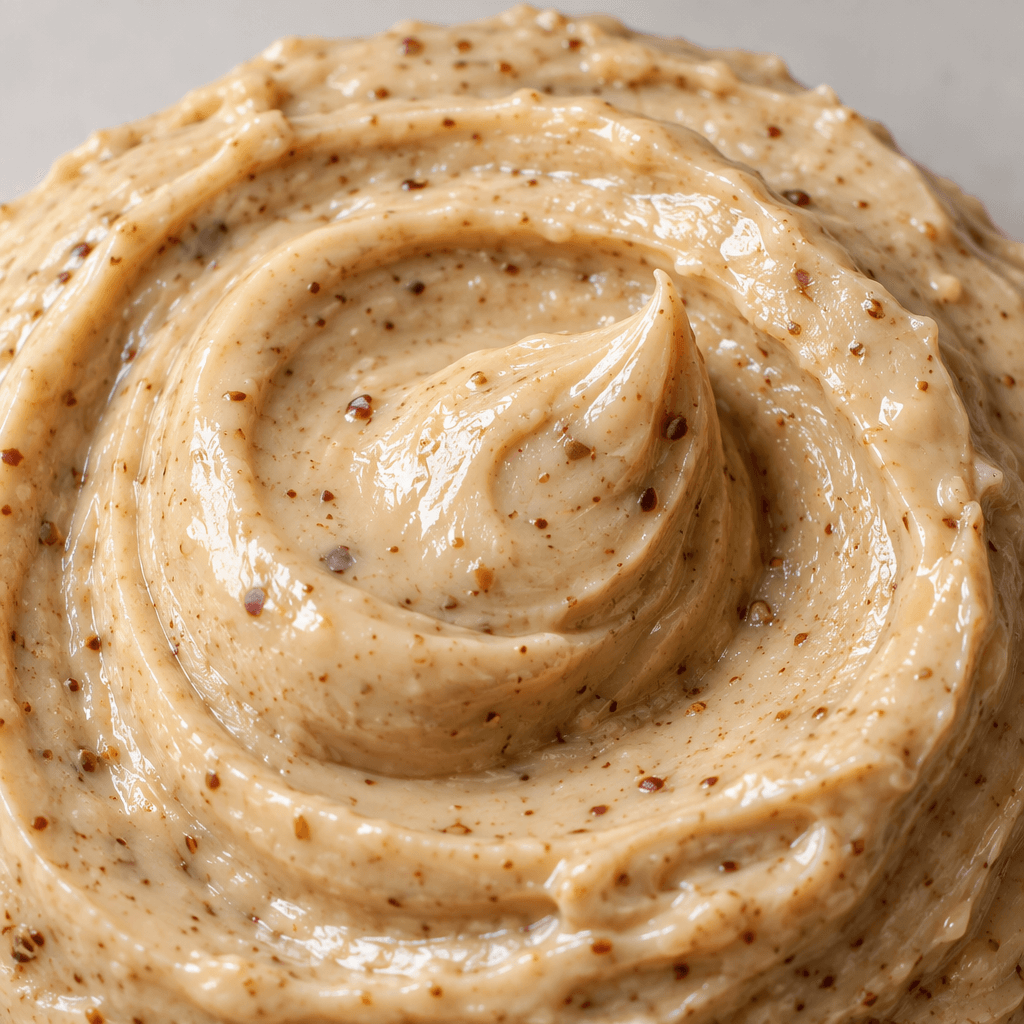
White chocolate hazelnut spread Calories
Sweet white chocolate and hazelnut spread
CALORIES · 100 G
GI
POTASSIUM · 100 G
FIBER · 100 G
Quick answer
1 tablespoon (medium) of White chocolate hazelnut spread (20 g) has 108 calories. That works out to 539 calories per 100 g. It contains 11.4 g of carbs, 1.2 g of protein, 6.4 g of fat and 0.6 g of fiber. Its 0.7 mg of Vitamin E covers 5% of the Daily Value. Its glycemic index is 48 (medium), so it raises blood sugar at a moderate pace.
White chocolate hazelnut spread Nutrition Facts
Selected: 1 tablespoon (medium) · 20 g
108
KCAL / 20G
Carbs
11.4g
· 4% DV
Protein
1.2g
· 2% DV
Fat
6.4g
· 8% DV
Fiber
0.6g
· 2% DV
DV is the share of the daily value covered, on a 2,000 kcal reference diet.
Calories come from: Carbs 42% · Protein 4% · Fat 54%
White chocolate hazelnut spread nutrition facts table · 1 tablespoon (medium) (20 g)
| Nutrient | Amount | % DV |
|---|---|---|
| Calories | 108 kcal | |
| Total fat | 6.4 g | 8% |
| Saturated fat | 1.96 g | 10% |
| Trans fat | 0.02 g | |
| Sodium | 16 mg | 1% |
| Total carbohydrate | 11.4 g | 4% |
| Fiber | 0.6 g | 2% |
| Protein | 1.2 g | 2% |
Calories: Calories measure energy. Average daily need is 2,000 kcal. Excess calories are stored as fat, too few cause weight loss.
Carbs: Your body's primary energy source. The brain runs exclusively on carbs. Daily need: 275g.
Protein: Essential for muscle repair and cell growth. Daily need: 50g. Keeps you full and boosts metabolism.
Fat: Needed for hormone production and vitamin absorption. Daily need: 78g. Limit saturated fats, choose unsaturated.
Fiber: Critical for digestive health and satiety. Daily need: 28g. Stabilizes blood sugar, lowers cholesterol.

Log this food in EatBetter
100,000+ people use it
- Get your daily calorie target
- Snap your meal, log it in seconds
- See every vitamin and mineral

📸 Scan the code to get the app free.

How Many Calories in 1 Tablespoon of White chocolate hazelnut spread?
| Serving | Amount | Calories |
|---|---|---|
| 1 tablespoon (medium) | 20 g | 108 kcal |
| 1 teaspoon (small) | 7 g | 38 kcal |
| 1 slice (thin) | 15 g | 81 kcal |
| 1 piece (small) | 25 g | 135 kcal |
| 2 slice (thick) | 30 g | 162 kcal |
| 1 serving (medium) | 30 g | 162 kcal |
| 2 tablespoon (double) | 40 g | 216 kcal |
| 1 serving (large) | 50 g | 270 kcal |
| 100 g | 100 g | 539 kcal |
| 1 cup (whole) | 300 g | 1617 kcal |
Calculated from 539 calories per 100 g.
Frequently Asked Questions About White chocolate hazelnut spread
What is White chocolate hazelnut spread made of?
White chocolate hazelnut spread is a sweet spread combining hazelnut and white-chocolate flavours. The exact proportions and other ingredients vary by product, so use the jar’s ingredient list for the precise formulation of the one you have.
Does White chocolate hazelnut spread need to be refrigerated?
No, White chocolate hazelnut spread generally does not need refrigeration. Keep the closed jar in a cool, dry place away from direct sunlight; chilling can make it firm and harder to spread. Follow the storage directions printed on the jar if they differ.
How should you store White chocolate hazelnut spread after opening?
Store White chocolate hazelnut spread with the lid tightly closed in a cool, dry cupboard after opening. Use a clean, dry utensil each time to avoid introducing crumbs or moisture, which can affect the spread’s quality.
Can you bake with White chocolate hazelnut spread?
Yes, White chocolate hazelnut spread works well as a filling for cookies, cakes, and pastries, or swirled through batter. Since it adds sweetness and fat, reduce other sweeteners in the recipe or use it as a filling rather than adding it freely to the dough.
Why does White chocolate hazelnut spread separate or get oily?
White chocolate hazelnut spread can develop a layer of oil when its fats separate during storage. Stir it thoroughly with a clean utensil. If it has an unusual smell, colour, or texture, discard it rather than trying to mix it back together.
Can you melt White chocolate hazelnut spread to make a sauce?
Yes, you can gently warm White chocolate hazelnut spread to make it runnier for drizzling over pancakes, fruit, or desserts. Heat it in short bursts and stir between them; overheating can make the texture less smooth.
What is the difference between White chocolate hazelnut spread and chocolate hazelnut spread?
White chocolate hazelnut spread has a sweeter, milkier flavour and lacks the pronounced cocoa taste of many chocolate hazelnut spreads. It suits people who want the hazelnut-and-white-chocolate combination for toast, baking, or dessert toppings.
Can you freeze White chocolate hazelnut spread?
Freezing White chocolate hazelnut spread is usually unnecessary and may change its texture after thawing. Keep it sealed in a cool, dry cupboard instead; if it becomes firm, let it sit at room temperature before spreading.
What can you eat with White chocolate hazelnut spread?
White chocolate hazelnut spread pairs well with toast, pancakes, waffles, and sliced fruit such as bananas or strawberries. Its sweetness also works as a filling for pastries or as a dessert drizzle, without needing an additional sweet topping.
Can you use White chocolate hazelnut spread as a cake filling?
Yes, White chocolate hazelnut spread can be used between cake layers or inside cupcakes and pastries. For a neater filling, let the baked goods cool completely first; warmth can make the spread runny and cause it to seep out.
White chocolate hazelnut spread Vitamins & Minerals
Vitamins
Vitamin E
0.68mg · 5% DV
B12
0.06µg · 3% DV
B2
0.03mg · 2% DV
Biotin
0.6µg · 2% DV
Minerals
Phosphorus
33mg · 5% DV
Copper
0.04mg · 4% DV
Manganese
0.1mg · 4% DV
Magnesium
10mg · 2% DV
Potassium ⭐
51mg · 2% DV
Sodium
16mg · 1% DV
White chocolate hazelnut spread Glycemic Index
GLYCEMIC INDEX
GLYCEMIC LOAD
Accounts for portion size — a more realistic measure than GI alone.
How to Burn Off White chocolate hazelnut spread
To burn the 108 calories in 1 tablespoon (medium) (20 g):
🚶
Walking (5 km/h)
🏃
Running (8 km/h)
🚴
Cycling
🏊
Swimming
Times are calculated with the MET equation for a 70 kg adult. Actual burn varies with your weight, age and pace.
What is White chocolate hazelnut spread?
White chocolate hazelnut spread combines the sweet, creamy taste of white chocolate with roasted hazelnut notes in a spreadable form. It is commonly spread on toast, bread or pancakes, or used as a filling for pastries and sweet crêpes. For an everyday breakfast or snack, fruit such as banana or strawberries balances its sweetness; a thin layer is often all you need.
It is energy-dense, with much of its energy coming from fat and carbohydrates, so it is best thought of as a sweet topping rather than a main source of protein. Pair it with plain yogurt or fruit, or keep the portion modest if you want a lighter snack.
How Nutritious Is White chocolate hazelnut spread?
Nutrient density
Low
How many vitamins, minerals and how much fiber this food carries per calorie. A high score means a lot of nutrition for few calories.
Satiety score
Low
An EatBetter score computed from fiber, protein and calorie density. A high score means staying full longer on the same calories.
Both scores are calculated per 100 g and do not change with the selected portion. The satiety score is EatBetter's own calculation, not a clinical measure.
Is White chocolate hazelnut spread Processed?
NOVA 4
Ultra-Processed
1. Unprocessed
2. Minimally Processed
3. Processed
4. Ultra-Processed
NOVA classifies foods into 4 groups by industrial processing. NOVA 1 (unprocessed) is the healthiest.
Does White chocolate hazelnut spread Contain Allergens?
Contains these allergens:
Which Diets Is White chocolate hazelnut spread Good For?
Vegan
— Not suitable
Vegetarian
✓ Suitable
Gluten-Free
— Not suitable
Dairy-Free
— Not suitable
Mediterranean
— Not suitable
Paleo
— Not suitable
Whole30
— Not suitable
DASH
— Not suitable
Keto
— Not suitable
Low FODMAP
— Not suitable
White chocolate hazelnut spread Fat Profile
SATURATED
1.96g
MONOUNSATURATED
3.44g
POLYUNSATURATED
0.82g
Omega 6:3 ratio 78:1
Above the ideal 4:1 (78:1).
Compare White chocolate hazelnut spread
Foods Similar to White chocolate hazelnut spread
Have another question about White chocolate hazelnut spread?
Ask the AI nutrition coach — calories, portions, alternatives and more, answered in seconds in the app.

Scan calories with your camera
Instant AI nutrition analysis

Nutrition data compiled from USDA FoodData Central and scientific sources.