

Ready & Packaged Foods
All →Vegetables & Legumes
All →Desserts & Confectionery
All →Meat & Protein
All →Grains & Bakery
All →Beverages
All →Milk & Dairy
All →

Sarelle Calories
Hazelnut spread, high energy, sweet
In season: Spring · Summer · Autumn · Winter
CALORIES
GI
POTASSIUM
FIBER
Quick answer
1 tablespoon (medium) of Sarelle (15 g) has 83 calories. That works out to 550 calories per 100 g. It contains 8.3 g of carbs, 0.9 g of protein, 5.1 g of fat and 0.6 g of fiber. Its 0.1 mg of Copper covers 7% of the Daily Value. Its glycemic index is 55 (medium), so it raises blood sugar at a moderate pace.
What is Sarelle?
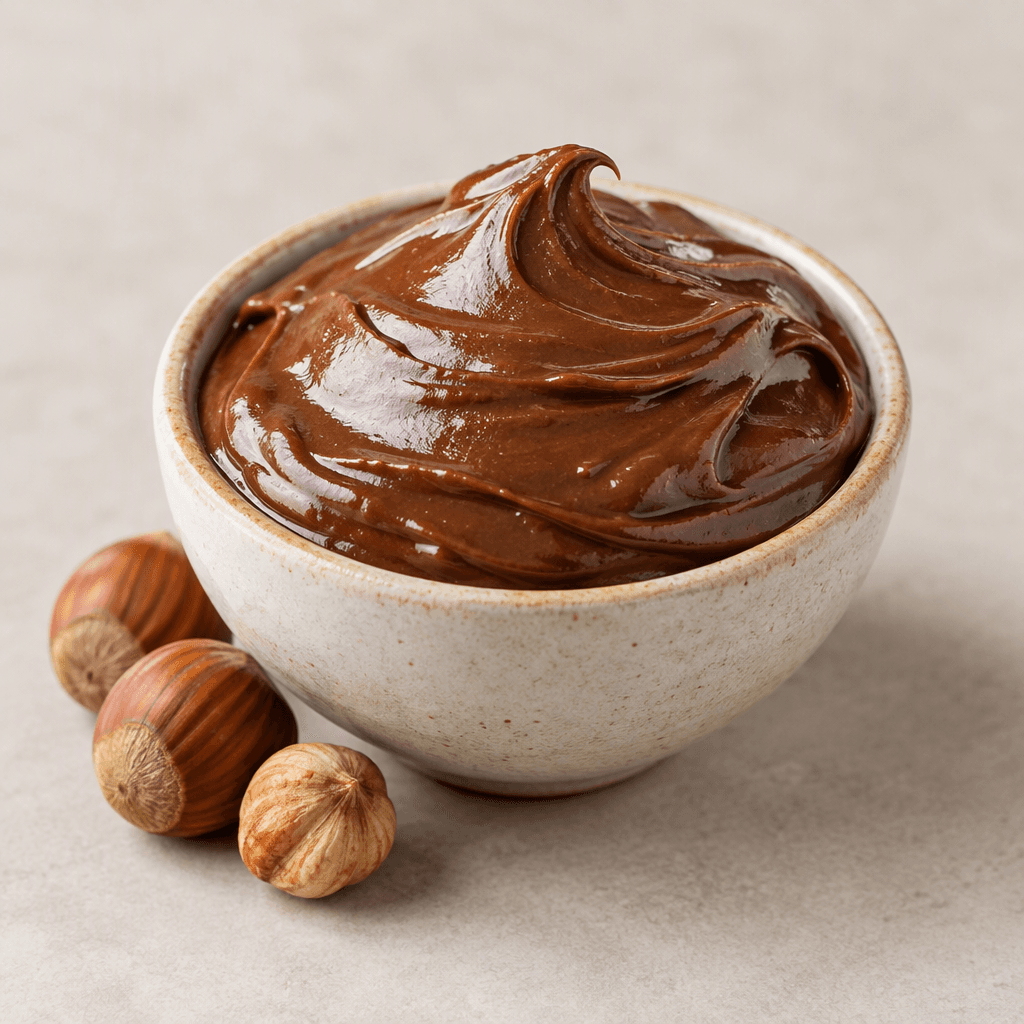
Sarelle is a packaged chocolate-hazelnut spread, with a smooth, thick texture and a sweet cocoa-and-nut flavour. In Turkey, it is commonly spread on bread at breakfast, spooned onto pancakes or crepes, or enjoyed as a small treat with tea. Outside Turkey, it works much like other hazelnut spreads: try it on toast, in a sandwich, or as a filling for pastries.
It is energy-dense, with much of its energy coming from carbohydrates and fat, so a modest spread is often enough. It adds sweetness and richness rather than much protein or fibre. For a less rich snack, pair a thin layer with fruit or plain bread.
Sarelle Nutrition Facts
Selected: 100 g
550
KCAL / 100G
Carbs
55g
· 20% DV
Protein
6g
· 12% DV
Fat
34g
· 44% DV
Fiber
4g
· 14% DV
DV is the share of the daily value covered, on a 2,000 kcal reference diet.
Calories come from: Carbs 40% · Protein 4% · Fat 56%
Sarelle Vitamins & Minerals
Vitamins
Vitamin E
3.5mg · 23% DV
B2
0.12mg · 9% DV
B1
0.08mg · 7% DV
Biotin
2µg · 7% DV
Minerals
Manganese
1mg · 43% DV
Phosphorus
120mg · 17% DV
Magnesium
60mg · 14% DV
Iron
2mg · 11% DV
How Nutritious Is Sarelle?
Nutrient density
Low
How many vitamins, minerals and how much fiber this food carries per calorie. A high score means a lot of nutrition for few calories.
Satiety score
Low
An EatBetter score computed from fiber, protein and calorie density. A high score means staying full longer on the same calories.
Both scores are calculated per 100 g and do not change with the selected portion. The satiety score is EatBetter's own calculation, not a clinical measure.
Sarelle Glycemic Index
GLYCEMIC INDEX
GLYCEMIC LOAD
Accounts for portion size — a more realistic measure than GI alone.
How to Burn Off Sarelle
To burn the 550 calories in 100 g:
🚶
Walking (5 km/h)
🏃
Running (8 km/h)
🚴
Cycling
🏊
Swimming
Times are calculated with the MET equation for a 70 kg adult. Actual burn varies with your weight, age and pace.
Is Sarelle Processed?
NOVA 3
Processed
1. Unprocessed
2. Minimally Processed
3. Processed
4. Ultra-Processed
NOVA classifies foods into 4 groups by industrial processing. NOVA 1 (unprocessed) is the healthiest.
Does Sarelle Contain Allergens?
Contains these allergens:
Which Diets Is Sarelle Good For?
Vegan
— Not suitable
Vegetarian
✓ Suitable
Gluten-Free
— Not suitable
Dairy-Free
— Not suitable
Mediterranean
— Not suitable
Paleo
— Not suitable
Whole30
— Not suitable
DASH
— Not suitable
Keto
— Not suitable
Low FODMAP
— Not suitable
Sarelle Fat Profile
SATURATED
8.5g
MONOUNSATURATED
20g
POLYUNSATURATED
4g
Omega 6:3 ratio 70:1
Above the ideal 4:1 (70:1).
Compare Sarelle
Foods Similar to Sarelle
Frequently Asked Questions About Sarelle
What is Sarelle?
Sarelle is a Turkish chocolate-hazelnut spread, typically eaten on bread or used in desserts. It has a sweet, cocoa-forward flavour and a smooth, thick texture.
Is Sarelle similar to Nutella?
Yes, Sarelle and Nutella are both chocolate-hazelnut spreads, but their recipes, sweetness and texture are not identical. Compare the ingredient lists on the jars if you want to check how the versions you have differ.
What ingredients are in Sarelle?
Sarelle’s main ingredients are typically hazelnuts, sugar and cocoa, with oils and other ingredients varying by product. The exact recipe can differ between varieties, so use the ingredient list on your jar for specifics.
Does Sarelle need to be refrigerated?
No, Sarelle does not need refrigeration. Keep the jar tightly closed in a cool, dry cupboard; chilling can make the spread firm and harder to spread.
How do you eat Sarelle?
Sarelle is commonly spread on toast or bread, and it also works with pancakes, crepes and biscuits. A thin layer is often enough to add its sweet, chocolate-hazelnut flavour without overwhelming the other ingredients.
Can you bake with Sarelle?
Yes, Sarelle can be used as a cake filling, a topping or a swirl in batter. Warming it gently makes it easier to spread; avoid adding it piping hot to mixtures where you want it to hold its shape.
Where is Sarelle from?
Sarelle is a Turkish chocolate-hazelnut spread brand. It is widely sold in Turkey, where it is commonly served at breakfast or used in home baking.
Why does oil separate in Sarelle?
A thin layer of oil can separate from Sarelle when the spread’s fats rise to the surface. Stir it with a clean utensil; discard the jar if you notice mould, an off smell or an unusual change in appearance.
How long does Sarelle last after opening?
After opening, keep Sarelle tightly closed and follow the date printed on the jar. Use a clean, dry utensil each time, and discard the spread if its smell or appearance changes noticeably.
Can people with diabetes eat Sarelle?
People with diabetes can eat Sarelle, but its sugar may raise blood glucose. Keep the serving small and account for it in the meal; a doctor or dietitian can help fit it into an individual eating plan.
Have another question about Sarelle?
Ask the AI nutrition coach — calories, portions, alternatives and more, answered in seconds in the app.

Scan calories with your camera
Instant AI nutrition analysis

Nutrition data compiled from USDA FoodData Central and scientific sources.