

Ready & Packaged Foods
All →Vegetables & Legumes
All →Desserts & Confectionery
All →Meat & Protein
All →Grains & Bakery
All →Beverages
All →Milk & Dairy
All →

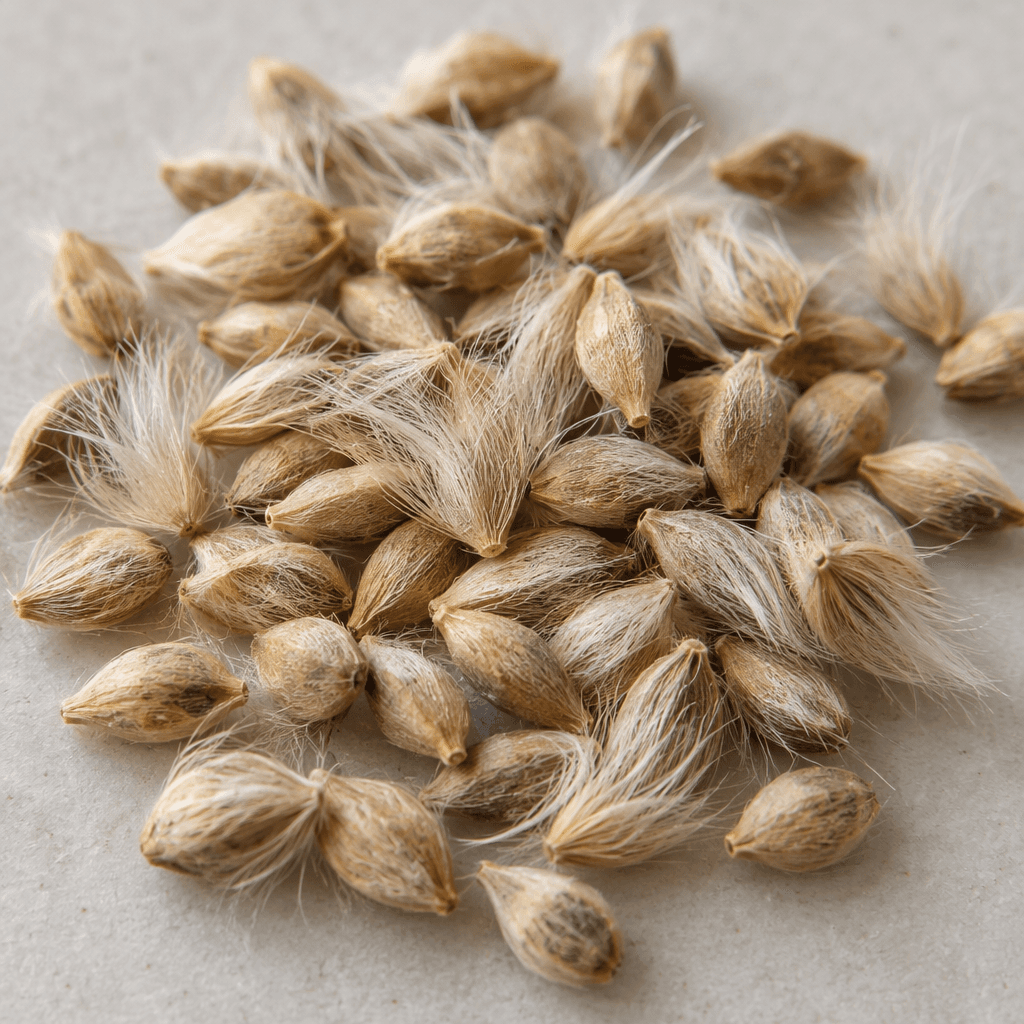
Rose seeds Calories
Seed rich in omega-3 and vitamin E, contains antioxidants
In season: Summer · Autumn
CALORIES · 100 G
GI
POTASSIUM · 100 G
FIBER · 100 G
Quick answer
2 tablespoon (medium) of Rose seeds (20 g) has 96 calories. That works out to 480 calories per 100 g. It contains 3.6 g of carbs, 3.8 g of protein, 7.2 g of fat and 3.2 g of fiber. Its 3 mg of Vitamin E covers 20% of the Daily Value. Its glycemic index is 15 (low), so it raises blood sugar slowly.
Rose seeds Nutrition Facts
Selected: 2 tablespoon (medium) · 20 g
96
KCAL / 20G
Carbs
3.6g
· 1% DV
Protein
3.8g
· 8% DV
Fat
7.2g
· 9% DV
Fiber
3.2g
· 11% DV
DV is the share of the daily value covered, on a 2,000 kcal reference diet.
Calories come from: Carbs 15% · Protein 16% · Fat 69%
Rose seeds nutrition facts table · 2 tablespoon (medium) (20 g)
| Nutrient | Amount | % DV |
|---|---|---|
| Calories | 96 kcal | |
| Total fat | 7.2 g | 9% |
| Saturated fat | 0.76 g | 4% |
| Trans fat | 0 g | |
| Sodium | 1.6 mg | 0% |
| Total carbohydrate | 3.6 g | 1% |
| Fiber | 3.2 g | 11% |
| Protein | 3.8 g | 8% |
Calories: Calories measure energy. Average daily need is 2,000 kcal. Excess calories are stored as fat, too few cause weight loss.
Carbs: Your body's primary energy source. The brain runs exclusively on carbs. Daily need: 275g.
Protein: Essential for muscle repair and cell growth. Daily need: 50g. Keeps you full and boosts metabolism.
Fat: Needed for hormone production and vitamin absorption. Daily need: 78g. Limit saturated fats, choose unsaturated.
Fiber: Critical for digestive health and satiety. Daily need: 28g. Stabilizes blood sugar, lowers cholesterol.

Log this food in EatBetter
100,000+ people use it
- Get your daily calorie target
- Snap your meal, log it in seconds
- See every vitamin and mineral

📸 Scan the code to get the app free.

How Many Calories in 2 Tablespoons of Rose seeds?
| Serving | Amount | Calories |
|---|---|---|
| 2 tablespoon (medium) | 20 g | 96 kcal |
| 1 piece (small) | 0.5 g | 2 kcal |
| 1 tablespoon (small) | 10 g | 48 kcal |
| 1 ounce (medium) | 28 g | 134 kcal |
| 3 tablespoon (large) | 30 g | 144 kcal |
| 50 g | 50 g | 240 kcal |
| 1 cup (large) | 90 g | 432 kcal |
| 100 g | 100 g | 480 kcal |
Calculated from 480 calories per 100 g.
Frequently Asked Questions About Rose seeds
Can you grow roses from rose seeds?
Yes, rose seeds can grow into rose plants, but germination is often slow and may require a period of cold, moist storage. Seed-grown roses may differ from the parent plant, so they are not a reliable way to reproduce a named variety.
What are rose seeds used for?
Rose seeds are mainly used to grow rose plants or pressed to make rosehip seed oil, commonly used in skincare. They are not the same as rose petals or rose-scented oil, and whole seeds are less common as a food ingredient.
Are rose seeds edible?
Rose seeds can be eaten when they have been cleaned and prepared for food, but seeds from rose hips may carry fine irritating hairs. Avoid eating seeds collected straight from wild fruit; choose a food-grade product with the hairs removed.
How do you remove hairs from rose seeds?
Rose seeds from rose hips are usually separated from the fruit and cleaned using equipment that removes the fine hairs. Avoid rubbing or grinding uncleaned seeds at home, since the hairs can irritate the mouth and throat; buy seeds prepared for food use.
How do you harvest rose seeds?
Harvest rose seeds from mature rose hips after the fruit has developed, then separate the seeds from the pulp. Wear gloves if handling thorny stems, and do not use hips from ornamental plants that may have been sprayed with garden chemicals.
Are rose seeds the same as rosehip seeds?
Yes, rose seeds commonly refers to the seeds inside rose hips, the fruit produced by rose plants. Rosehip tea is generally made from the fruit, though, rather than from the seeds themselves.
How is rose seed oil different from rose oil?
Rose seed oil is pressed from the seeds, often from rose hips, while rose oil is an aromatic oil made from rose petals. They differ in aroma, composition, and use; rose seed oil is commonly found in skincare products.
How should you store rose seeds?
Store rose seeds in a tightly sealed container in a cool, dry place away from direct sunlight. Their natural oils can become rancid over time, so discard seeds that smell stale or taste unusually bitter.
Can you roast rose seeds?
Yes, clean rose seeds can be lightly roasted, although this is not a common preparation. Use gentle heat and stop before they darken or smell burnt, since excessive heating can damage their natural oils.
Do all rose seeds produce the same kind of rose?
No, a seed-grown rose may not look or grow like its parent because it inherits traits from both parent plants. Many cultivated roses are propagated by cuttings or grafting when growers want to preserve a particular variety.
Rose seeds Vitamins & Minerals
Vitamins
Vitamin E
3mg · 20% DV
B1
0.07mg · 6% DV
B3
0.42mg · 3% DV
B5
0.12mg · 2% DV
Minerals
Copper
0.16mg · 18% DV
Manganese
0.34mg · 15% DV
Phosphorus
64mg · 9% DV
Magnesium
34mg · 8% DV
Potassium ⭐
102mg · 3% DV
Sodium
1.6mg · 0% DV
Rose seeds Glycemic Index
GLYCEMIC INDEX
GLYCEMIC LOAD
Accounts for portion size — a more realistic measure than GI alone.
How to Burn Off Rose seeds
To burn the 96 calories in 2 tablespoon (medium) (20 g):
🚶
Walking (5 km/h)
🏃
Running (8 km/h)
🚴
Cycling
🏊
Swimming
Times are calculated with the MET equation for a 70 kg adult. Actual burn varies with your weight, age and pace.
What is Rose seeds?
Rose seeds are the hard seeds inside rose hips, the fruit of the rose plant. They are not usually eaten like sunflower seeds: when rose hips are made into tea, syrup or jam, the seeds and their surrounding hairs are generally strained out. Products intended for eating are more often dried and ground, or sold ready to add to other foods.
Their flavour is mild and somewhat plant-like, with a faint nutty quality; whole seeds can be quite hard, so a ground form is easier to use. They contribute fat and fibre, and are noted for omega-3 and vitamin E; 100 g provides 16 g of fibre. Try a small amount stirred into porridge or yoghurt, and make sure the product is prepared for culinary use.
How Nutritious Is Rose seeds?
Nutrient density
High
How many vitamins, minerals and how much fiber this food carries per calorie. A high score means a lot of nutrition for few calories.
Satiety score
Medium
An EatBetter score computed from fiber, protein and calorie density. A high score means staying full longer on the same calories.
Both scores are calculated per 100 g and do not change with the selected portion. The satiety score is EatBetter's own calculation, not a clinical measure.
Is Rose seeds Processed?
NOVA 1
Unprocessed
1. Unprocessed
2. Minimally Processed
3. Processed
4. Ultra-Processed
NOVA classifies foods into 4 groups by industrial processing. NOVA 1 (unprocessed) is the healthiest.
Does Rose seeds Contain Allergens?
No known major allergens
Which Diets Is Rose seeds Good For?
Vegan
✓ Suitable
Vegetarian
✓ Suitable
Gluten-Free
✓ Suitable
Dairy-Free
— Not suitable
Mediterranean
✓ Suitable
Paleo
✓ Suitable
Whole30
— Not suitable
DASH
— Not suitable
Keto
— Not suitable
Low FODMAP
— Not suitable
Rose seeds Fat Profile
SATURATED
0.76g
MONOUNSATURATED
1.5g
POLYUNSATURATED
4.4g
Omega 6:3 ratio 2.6:1
Below the ideal 4:1 — a good omega balance.
Compare Rose seeds
Foods Similar to Rose seeds
Have another question about Rose seeds?
Ask the AI nutrition coach — calories, portions, alternatives and more, answered in seconds in the app.

Scan calories with your camera
Instant AI nutrition analysis

Nutrition data compiled from USDA FoodData Central and scientific sources.