

Ready & Packaged Foods
All →Vegetables & Legumes
All →Desserts & Confectionery
All →Meat & Protein
All →Grains & Bakery
All →Beverages
All →Milk & Dairy
All →

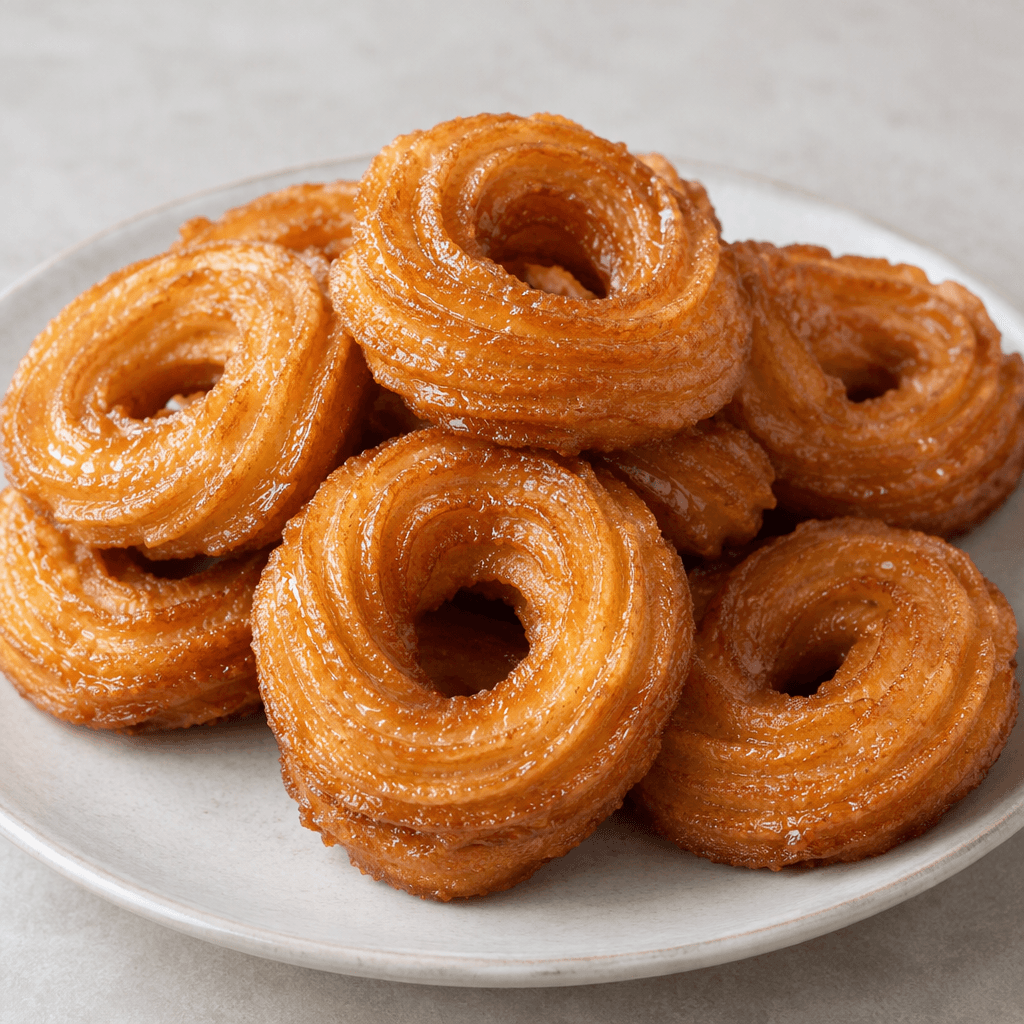
Ring Dessert Calories
Fried dough dessert with syrup, high in sugar and fat
In season: Spring · Summer · Autumn · Winter
CALORIES
GI
POTASSIUM
FIBER
Quick answer
1 piece (medium) of Ring Dessert (60 g) has 222 calories. That works out to 370 calories per 100 g. It contains 36 g of carbs, 2.7 g of protein, 7.8 g of fat and 0.7 g of fiber. Its glycemic index is 75 (high), so it raises blood sugar quickly.
What is Ring Dessert?
Ring Dessert is a Turkish sweet made by piping ridged dough into rings, frying it until golden, then soaking it in syrup. It is a familiar sight at sweet shops and street stalls in Turkey. The outside is lightly crisp while the centre stays softer, with syrup giving each bite a glossy finish and pronounced sweetness.
It is usually served at room temperature, on its own after a meal or alongside tea; coffee is another good match. As a fried, syrup-soaked pastry, it is high in sugar and fat and relatively low in protein and fibre. If you would rather keep dessert lighter, share one or enjoy a smaller portion with unsweetened tea.
Ring Dessert Nutrition Facts
Selected: 100 g
370
KCAL / 100G
Carbs
60g
· 22% DV
Protein
4.5g
· 9% DV
Fat
13g
· 17% DV
Fiber
1.2g
· 4% DV
DV is the share of the daily value covered, on a 2,000 kcal reference diet.
Calories come from: Carbs 64% · Protein 5% · Fat 31%
Ring Dessert Vitamins & Minerals
Vitamins
B1
0.07mg · 6% DV
B2
0.05mg · 4% DV
B5
0.2mg · 4% DV
B3
0.5mg · 3% DV
Minerals
Iron
1mg · 6% DV
Phosphorus
40mg · 6% DV
Sodium
120mg · 5% DV
Selenium
2µg · 4% DV
How Nutritious Is Ring Dessert?
Nutrient density
Low
How many vitamins, minerals and how much fiber this food carries per calorie. A high score means a lot of nutrition for few calories.
Satiety score
Low
An EatBetter score computed from fiber, protein and calorie density. A high score means staying full longer on the same calories.
Both scores are calculated per 100 g and do not change with the selected portion. The satiety score is EatBetter's own calculation, not a clinical measure.
Ring Dessert Glycemic Index
GLYCEMIC INDEX
GLYCEMIC LOAD
Accounts for portion size — a more realistic measure than GI alone.
How to Burn Off Ring Dessert
To burn the 370 calories in 100 g:
🚶
Walking (5 km/h)
🏃
Running (8 km/h)
🚴
Cycling
🏊
Swimming
Times are calculated with the MET equation for a 70 kg adult. Actual burn varies with your weight, age and pace.
Is Ring Dessert Processed?
NOVA 3
Processed
1. Unprocessed
2. Minimally Processed
3. Processed
4. Ultra-Processed
NOVA classifies foods into 4 groups by industrial processing. NOVA 1 (unprocessed) is the healthiest.
Does Ring Dessert Contain Allergens?
Contains these allergens:
Which Diets Is Ring Dessert Good For?
Vegan
— Not suitable
Vegetarian
✓ Suitable
Gluten-Free
— Not suitable
Dairy-Free
— Not suitable
Mediterranean
— Not suitable
Paleo
— Not suitable
Whole30
— Not suitable
DASH
— Not suitable
Keto
— Not suitable
Low FODMAP
— Not suitable
Ring Dessert Fat Profile
SATURATED
3.5g
MONOUNSATURATED
5.5g
POLYUNSATURATED
2.2g
Omega 6:3 ratio 210:1
Above the ideal 4:1 (210:1).
Compare Ring Dessert
Foods Similar to Ring Dessert
Frequently Asked Questions About Ring Dessert
What is Turkish ring dessert made of?
Turkish ring dessert is made from piped dough that is fried into ridged rings and soaked in syrup. Recipes commonly use flour, water, eggs and fat; some also include semolina or a raising agent.
How is ring dessert different from tulumba?
Ring dessert is piped into large rings, while tulumba is usually made as short, ridged cylinders. Both are fried and soaked in syrup, but their shapes and dough textures differ.
Where does ring dessert come from?
Ring dessert is a popular Turkish syrup pastry often sold by street vendors and sweet shops. It is enjoyed across the country, so it is better described as widely eaten in Turkey than tied to just one region.
How do you make ring dessert crispy at home?
For crispy ring dessert, pipe firm dough into properly heated oil and fry the rings without crowding the pan. Dip them briefly in cold syrup after frying, then let excess syrup drain before serving.
Why does ring dessert turn soggy?
Ring dessert turns soggy when it sits in syrup too long or is covered while still warm. Briefly dipping the fried rings and letting extra syrup drain helps preserve their crisp exterior.
Should the syrup for ring dessert be hot or cold?
Cold syrup is commonly used for freshly fried, hot ring dessert. The temperature contrast helps the syrup coat and soak into the pastry; leaving the rings submerged too long can make them soft.
Why does ring dessert fall apart while frying?
Ring dessert may break apart if its dough is too loose, the oil is excessively hot, or the piped ring is not joined securely. Use firm dough, seal the ends, and fry at a controlled temperature.
How should you store ring dessert?
Store ring dessert at room temperature and avoid sealing it while warm, since trapped moisture softens the crust. It is best eaten the day it is made; refrigeration can make the pastry damp and less crisp.
Can you reheat ring dessert to make it crispy again?
Yes, a brief spell in a low-to-moderate oven can help ring dessert regain some crispness. Avoid the microwave, which tends to make the syrup-soaked dough softer rather than crisp.
Can ring dessert be made with less oil or syrup?
Yes, make smaller rings, drain them thoroughly after frying, and dip them in syrup for less time. Baking can reduce the oil used, but it will not produce the same traditional fried texture.
Have another question about Ring Dessert?
Ask the AI nutrition coach — calories, portions, alternatives and more, answered in seconds in the app.

Scan calories with your camera
Instant AI nutrition analysis

Nutrition data compiled from USDA FoodData Central and scientific sources.