

Ready & Packaged Foods
All →Vegetables & Legumes
All →Desserts & Confectionery
All →Meat & Protein
All →Grains & Bakery
All →Beverages
All →Milk & Dairy
All →

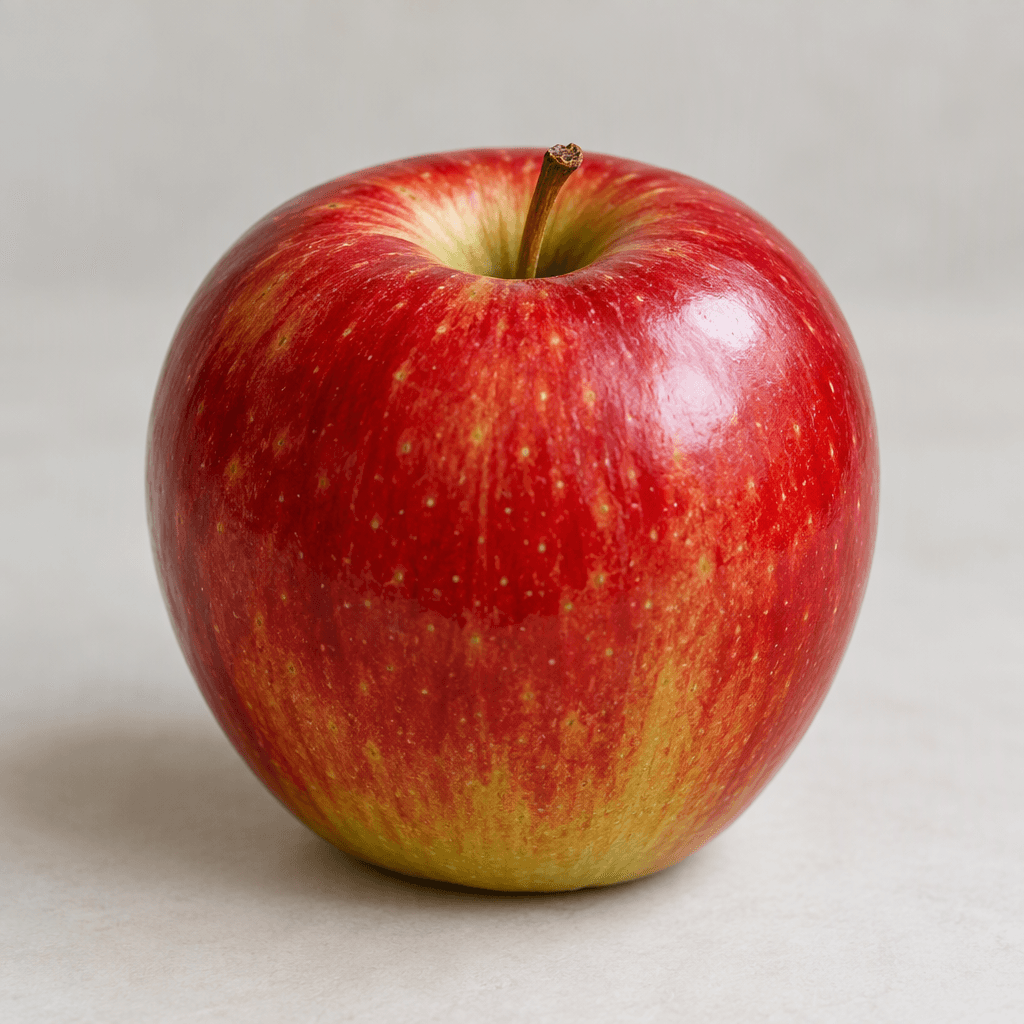
Red Apple Calories
Vitamin C, fiber, low calorie
In season: Autumn · Winter
CALORIES
GI
POTASSIUM
FIBER
Quick answer
1 piece (medium) of Red Apple (150 g) has 78 calories. That works out to 52 calories per 100 g. It contains 20.7 g of carbs, 0.5 g of protein, 0.3 g of fat and 3.6 g of fiber. Its 6.9 mg of Vitamin C covers 8% of the Daily Value. Its glycemic index is 36 (low), so it raises blood sugar slowly.
What is Red Apple?
Red apple refers to several cultivated apple varieties with red skin, crisp flesh and a flavour that can range from sweet to pleasantly tart. Apples originated in Central Asia, and red varieties are now grown in many regions. They are commonly eaten fresh as a portable snack, sliced into salads or served with cheese; in colder months, they also work well in pies, crumbles and baked dishes.
A red apple provides fibre and is mostly water and carbohydrate, with very little fat. For a simple snack, eat it whole or pair slices with yoghurt or nut butter; leaving the skin on keeps the fruit’s fibre. Cut it just before serving, or toss the slices with a little lemon juice to slow browning.
Red Apple Nutrition Facts
Selected: 100 g
52
KCAL / 100G
Carbs
13.8g
· 5% DV
Protein
0.3g
· 1% DV
Fat
0.2g
· 0% DV
Fiber
2.4g
· 9% DV
DV is the share of the daily value covered, on a 2,000 kcal reference diet.
Calories come from: Carbs 95% · Protein 2% · Fat 3%
Red Apple Vitamins & Minerals
Vitamins
Vitamin C
4.6mg · 5% DV
B1
0.02mg · 2% DV
B2
0.03mg · 2% DV
B6
0.04mg · 2% DV
Minerals
Potassium ⭐
107mg · 3% DV
Phosphorus
11mg · 2% DV
Calcium
6mg · 1% DV
Magnesium
5mg · 1% DV
How Nutritious Is Red Apple?
Nutrient density
High
How many vitamins, minerals and how much fiber this food carries per calorie. A high score means a lot of nutrition for few calories.
Satiety score
Medium
An EatBetter score computed from fiber, protein and calorie density. A high score means staying full longer on the same calories.
Both scores are calculated per 100 g and do not change with the selected portion. The satiety score is EatBetter's own calculation, not a clinical measure.
Red Apple Glycemic Index
GLYCEMIC INDEX
GLYCEMIC LOAD
Accounts for portion size — a more realistic measure than GI alone.
How to Burn Off Red Apple
To burn the 52 calories in 100 g:
🚶
Walking (5 km/h)
🏃
Running (8 km/h)
🚴
Cycling
🏊
Swimming
Times are calculated with the MET equation for a 70 kg adult. Actual burn varies with your weight, age and pace.
Is Red Apple Processed?
NOVA 1
Unprocessed
1. Unprocessed
2. Minimally Processed
3. Processed
4. Ultra-Processed
NOVA classifies foods into 4 groups by industrial processing. NOVA 1 (unprocessed) is the healthiest.
Does Red Apple Contain Allergens?
No known major allergens
Which Diets Is Red Apple Good For?
Vegan
✓ Suitable
Vegetarian
✓ Suitable
Gluten-Free
✓ Suitable
Dairy-Free
— Not suitable
Mediterranean
✓ Suitable
Paleo
✓ Suitable
Whole30
— Not suitable
DASH
— Not suitable
Keto
— Not suitable
Low FODMAP
— Not suitable
Red Apple Fat Profile
SATURATED
0.03g
MONOUNSATURATED
0.01g
POLYUNSATURATED
0.05g
Omega 6:3 ratio 3:1
Below the ideal 4:1 — a good omega balance.
Compare Red Apple
Foods Similar to Red Apple
Frequently Asked Questions About Red Apple
Are red apples good for you?
Yes, red apples can be a nutritious everyday fruit: eating one whole provides fiber and vitamin C. Keep the skin on if you enjoy it, and choose the whole fruit rather than juice for a more filling snack.
Are red apples healthier than green apples?
No color is automatically healthier. Red apples are often sweeter, while green apples tend to taste tarter; the exact flavor and nutrient content vary by variety. Choose the one you prefer rather than judging an apple by its color.
Can dogs eat red apples?
Yes, dogs can have small pieces of red apple as an occasional treat. Remove the core and seeds, and cut the flesh into bite-sized pieces; avoid giving a whole apple, which can be difficult to chew and may pose a choking risk.
Should you peel a red apple before eating it?
No, peeling a red apple is not necessary. The skin is edible and adds fiber, but wash the apple under running water and rub the surface before eating. Peel it if you prefer the texture or need a softer option.
How should you store red apples to keep them crisp?
Keep red apples in the refrigerator, where they stay crisp longer than they do on the counter. Store them away from bruised produce and check occasionally for soft or spoiled fruit, which can affect nearby apples.
Why does a red apple sometimes taste mealy?
A red apple tastes mealy when its cells lose their crisp structure, often because it is overripe or has been stored too long or too warm. It may still be usable in baking or applesauce if it has no mold or off smell.
Can you freeze red apples?
Yes, red apples can be frozen, but thawed slices will be softer than fresh ones. Remove the core, slice the apples, and freeze them in a sealed container; use them later in pies, sauces, or other cooked dishes.
Are red apple seeds poisonous?
Red apple seeds contain amygdalin, which can release cyanide when seeds are crushed or chewed. Accidentally swallowing a few whole seeds is unlikely to cause harm, but do not deliberately eat or chew them, especially in large quantities.
Why does the flesh of a red apple turn brown after cutting?
The cut flesh of a red apple turns brown when enzymes react with oxygen in the air. This natural change does not by itself mean the apple has spoiled; a little lemon juice can slow the browning if you are preparing slices ahead.
How can you tell if a red apple is ripe?
A ripe red apple should feel firm and heavy for its size, without soft spots or bruises. Color alone is not a reliable test because red-apple varieties ripen to different shades; check firmness and avoid fruit with damaged skin.
Have another question about Red Apple?
Ask the AI nutrition coach — calories, portions, alternatives and more, answered in seconds in the app.

Scan calories with your camera
Instant AI nutrition analysis

Nutrition data compiled from USDA FoodData Central and scientific sources.