

Ready & Packaged Foods
All →Vegetables & Legumes
All →Desserts & Confectionery
All →Meat & Protein
All →Grains & Bakery
All →Beverages
All →Milk & Dairy
All →

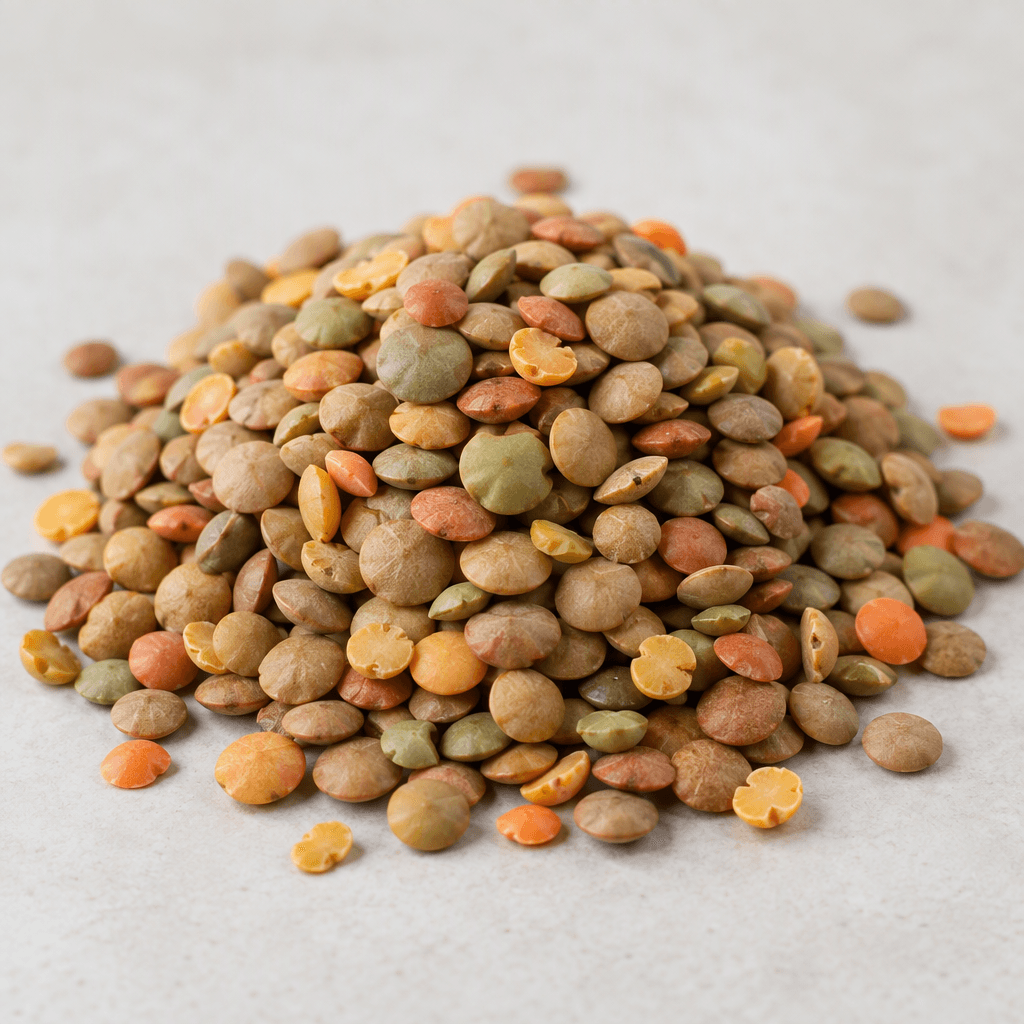
Raw lentils Calories
Plant protein, high fiber, source of iron and folate
In season: Spring · Summer · Autumn · Winter
CALORIES
GI
POTASSIUM
FIBER
Quick answer
1 cup (medium) of Raw lentils (200 g) has 706 calories. That works out to 353 calories per 100 g. It contains 120.2 g of carbs, 51.6 g of protein, 2.2 g of fat and 21.4 g of fiber. Its 958 µg of Folate covers 240% of the Daily Value. Its glycemic index is 21 (low), so it raises blood sugar slowly.
What is Raw lentils?
Raw lentils are the dried seeds of the lentil plant, sold in varieties such as red, green and brown. They need sorting, rinsing and cooking until tender before eating; they are not usually eaten uncooked.
Across South Asia, the Middle East, Europe and beyond, lentils are cooked into soups, dals, stews and salads. Red lentils soften and break down into a creamy texture, while green and brown varieties tend to hold their shape and taste earthier. They provide plant protein and fibre while being naturally low in fat. Add them to a vegetable soup or grain bowl for a satisfying meal, or season simply with herbs, spices and a squeeze of lemon.
Raw lentils Nutrition Facts
Selected: 100 g
353
KCAL / 100G
Carbs
60.1g
· 22% DV
Protein
25.8g
· 52% DV
Fat
1.1g
· 1% DV
Fiber
10.7g
· 38% DV
DV is the share of the daily value covered, on a 2,000 kcal reference diet.
Calories come from: Carbs 68% · Protein 29% · Fat 3%
Raw lentils Vitamins & Minerals
Vitamins
Folate
479µg · 120% DV
B1
0.87mg · 73% DV
B6
0.54mg · 32% DV
B5
1.33mg · 27% DV
Minerals
Copper
1mg · 111% DV
Manganese
1mg · 43% DV
Phosphorus
281mg · 40% DV
Iron
7mg · 39% DV
How Nutritious Is Raw lentils?
Nutrient density
Very high
How many vitamins, minerals and how much fiber this food carries per calorie. A high score means a lot of nutrition for few calories.
Satiety score
High
An EatBetter score computed from fiber, protein and calorie density. A high score means staying full longer on the same calories.
Both scores are calculated per 100 g and do not change with the selected portion. The satiety score is EatBetter's own calculation, not a clinical measure.
Raw lentils Glycemic Index
GLYCEMIC INDEX
GLYCEMIC LOAD
Accounts for portion size — a more realistic measure than GI alone.
How to Burn Off Raw lentils
To burn the 353 calories in 100 g:
🚶
Walking (5 km/h)
🏃
Running (8 km/h)
🚴
Cycling
🏊
Swimming
Times are calculated with the MET equation for a 70 kg adult. Actual burn varies with your weight, age and pace.
Is Raw lentils Processed?
NOVA 1
Unprocessed
1. Unprocessed
2. Minimally Processed
3. Processed
4. Ultra-Processed
NOVA classifies foods into 4 groups by industrial processing. NOVA 1 (unprocessed) is the healthiest.
Does Raw lentils Contain Allergens?
No known major allergens
Which Diets Is Raw lentils Good For?
Vegan
✓ Suitable
Vegetarian
✓ Suitable
Gluten-Free
✓ Suitable
Dairy-Free
— Not suitable
Mediterranean
✓ Suitable
Paleo
✓ Suitable
Whole30
— Not suitable
DASH
— Not suitable
Keto
— Not suitable
Low FODMAP
— Not suitable
Raw lentils Fat Profile
SATURATED
0.16g
MONOUNSATURATED
0.13g
POLYUNSATURATED
0.53g
Omega 6:3 ratio 6.4:1
Above the ideal 4:1 (6.4:1).
Compare Raw lentils
Foods Similar to Raw lentils
Frequently Asked Questions About Raw lentils
How do you cook raw lentils?
Sort and rinse raw lentils, then simmer them in water until tender. Red lentils soften and break down quickly, while green and brown lentils hold their shape better. Drain any excess water before adding them to a recipe.
Do raw lentils need to be soaked before cooking?
No, raw lentils do not have to be soaked before cooking. Soaking can shorten the cooking time, but it is optional; lentils cook well from dry when simmered in water until tender.
How long do raw lentils take to cook?
Cooking time for raw lentils varies by type and freshness. Red lentils usually cook faster and become soft, while green and brown lentils take longer and stay firmer. Check them as they simmer and stop when they reach your preferred texture.
What is the water-to-lentil ratio for cooking raw lentils?
A useful starting point is to cover raw lentils with plenty of water and simmer them like pasta, then drain the excess. This avoids guessing how much water they will absorb and works well when you do not need a precise, firm texture.
Should you rinse raw lentils before cooking?
Yes, rinse raw lentils under cool running water and pick through them before cooking. This removes dust and helps you spot any small stones or debris that may have been mixed in during harvesting or packing.
How should you store raw lentils?
Store raw lentils in a tightly sealed container in a cool, dry, dark cupboard. Keep them away from moisture and heat, which can encourage spoilage and make the lentils take longer to soften during cooking.
What is the difference between red and green raw lentils?
Red raw lentils are usually split and hulled, so they cook down into a soft texture suited to soups and dals. Green lentils generally keep their shape, making them a better fit for salads and dishes where distinct lentils are wanted.
Can raw lentils be sprouted?
Yes, some whole raw lentils can be sprouted, but split lentils generally will not sprout. Rinse and soak whole lentils, then keep them drained and rinse them regularly; cook sprouts thoroughly before eating to reduce food-safety risks.
Can you eat raw lentils without cooking them?
No, dry raw lentils are too hard to eat comfortably and can be difficult to digest. Cook them until tender before eating; do not confuse uncooked dry lentils with lentil sprouts, which also need careful handling.
Why do raw lentils foam while cooking?
Raw lentils can foam as starches and proteins rise to the surface during cooking. The foam is usually harmless; skim it off if you prefer, and use a roomy pot with a gentle simmer to help prevent boil-overs.
Have another question about Raw lentils?
Ask the AI nutrition coach — calories, portions, alternatives and more, answered in seconds in the app.

Scan calories with your camera
Instant AI nutrition analysis

Nutrition data compiled from USDA FoodData Central and scientific sources.