

Ready & Packaged Foods
All →Vegetables & Legumes
All →Desserts & Confectionery
All →Meat & Protein
All →Grains & Bakery
All →Beverages
All →Milk & Dairy
All →

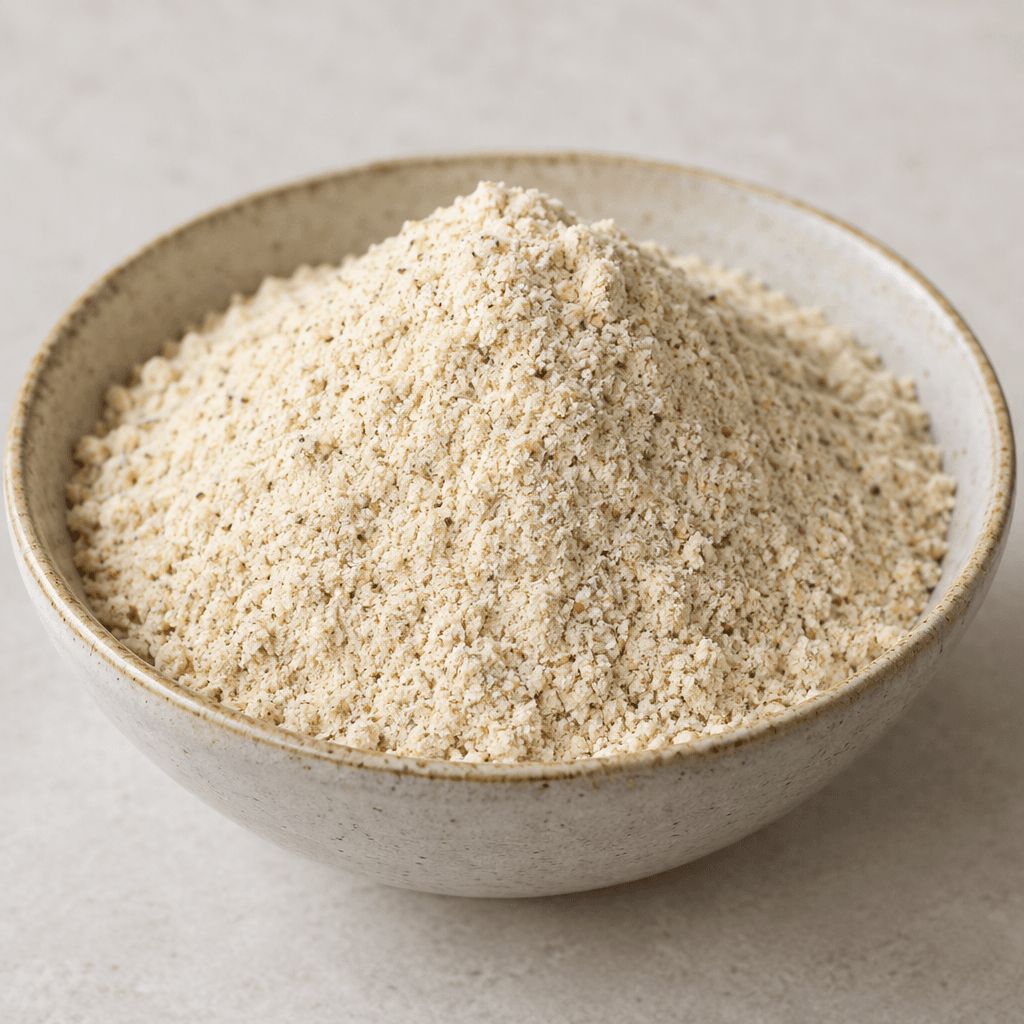
Quinoa Flour Calories
Gluten-free, high in protein and fiber, mineral-rich
In season: Spring · Summer · Autumn · Winter
CALORIES
GI
POTASSIUM
FIBER
Quick answer
1 cup (medium) of Quinoa Flour (120 g) has 444 calories. That works out to 370 calories per 100 g. It contains 81.6 g of carbs, 16.2 g of protein, 6.6 g of fat and 8.4 g of fiber. Its 0.7 mg of Copper covers 80% of the Daily Value. Its glycemic index is 40 (medium), so it raises blood sugar at a moderate pace.
What is Quinoa Flour?
Quinoa flour is made by grinding the seeds of quinoa, a crop long grown in the Andes of South America. It has a fine, soft texture and a gently earthy, nutty flavour. In its regions of origin, it is used in porridges and baked foods; elsewhere, including in English-speaking kitchens, it works well in pancakes, flatbreads, muffins and as part of a flour blend. Naturally gluten-free and a source of protein and fibre, it brings more substance than many refined flours; 100 grams provides 7 grams of fibre. Its distinctive flavour and lack of gluten can make baked goods dense, so combine it with other flours when you want a lighter result.
Quinoa Flour Nutrition Facts
Selected: 100 g
370
KCAL / 100G
Carbs
68g
· 25% DV
Protein
13.5g
· 27% DV
Fat
5.5g
· 7% DV
Fiber
7g
· 25% DV
DV is the share of the daily value covered, on a 2,000 kcal reference diet.
Calories come from: Carbs 72% · Protein 14% · Fat 14%
Quinoa Flour Vitamins & Minerals
Vitamins
B1
0.36mg · 30% DV
B6
0.49mg · 29% DV
Biotin
8µg · 27% DV
B2
0.32mg · 25% DV
Minerals
Copper
1mg · 111% DV
Manganese
2mg · 87% DV
Phosphorus
457mg · 65% DV
Magnesium
197mg · 47% DV
How Nutritious Is Quinoa Flour?
Nutrient density
High
How many vitamins, minerals and how much fiber this food carries per calorie. A high score means a lot of nutrition for few calories.
Satiety score
Medium
An EatBetter score computed from fiber, protein and calorie density. A high score means staying full longer on the same calories.
Both scores are calculated per 100 g and do not change with the selected portion. The satiety score is EatBetter's own calculation, not a clinical measure.
Quinoa Flour Glycemic Index
GLYCEMIC INDEX
GLYCEMIC LOAD
Accounts for portion size — a more realistic measure than GI alone.
How to Burn Off Quinoa Flour
To burn the 370 calories in 100 g:
🚶
Walking (5 km/h)
🏃
Running (8 km/h)
🚴
Cycling
🏊
Swimming
Times are calculated with the MET equation for a 70 kg adult. Actual burn varies with your weight, age and pace.
Is Quinoa Flour Processed?
NOVA 2
Minimally Processed
1. Unprocessed
2. Minimally Processed
3. Processed
4. Ultra-Processed
NOVA classifies foods into 4 groups by industrial processing. NOVA 1 (unprocessed) is the healthiest.
Does Quinoa Flour Contain Allergens?
No known major allergens
Which Diets Is Quinoa Flour Good For?
Vegan
✓ Suitable
Vegetarian
✓ Suitable
Gluten-Free
✓ Suitable
Dairy-Free
— Not suitable
Mediterranean
✓ Suitable
Paleo
✓ Suitable
Whole30
— Not suitable
DASH
— Not suitable
Keto
— Not suitable
Low FODMAP
— Not suitable
Quinoa Flour Fat Profile
SATURATED
0.6g
MONOUNSATURATED
1.4g
POLYUNSATURATED
2.7g
Omega 6:3 ratio 16.7:1
Above the ideal 4:1 (16.7:1).
Compare Quinoa Flour
Foods Similar to Quinoa Flour
Frequently Asked Questions About Quinoa Flour
What is quinoa flour made from?
Quinoa flour is made by grinding quinoa seeds into a fine powder. Depending on the product, the seeds may be ground raw or toasted first, which can change the flour’s aroma and color.
Can quinoa flour replace all-purpose flour one to one?
No, quinoa flour usually cannot replace all-purpose flour cup for cup in every recipe. It has no gluten, so doughs and batters may bind and rise differently; start with a partial substitution and adjust the liquid or binder if needed.
Why does quinoa flour taste bitter?
Quinoa flour can taste bitter or earthy because of quinoa’s natural flavor, and residual saponins may contribute if the seeds were not rinsed well before milling. Lightly toasting the flour in a dry pan can mellow the flavor.
How do you make quinoa flour at home?
You can make quinoa flour by grinding dry quinoa seeds in a high-speed blender or grain mill, then sifting out any coarse pieces. If you rinse the seeds first, dry them completely before grinding so moisture does not interfere.
Can you use quinoa flour for pancakes?
Yes, quinoa flour works in pancakes and gives them a distinctive, slightly earthy flavor. The batter can be more fragile than a wheat-flour batter, so let each pancake cook through on the first side before flipping it.
Is it safe to eat quinoa flour raw?
It is better to cook quinoa flour rather than eat it raw. Flour is generally not a ready-to-eat ingredient, so bake or cook batters thoroughly, including the center of breads, cakes, and pancakes.
Should quinoa flour be toasted before baking?
No, toasting quinoa flour before baking is optional. A brief, gentle toast in a dry pan can soften its strong earthy flavor, but let the flour cool before adding it to a recipe and avoid browning it heavily.
How should quinoa flour be stored?
Store quinoa flour in an airtight container away from heat, light, and moisture. For longer storage, keep it refrigerated or frozen, and use a clean, dry spoon so moisture does not get into the container.
Why do baked goods made with quinoa flour turn out dense?
Baked goods can turn out dense when quinoa flour is used alone because it does not form the stretchy gluten network found in wheat flour. Pairing it with a suitable binder or another flour can improve structure, though the texture will still differ.
Can quinoa flour be used to thicken sauces?
Yes, quinoa flour can thicken sauces. First whisk it into a little cool liquid to make a smooth slurry, then stir that into the hot sauce and cook it until the flour no longer tastes raw.
Have another question about Quinoa Flour?
Ask the AI nutrition coach — calories, portions, alternatives and more, answered in seconds in the app.

Scan calories with your camera
Instant AI nutrition analysis

Nutrition data compiled from USDA FoodData Central and scientific sources.