

Ready & Packaged Foods
All →Vegetables & Legumes
All →Desserts & Confectionery
All →Meat & Protein
All →Grains & Bakery
All →Beverages
All →Milk & Dairy
All →

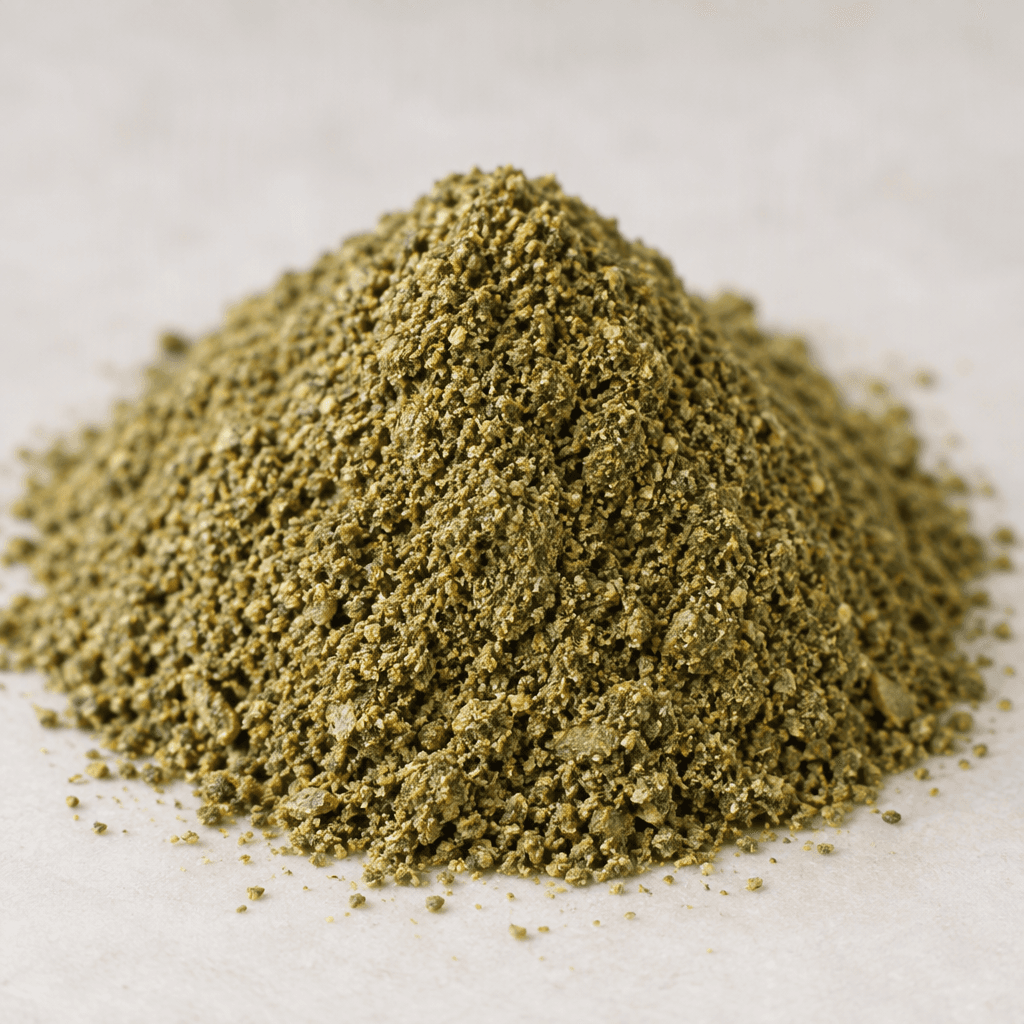
Pumpkin seed powder Calories
Plant-based protein, source of magnesium and zinc, contains healthy fats
In season: Autumn
CALORIES
GI
POTASSIUM
FIBER
Quick answer
2 tablespoon (medium) of Pumpkin seed powder (20 g) has 89 calories. That works out to 445 calories per 100 g. It contains 2 g of carbs, 6.4 g of protein, 7.2 g of fat and 1.2 g of fiber. Its 234 mg of Phosphorus covers 33% of the Daily Value. Its glycemic index is 10 (low), so it raises blood sugar slowly.
What is Pumpkin seed powder?
Pumpkin seed powder is made by finely grinding pumpkin seeds into a loose, greenish-brown meal. It has a mild, earthy, nutty flavour and a slightly coarse texture, rather than the sweetness of pumpkin flesh. Add it to porridge, yoghurt or smoothies, or stir it into soup and sauces; it also works in bread, muffins and savoury baking. In many kitchens, a spoonful over cereal or a salad is an easy way to use it.
It is a concentrated plant-based source of protein and fats, with 32 g of protein per 100 g. Its flavour is fairly gentle, so it can blend into everyday dishes without taking them over. Start with a small amount, and mix it with something moist to keep the powder from feeling dry or gritty.
Pumpkin seed powder Nutrition Facts
Selected: 100 g
445
KCAL / 100G
Carbs
10g
· 4% DV
Protein
32g
· 64% DV
Fat
36g
· 46% DV
Fiber
6g
· 21% DV
DV is the share of the daily value covered, on a 2,000 kcal reference diet.
Calories come from: Carbs 8% · Protein 26% · Fat 66%
Pumpkin seed powder Vitamins & Minerals
Vitamins
B3
4.9mg · 31% DV
B1
0.27mg · 23% DV
B5
0.75mg · 15% DV
Folate
58µg · 14% DV
Minerals
Phosphorus
1170mg · 167% DV
Magnesium
535mg · 127% DV
Copper
1mg · 111% DV
Zinc
8mg · 73% DV
How Nutritious Is Pumpkin seed powder?
Nutrient density
Very high
How many vitamins, minerals and how much fiber this food carries per calorie. A high score means a lot of nutrition for few calories.
Satiety score
High
An EatBetter score computed from fiber, protein and calorie density. A high score means staying full longer on the same calories.
Both scores are calculated per 100 g and do not change with the selected portion. The satiety score is EatBetter's own calculation, not a clinical measure.
Pumpkin seed powder Glycemic Index
GLYCEMIC INDEX
GLYCEMIC LOAD
Accounts for portion size — a more realistic measure than GI alone.
How to Burn Off Pumpkin seed powder
To burn the 445 calories in 100 g:
🚶
Walking (5 km/h)
🏃
Running (8 km/h)
🚴
Cycling
🏊
Swimming
Times are calculated with the MET equation for a 70 kg adult. Actual burn varies with your weight, age and pace.
Is Pumpkin seed powder Processed?
NOVA 2
Minimally Processed
1. Unprocessed
2. Minimally Processed
3. Processed
4. Ultra-Processed
NOVA classifies foods into 4 groups by industrial processing. NOVA 1 (unprocessed) is the healthiest.
Does Pumpkin seed powder Contain Allergens?
No known major allergens
Which Diets Is Pumpkin seed powder Good For?
Vegan
✓ Suitable
Vegetarian
✓ Suitable
Gluten-Free
✓ Suitable
Dairy-Free
— Not suitable
Mediterranean
✓ Suitable
Paleo
✓ Suitable
Whole30
— Not suitable
DASH
— Not suitable
Keto
✓ Suitable
Low FODMAP
— Not suitable
Pumpkin seed powder Fat Profile
SATURATED
7.5g
MONOUNSATURATED
13g
POLYUNSATURATED
14.5g
Omega 6:3 ratio 160:1
Above the ideal 4:1 (160:1).
Compare Pumpkin seed powder
Foods Similar to Pumpkin seed powder
Frequently Asked Questions About Pumpkin seed powder
What is pumpkin seed powder made from?
Pumpkin seed powder is made by grinding dried pumpkin seeds, usually after removing the shells. Depending on the product, the seeds may be raw or roasted; this changes the flavor, so check the product description if you prefer one.
What are the benefits of pumpkin seed powder?
Pumpkin seed powder provides plant protein, magnesium, zinc and unsaturated fats. It can add these nutrients to meals, but it is a food ingredient, not a proven treatment or cure for a health condition.
How do you use pumpkin seed powder?
Stir pumpkin seed powder into oatmeal, yogurt, soups or sauces, or mix it into savory batters. Its earthy, nutty flavor is fairly pronounced, so start with a small amount and blend it well to avoid clumps.
Can you put pumpkin seed powder in a smoothie?
Yes, pumpkin seed powder works in smoothies. Blend it with fruit and your choice of milk or plant-based drink; it thickens the mixture and adds an earthy flavor, so adjust the liquid if the smoothie becomes too dense.
Can pumpkin seed powder replace flour in baking?
Pumpkin seed powder usually cannot replace all the flour in a recipe because it has no gluten and behaves differently in dough. Try using some alongside the usual flour in bread, pancakes or muffins, and adjust the liquid if needed.
Is pumpkin seed powder the same as pumpkin protein powder?
Not necessarily. Pumpkin seed powder is generally ground seeds, while pumpkin protein powder is often made by pressing oil from the seeds and milling the remaining solids. Their texture, fat content and flavor can differ.
Does pumpkin seed powder taste better raw or roasted?
Roasted pumpkin seed powder usually tastes toastier and more pronounced, while powder made from raw seeds has a milder, greener flavor. Either can be used in recipes; choose roasted for savory dishes or raw when you want a subtler taste.
How should you store pumpkin seed powder?
Keep pumpkin seed powder in an airtight container away from heat, moisture and light. Its natural oils can turn rancid over time, so refrigeration can help preserve freshness, especially if you use it slowly; discard it if it smells sour or bitter.
Does pumpkin seed powder help with prostate health?
Pumpkin seed powder is not proven to prevent or treat prostate conditions. Research involving pumpkin seeds does not establish that the powder has the same effects; anyone with urinary or prostate symptoms should seek medical advice.
How much pumpkin seed powder should you use per serving?
A typical serving of pumpkin seed powder is about two medium tablespoons, or 20 grams. Mix it into a meal rather than eating it dry, and adjust the amount to suit the recipe and your taste.
Have another question about Pumpkin seed powder?
Ask the AI nutrition coach — calories, portions, alternatives and more, answered in seconds in the app.

Scan calories with your camera
Instant AI nutrition analysis

Nutrition data compiled from USDA FoodData Central and scientific sources.