

Ready & Packaged Foods
All →Vegetables & Legumes
All →Desserts & Confectionery
All →Meat & Protein
All →Grains & Bakery
All →Beverages
All →Milk & Dairy
All →

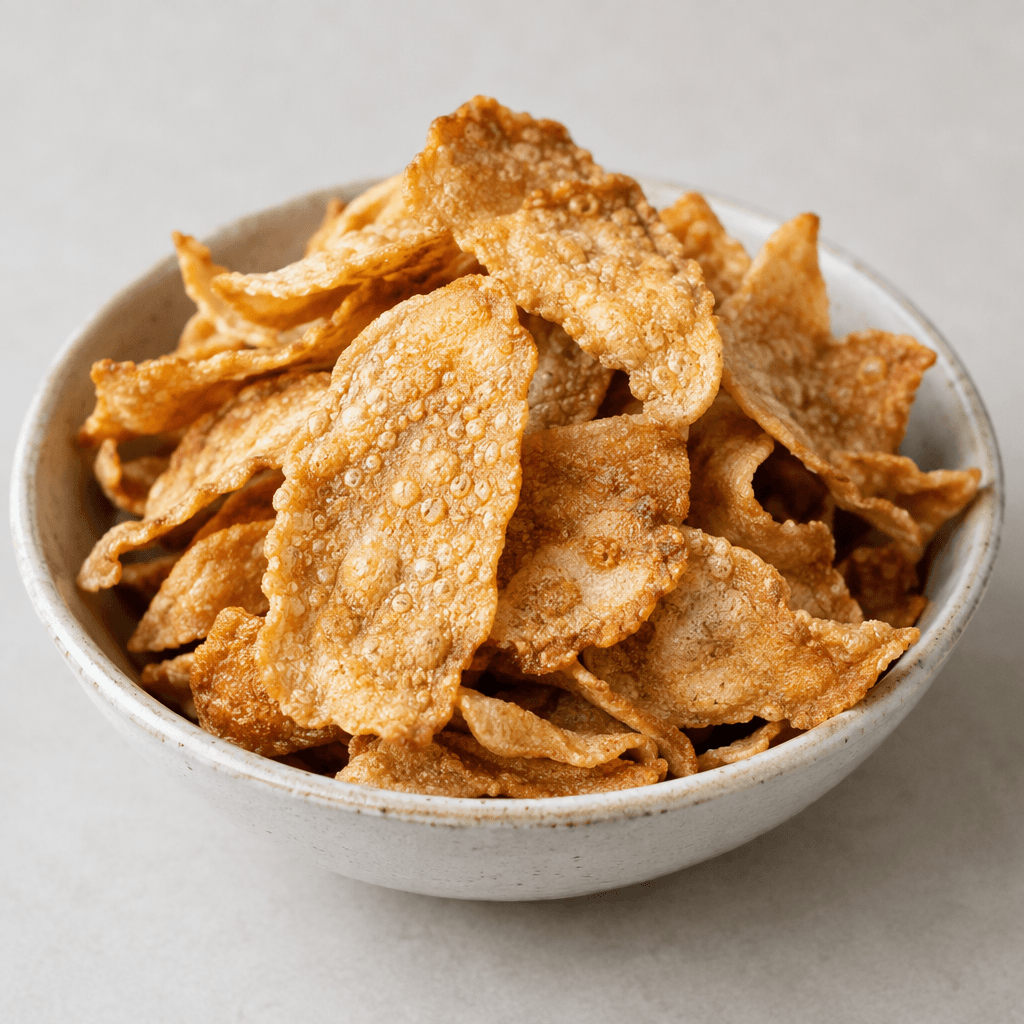
Protein chips Calories
High-protein, low-fat snack
CALORIES
GI
POTASSIUM
FIBER
Quick answer
1 pack (medium) of Protein chips (30 g) has 111 calories. That works out to 370 calories per 100 g. It contains 10.5 g of carbs, 10.5 g of protein, 2.1 g of fat and 1.8 g of fiber. Its 66 mg of Phosphorus covers 9% of the Daily Value. Its glycemic index is 55 (medium), so it raises blood sugar at a moderate pace.
What is Protein chips?
Protein chips are a packaged, crunchy snack made to provide more protein than many conventional crisps. The ingredients and protein source vary by brand, so check the pack if you have particular preferences. Their thin, crisp pieces are usually seasoned and eaten straight from the bag, as a snack between meals or alongside a sandwich or dip. They are not a traditional dish with a single place of origin; their appeal is as a convenient alternative to ordinary chips. Protein chips are high in protein, with 35 g per 100 g, and can suit a quick snack when you want something savoury. For a more balanced bite, serve a small portion with fresh vegetables or plain yoghurt.
Protein chips Nutrition Facts
Selected: 100 g
370
KCAL / 100G
Carbs
35g
· 13% DV
Protein
35g
· 70% DV
Fat
7g
· 9% DV
Fiber
6g
· 21% DV
DV is the share of the daily value covered, on a 2,000 kcal reference diet.
Calories come from: Carbs 41% · Protein 41% · Fat 18%

Log this food in EatBetter
100,000+ people use it
- Get your daily calorie target
- Snap your meal, log it in seconds
- See every vitamin and mineral

📸 Scan the code to get the app free.

Protein chips Vitamins & Minerals
Vitamins
B1
0.15mg · 13% DV
B12
0.3µg · 13% DV
B6
0.18mg · 11% DV
B5
0.5mg · 10% DV
Minerals
Phosphorus
220mg · 31% DV
Sodium
650mg · 28% DV
Magnesium
55mg · 13% DV
Potassium ⭐
320mg · 9% DV
Copper
0mg · 0% DV
How Nutritious Is Protein chips?
Nutrient density
Medium
How many vitamins, minerals and how much fiber this food carries per calorie. A high score means a lot of nutrition for few calories.
Satiety score
High
An EatBetter score computed from fiber, protein and calorie density. A high score means staying full longer on the same calories.
Both scores are calculated per 100 g and do not change with the selected portion. The satiety score is EatBetter's own calculation, not a clinical measure.
Protein chips Glycemic Index
GLYCEMIC INDEX
GLYCEMIC LOAD
Accounts for portion size — a more realistic measure than GI alone.
How to Burn Off Protein chips
To burn the 370 calories in 100 g:
🚶
Walking (5 km/h)
🏃
Running (8 km/h)
🚴
Cycling
🏊
Swimming
Times are calculated with the MET equation for a 70 kg adult. Actual burn varies with your weight, age and pace.
Is Protein chips Processed?
NOVA 3
Processed
1. Unprocessed
2. Minimally Processed
3. Processed
4. Ultra-Processed
NOVA classifies foods into 4 groups by industrial processing. NOVA 1 (unprocessed) is the healthiest.
Does Protein chips Contain Allergens?
No known major allergens
Which Diets Is Protein chips Good For?
Vegan
— Not suitable
Vegetarian
— Not suitable
Gluten-Free
✓ Suitable
Dairy-Free
— Not suitable
Mediterranean
✓ Suitable
Paleo
✓ Suitable
Whole30
— Not suitable
DASH
— Not suitable
Keto
✓ Suitable
Low FODMAP
— Not suitable
Protein chips Fat Profile
SATURATED
1.1g
MONOUNSATURATED
2.2g
POLYUNSATURATED
2.6g
Omega 6:3 ratio 24:1
Above the ideal 4:1 (24:1).
Compare Protein chips
Foods Similar to Protein chips
Frequently Asked Questions About Protein chips
Are protein chips healthy?
Protein chips can be a convenient way to get more protein from a snack, but they are not automatically a nutritious meal. Seasonings and salt vary by product, so they are best treated as an occasional snack rather than a substitute for varied foods.
What are protein chips made of?
Protein chips are made from a mix of protein ingredients and a base such as starch or flour, with seasonings added for flavor. Recipes vary: some use dairy or soy protein, while others use plant proteins such as pea.
Do protein chips taste like regular chips?
Protein chips can taste similar to regular chips, but their texture is often denser, drier, or more powdery. The flavor also depends on the protein source and seasoning, so a cheese-flavored variety may not taste exactly like conventional cheese crisps.
Are protein chips better than regular chips?
Protein chips may offer more protein and less fat than some regular chips, but that does not make every product a better choice in every way. Compare their ingredients, saltiness, and portion size with the snack you would otherwise eat.
What protein is used in protein chips?
Protein chips may use whey, milk, soy, pea, or other protein ingredients. The source differs by brand and recipe, which affects taste and texture; there is no single protein used in all protein chips.
Can protein chips help with weight loss?
Protein chips do not cause weight loss on their own. Their protein may make a snack more filling, but eating large portions can still add up; serve a portion rather than grazing from the bag if you are managing your intake.
Are protein chips a good post-workout snack?
Yes, protein chips can be a convenient post-workout snack and contribute protein. They may not provide everything you need after a demanding session, so pair them with water and, when appropriate, a food containing carbohydrates.
Are protein chips baked or fried?
Protein chips can be baked, fried, or made using other manufacturing methods. The method is not the same across brands, and appearance alone does not reliably tell you how a particular product was cooked.
Can you make protein chips at home?
Yes, you can make protein chips at home by mixing a protein-rich flour or powder into a thin dough and baking small pieces until crisp. Homemade versions may be denser than packaged chips, and rolling the dough thin helps them crisp up.
How should you store protein chips after opening?
Store protein chips in an airtight container in a cool, dry place after opening. Exposure to moisture softens their crisp texture, so reseal them promptly and eat them soon for the best crunch.
Have another question about Protein chips?
Ask the AI nutrition coach — calories, portions, alternatives and more, answered in seconds in the app.

Scan calories with your camera
Instant AI nutrition analysis

Nutrition data compiled from USDA FoodData Central and scientific sources.