

Ready & Packaged Foods
All →Vegetables & Legumes
All →Desserts & Confectionery
All →Meat & Protein
All →Grains & Bakery
All →Beverages
All →Milk & Dairy
All →

Protein Calories
Essential nutrient for muscle growth and repair
CALORIES
GI
POTASSIUM
FIBER
Quick answer
1 tablespoon (medium) of Protein (10 g) has 40 calories. That works out to 400 calories per 100 g. It contains 0 g of carbs, 10 g of protein, 0 g of fat and 0 g of fiber. Its glycemic index is 0 (low), so it raises blood sugar slowly.
What is Protein?
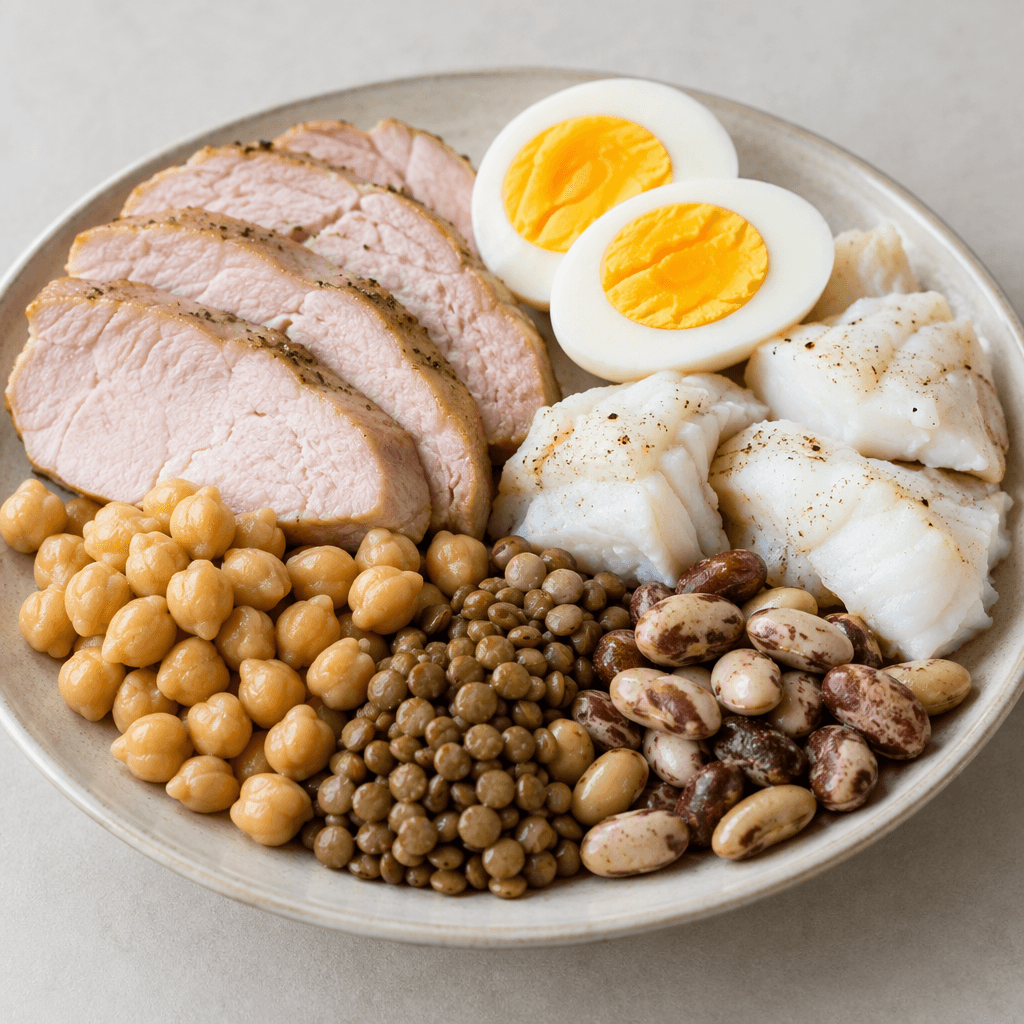
Protein is a nutrient rather than a single dish or ingredient. It occurs in foods such as meat, fish, eggs and dairy, as well as beans, lentils, tofu and other plant foods. Its flavour and texture depend on the source: eggs can be soft and mild, fish delicate, and legumes hearty.
Around the world, protein-rich foods appear at breakfast, in sandwiches and salads, or as the centre of a cooked meal; beans and lentils are also common staples in plant-based cooking. Protein supports the building and repair of body tissues, but the foods that provide it also bring different nutrients and textures. For an easy plant-based meal, pair legumes with grains and add vegetables for variety.
Protein Nutrition Facts
Selected: 100 g
400
KCAL / 100G
Carbs
0g
· 0% DV
Protein
100g
· 200% DV
Fat
0g
· 0% DV
Fiber
0g
· 0% DV
DV is the share of the daily value covered, on a 2,000 kcal reference diet.
Calories come from: Carbs 0% · Protein 100% · Fat 0%
Protein Vitamins & Minerals
Vitamins
Vitamin A
0µg · 0% DV
B1
0mg · 0% DV
B2
0mg · 0% DV
B3
0mg · 0% DV
Minerals
Calcium
0mg · 0% DV
Iron
0mg · 0% DV
Magnesium
0mg · 0% DV
Zinc
0mg · 0% DV
How Nutritious Is Protein?
Nutrient density
High
How many vitamins, minerals and how much fiber this food carries per calorie. A high score means a lot of nutrition for few calories.
Satiety score
Low
An EatBetter score computed from fiber, protein and calorie density. A high score means staying full longer on the same calories.
Both scores are calculated per 100 g and do not change with the selected portion. The satiety score is EatBetter's own calculation, not a clinical measure.
Protein Glycemic Index
GLYCEMIC INDEX
GLYCEMIC LOAD
Accounts for portion size — a more realistic measure than GI alone.
How to Burn Off Protein
To burn the 400 calories in 100 g:
🚶
Walking (5 km/h)
🏃
Running (8 km/h)
🚴
Cycling
🏊
Swimming
Times are calculated with the MET equation for a 70 kg adult. Actual burn varies with your weight, age and pace.
Is Protein Processed?
NOVA 3
Processed
1. Unprocessed
2. Minimally Processed
3. Processed
4. Ultra-Processed
NOVA classifies foods into 4 groups by industrial processing. NOVA 1 (unprocessed) is the healthiest.
Does Protein Contain Allergens?
No known major allergens
Which Diets Is Protein Good For?
Vegan
✓ Suitable
Vegetarian
✓ Suitable
Gluten-Free
✓ Suitable
Dairy-Free
— Not suitable
Mediterranean
✓ Suitable
Paleo
✓ Suitable
Whole30
— Not suitable
DASH
— Not suitable
Keto
✓ Suitable
Low FODMAP
— Not suitable
Protein Fat Profile
SATURATED
0g
MONOUNSATURATED
0g
POLYUNSATURATED
0g
Compare Protein
Foods Similar to Protein
Frequently Asked Questions About Protein
What does protein do in the body?
Protein supplies amino acids used to build and repair muscles and other tissues. It also helps form enzymes, hormones and components of the immune system, so its role goes well beyond supporting muscle growth.
How much protein do you need each day?
Daily protein needs vary with body size, age, activity and health. People who train regularly or have specific health needs may require different amounts, so include protein-rich foods across meals rather than relying on one large serving.
Which foods are high in protein?
Eggs, fish, poultry, meat, dairy foods, beans, lentils, tofu, nuts and seeds all provide protein. Choosing a mix of sources can also bring a wider range of nutrients and suit different eating patterns.
Is animal protein better than plant protein for building muscle?
No, plant protein can support muscle building too. Many animal foods provide all essential amino acids in one food, while a varied plant-based diet can supply them across different foods; training and overall food intake matter as well.
Do you need protein immediately after a workout?
No, you do not need to consume protein immediately after exercise. Having a protein-containing meal or snack within a few hours is a practical way to support muscle repair, while consistent intake throughout the day matters too.
Can you get enough protein on a vegan diet?
Yes, a vegan diet can provide enough protein with regular servings of foods such as beans, lentils, peas, tofu, tempeh, nuts and seeds. Eating a variety of these foods throughout the day helps cover different amino acid needs.
Does protein help with weight loss?
Protein can help you feel fuller after meals and preserve muscle during weight loss, which may make a structured eating plan easier to follow. It does not cause weight loss by itself; total food intake and activity also matter.
What is a complete protein, and does protein have to be complete?
A complete protein provides all nine essential amino acids in sufficient amounts; eggs, dairy, meat, fish and soy are examples. You do not have to get every essential amino acid from one food, since varied meals across the day can provide them.
Is protein before bed useful?
Protein before bed can contribute to your daily intake and provide amino acids during the overnight fast. A regular food such as yogurt or cottage cheese is an option, but a bedtime protein snack is not necessary for everyone.
Can too much protein damage your kidneys?
High protein intake is not generally considered harmful to healthy kidneys at typical dietary levels, but very high intakes may not suit everyone. Anyone with kidney disease should get individualized advice from a healthcare professional before changing protein intake.
Have another question about Protein?
Ask the AI nutrition coach — calories, portions, alternatives and more, answered in seconds in the app.

Scan calories with your camera
Instant AI nutrition analysis

Nutrition data compiled from USDA FoodData Central and scientific sources.