

Ready & Packaged Foods
All →Vegetables & Legumes
All →Desserts & Confectionery
All →Meat & Protein
All →Grains & Bakery
All →Beverages
All →Milk & Dairy
All →

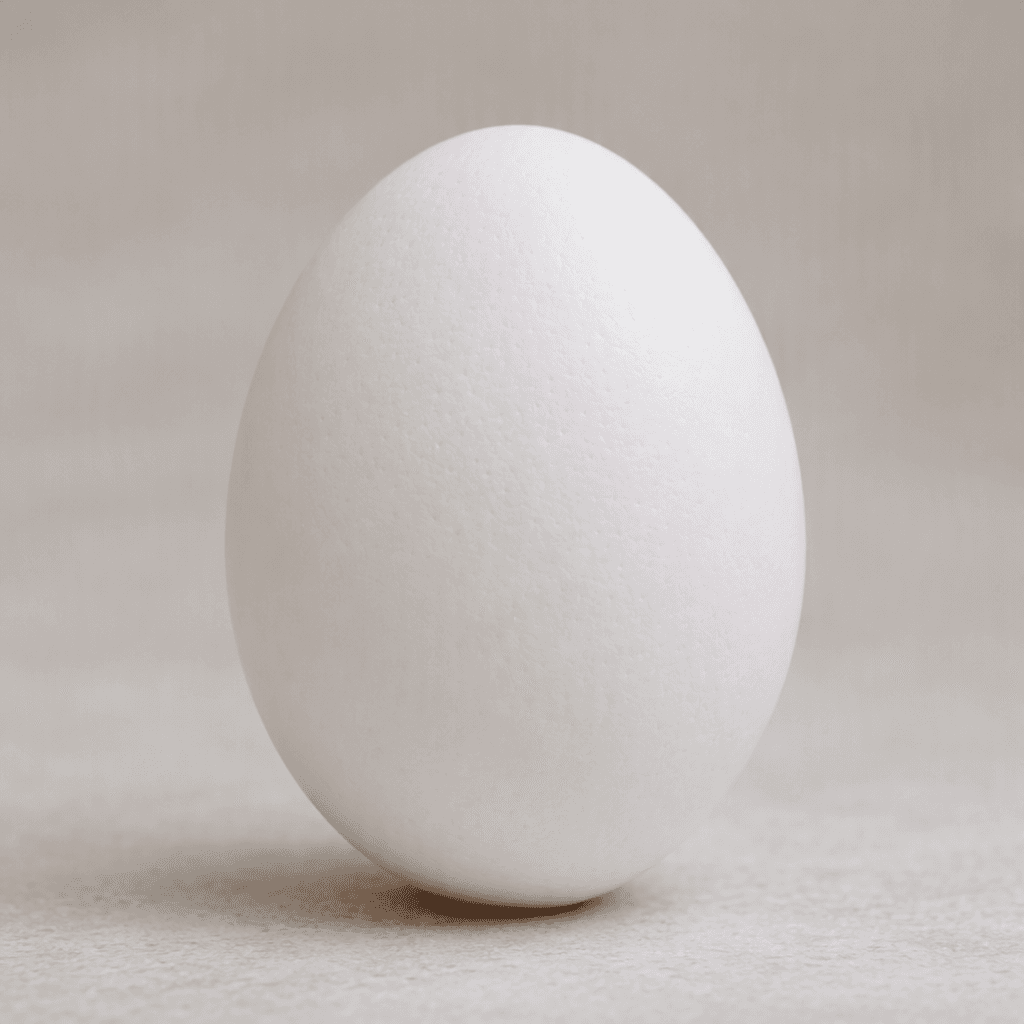
Egg Calories
High-quality protein, source of B12, choline, selenium
In season: Spring · Summer · Autumn · Winter
CALORIES
GI
POTASSIUM
FIBER
Quick answer
1 piece (medium) of Egg (50 g) has 72 calories. That works out to 143 calories per 100 g. It contains 0.6 g of carbs, 6.5 g of protein, 4.8 g of fat and 0 g of fiber. Its 10 µg of Biotin covers 33% of the Daily Value. Its glycemic index is 0 (low), so it raises blood sugar slowly.
What is Egg?
Eggs are a familiar kitchen staple: the edible, shelled eggs of hens, used both on their own and as an ingredient in dishes from baking to sauces. The white and yolk can be cooked together or separately, and the method changes the texture considerably.
Around the world, eggs appear at breakfast, in sandwiches and salads, or as a simple meal with vegetables and toast. Their flavour is mild and their texture can be tender, creamy or firm, depending on how they are cooked. They provide high-quality protein, along with nutrients such as vitamin B12 and choline.
For an easy, lighter meal, boil an egg and serve it with vegetables, or cook it with tomatoes and greens. Eggs also pair well with herbs and wholegrain toast.
Egg Nutrition Facts
Selected: 100 g
143
KCAL / 100G
Carbs
1.1g
· 0% DV
Protein
13g
· 26% DV
Fat
9.5g
· 12% DV
Fiber
0g
· 0% DV
DV is the share of the daily value covered, on a 2,000 kcal reference diet.
Calories come from: Carbs 3% · Protein 37% · Fat 60%
Egg Vitamins & Minerals
Vitamins
Biotin
20µg · 67% DV
B12
1.1µg · 46% DV
B2
0.5mg · 38% DV
B5
1.4mg · 28% DV
Minerals
Selenium
30µg · 55% DV
Iodine
47µg · 31% DV
Phosphorus
190mg · 27% DV
Zinc
1mg · 9% DV
How Nutritious Is Egg?
Nutrient density
Very high
How many vitamins, minerals and how much fiber this food carries per calorie. A high score means a lot of nutrition for few calories.
Satiety score
Medium
An EatBetter score computed from fiber, protein and calorie density. A high score means staying full longer on the same calories.
Both scores are calculated per 100 g and do not change with the selected portion. The satiety score is EatBetter's own calculation, not a clinical measure.
Egg Glycemic Index
GLYCEMIC INDEX
GLYCEMIC LOAD
Accounts for portion size — a more realistic measure than GI alone.
How to Burn Off Egg
To burn the 143 calories in 100 g:
🚶
Walking (5 km/h)
🏃
Running (8 km/h)
🚴
Cycling
🏊
Swimming
Times are calculated with the MET equation for a 70 kg adult. Actual burn varies with your weight, age and pace.
Is Egg Processed?
NOVA 1
Unprocessed
1. Unprocessed
2. Minimally Processed
3. Processed
4. Ultra-Processed
NOVA classifies foods into 4 groups by industrial processing. NOVA 1 (unprocessed) is the healthiest.
Does Egg Contain Allergens?
Contains these allergens:
Which Diets Is Egg Good For?
Vegan
— Not suitable
Vegetarian
✓ Suitable
Gluten-Free
✓ Suitable
Dairy-Free
— Not suitable
Mediterranean
✓ Suitable
Paleo
✓ Suitable
Whole30
— Not suitable
DASH
— Not suitable
Keto
✓ Suitable
Low FODMAP
— Not suitable
Egg Fat Profile
SATURATED
3.1g
MONOUNSATURATED
3.6g
POLYUNSATURATED
1.4g
Omega 6:3 ratio 26:1
Above the ideal 4:1 (26:1).
Compare Egg
Foods Similar to Egg
Frequently Asked Questions About Egg
Are eggs good for you?
Yes, eggs are a nutritious food that provides high-quality protein and nutrients such as vitamin B12 and choline. How you prepare them matters too: boiling or poaching adds no cooking fat, while frying can add fat and salt.
How many eggs can you eat a day?
Many healthy adults can include an egg each day in a balanced diet, but there is no single limit that suits everyone. If you have high cholesterol or a condition that affects your diet, ask your healthcare professional what amount is appropriate.
Do eggs need to be refrigerated?
Yes, refrigerate eggs in their carton to keep them at a steady, cool temperature and protect them from absorbing odors. Store them on an interior shelf rather than in the refrigerator door, where temperatures fluctuate more.
How long do hard-boiled eggs last in the fridge?
Hard-boiled eggs keep for up to one week in the refrigerator. Refrigerate them within two hours of cooking, and leave the shells on until you are ready to eat them to help protect the eggs.
How can you tell if an egg is bad?
Crack the egg into a separate bowl and check for an unusual smell or appearance; discard it if either seems abnormal. The float test can indicate that an egg is older, but it cannot confirm that the egg is safe to eat.
Can you freeze eggs?
Yes, you can freeze eggs, but not in their shells because the contents expand and may crack them. Beat the yolks and whites together first, or freeze them separately in a covered, freezer-safe container.
Why do eggs come in different colors?
Eggshell color comes mainly from the hen’s breed, so eggs can be white, brown, or other shades. Shell color does not by itself indicate better nutrition, freshness, or a different flavor.
Is it safe to eat eggs with runny yolks?
Runny yolks can carry a food-safety risk because the egg has not been cooked fully. Choose pasteurized eggs for dishes served raw or lightly cooked, and cook eggs thoroughly for people at higher risk of foodborne illness.
Why do eggs crack when you boil them?
Eggs often crack from a sudden temperature change, a small weakness in the shell, or vigorous bubbling. Lower them gently into the pot and keep the water at a gentle simmer to reduce cracking.
Can you eat an egg with a blood spot?
Yes, a small blood spot is generally safe to eat and does not mean the egg is fertilized. It can be removed with a clean utensil if you prefer; discard the egg if it has an off smell or other signs of spoilage.
Have another question about Egg?
Ask the AI nutrition coach — calories, portions, alternatives and more, answered in seconds in the app.

Scan calories with your camera
Instant AI nutrition analysis

Nutrition data compiled from USDA FoodData Central and scientific sources.