

Ready & Packaged Foods
All →Vegetables & Legumes
All →Desserts & Confectionery
All →Meat & Protein
All →Grains & Bakery
All →Beverages
All →Milk & Dairy
All →

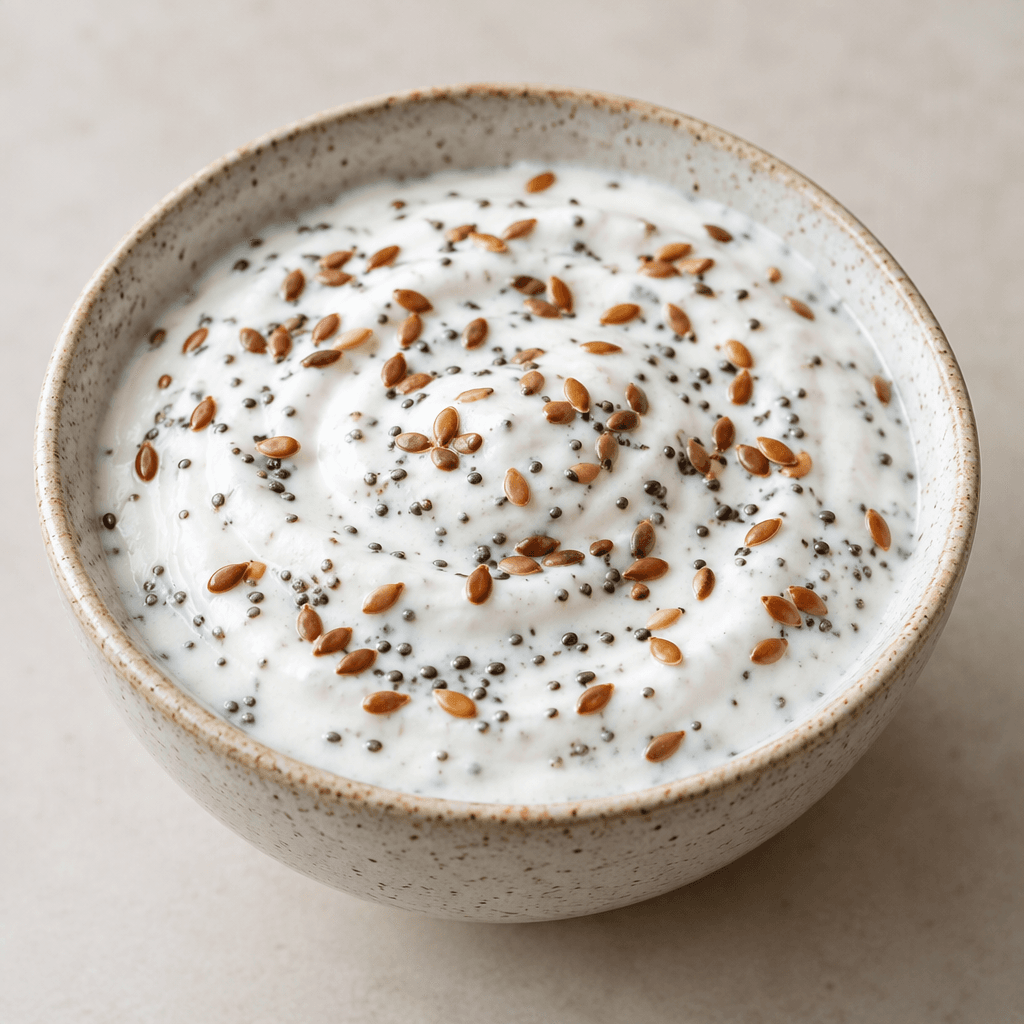
Probiotic yogurt with chia and flax Calories
Probiotic yogurt blend with fiber and omega-3 fats
CALORIES
GI
POTASSIUM
FIBER
Quick answer
1 cup (medium) of Probiotic yogurt with chia and flax (170 g) has 184 calories. That works out to 108 calories per 100 g. It contains 13.9 g of carbs, 8.7 g of protein, 10 g of fat and 5.3 g of fiber. Its 265.2 mg of Phosphorus covers 38% of the Daily Value. Its glycemic index is 28 (low), so it raises blood sugar slowly.
What is Probiotic yogurt with chia and flax?
Probiotic yogurt with chia and flax is a simple yogurt preparation rather than a dish tied to one particular cuisine. It combines cultured yogurt with chia and flax seeds, which add a mild, nutty note and a little texture; chia softens as it sits.
It works well for breakfast or a snack, served with fruit, oats or a handful of nuts. The yogurt provides protein, while the seeds contribute fibre and omega-3 fats; there are 3.1 g of fibre per 100 g. For a less sweet bowl, start with plain yogurt and add fresh fruit to taste.
Probiotic yogurt with chia and flax Nutrition Facts
Selected: 100 g
108
KCAL / 100G
Carbs
8.2g
· 3% DV
Protein
5.1g
· 10% DV
Fat
5.9g
· 8% DV
Fiber
3.1g
· 11% DV
DV is the share of the daily value covered, on a 2,000 kcal reference diet.
Calories come from: Carbs 31% · Protein 19% · Fat 50%
Probiotic yogurt with chia and flax Vitamins & Minerals
Vitamins
B12
0.42µg · 18% DV
B2
0.19mg · 15% DV
Biotin
2.6µg · 9% DV
B5
0.42mg · 8% DV
Minerals
Phosphorus
156mg · 22% DV
Calcium
170mg · 17% DV
Magnesium
48mg · 11% DV
Zinc
1mg · 9% DV
How Nutritious Is Probiotic yogurt with chia and flax?
Nutrient density
High
How many vitamins, minerals and how much fiber this food carries per calorie. A high score means a lot of nutrition for few calories.
Satiety score
Medium
An EatBetter score computed from fiber, protein and calorie density. A high score means staying full longer on the same calories.
Both scores are calculated per 100 g and do not change with the selected portion. The satiety score is EatBetter's own calculation, not a clinical measure.
Probiotic yogurt with chia and flax Glycemic Index
GLYCEMIC INDEX
GLYCEMIC LOAD
Accounts for portion size — a more realistic measure than GI alone.
How to Burn Off Probiotic yogurt with chia and flax
To burn the 108 calories in 100 g:
🚶
Walking (5 km/h)
🏃
Running (8 km/h)
🚴
Cycling
🏊
Swimming
Times are calculated with the MET equation for a 70 kg adult. Actual burn varies with your weight, age and pace.
Is Probiotic yogurt with chia and flax Processed?
NOVA 3
Processed
1. Unprocessed
2. Minimally Processed
3. Processed
4. Ultra-Processed
NOVA classifies foods into 4 groups by industrial processing. NOVA 1 (unprocessed) is the healthiest.
Does Probiotic yogurt with chia and flax Contain Allergens?
Contains these allergens:
Which Diets Is Probiotic yogurt with chia and flax Good For?
Vegan
— Not suitable
Vegetarian
✓ Suitable
Gluten-Free
✓ Suitable
Dairy-Free
— Not suitable
Mediterranean
✓ Suitable
Paleo
— Not suitable
Whole30
— Not suitable
DASH
— Not suitable
Keto
— Not suitable
Low FODMAP
— Not suitable
Probiotic yogurt with chia and flax Fat Profile
SATURATED
2.1g
MONOUNSATURATED
1.45g
POLYUNSATURATED
3.02g
Omega 6:3 ratio 1.2:1
Below the ideal 4:1 — a good omega balance.
Compare Probiotic yogurt with chia and flax
Foods Similar to Probiotic yogurt with chia and flax
Frequently Asked Questions About Probiotic yogurt with chia and flax
Is probiotic yogurt with chia and flax good for gut health?
It can support gut health: live yogurt cultures contribute beneficial microbes, while chia and flax provide fiber that helps support regular bowel movements. It is a food, not a treatment for digestive conditions.
How do you make probiotic yogurt with chia and flax?
Stir chia and flax into plain yogurt that contains live cultures. Keep the mixture cold rather than heating it, which can damage live cultures. Add fruit or nuts when serving if you want extra flavor and texture.
Does probiotic yogurt with chia and flax help with weight loss?
Not on its own. Its fiber may help you feel satisfied, so it can work as a filling snack or meal component. It is more useful when it replaces a less filling choice than when added on top of your usual food.
Should the flax in probiotic yogurt with chia and flax be ground?
Ground flax is generally easier to digest, making its nutrients more accessible than those in whole seeds. Whole flax still adds texture and fiber, but some seeds may pass through without being fully broken down.
Does chia make probiotic yogurt with chia and flax thicker?
Yes. Chia absorbs moisture and forms a gel, so the yogurt thickens as it sits. Stir it again before eating; if the texture becomes too dense, loosen it with a little plain yogurt.
What toppings go well with probiotic yogurt with chia and flax?
Fresh berries, sliced banana, nuts, or oats pair well with its tangy flavor and seed-speckled texture. Choose unsweetened toppings if you want to keep the bowl less sweet, since flavored additions can bring extra sugar.
Can you eat probiotic yogurt with chia and flax every day?
Yes, most people can include it regularly as part of meals or snacks. Increase seed-rich foods gradually if you are not used to much fiber, and drink enough fluids to help avoid discomfort.
Can you freeze probiotic yogurt with chia and flax?
You can freeze it, but thawing may make the yogurt grainy or watery and change the seeds’ texture. Stir it after thawing and use it in a smoothie if you do not enjoy it as a bowl.
Is probiotic yogurt with chia and flax a good pre-workout snack?
It can work before exercise if you tolerate dairy and seeds well. Its fiber and thicker texture may feel heavy just before a workout, so allow time to digest or choose a smaller serving.
Can you heat probiotic yogurt with chia and flax?
It is better served cold or at room temperature if you want to preserve live yogurt cultures. Heating can reduce their viability; add the yogurt to a warm dish after it has cooled rather than cooking it.
Have another question about Probiotic yogurt with chia and flax?
Ask the AI nutrition coach — calories, portions, alternatives and more, answered in seconds in the app.

Scan calories with your camera
Instant AI nutrition analysis

Nutrition data compiled from USDA FoodData Central and scientific sources.