

Ready & Packaged Foods
All →Vegetables & Legumes
All →Desserts & Confectionery
All →Meat & Protein
All →Grains & Bakery
All →Beverages
All →Milk & Dairy
All →

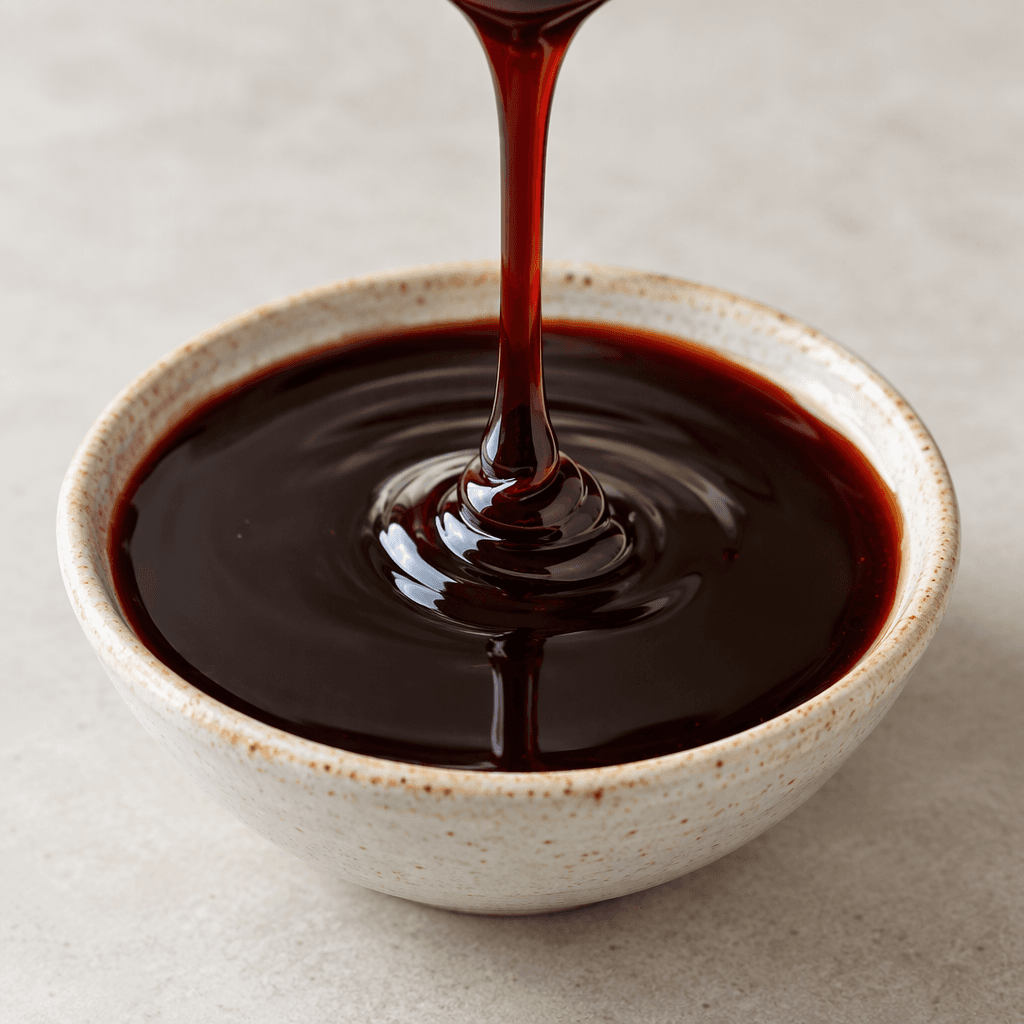
Pomegranate Molasses Sauce Calories
Intense pomegranate flavor, sweet-tart sauce, antioxidant source
In season: Autumn · Winter
CALORIES
GI
POTASSIUM
FIBER
Quick answer
1 tablespoon (medium) of Pomegranate Molasses Sauce (20 g) has 52 calories. That works out to 260 calories per 100 g. It contains 13.2 g of carbs, 0.2 g of protein, 0 g of fat and 0.3 g of fiber. Its glycemic index is 55 (medium), so it raises blood sugar at a moderate pace.
What is Pomegranate Molasses Sauce?
Pomegranate molasses sauce is a thick, glossy condiment made by concentrating pomegranate juice. Compared with plain pomegranate molasses, some versions are sweeter or include other ingredients, so the exact flavour and consistency vary by product. Its intense sweet-tart taste means a little can go a long way.
In Turkey and across the eastern Mediterranean, it is commonly drizzled over salads, grain dishes and grilled vegetables, or stirred into marinades and dips. It is largely carbohydrate, with very little protein or fat, so it works best as a flavouring rather than a main ingredient. Try it with olive oil and lemon as a salad dressing, or add a small splash to lentils or roasted vegetables.
Pomegranate Molasses Sauce Nutrition Facts
Selected: 100 g
260
KCAL / 100G
Carbs
66g
· 24% DV
Protein
1g
· 2% DV
Fat
0.2g
· 0% DV
Fiber
1.5g
· 5% DV
DV is the share of the daily value covered, on a 2,000 kcal reference diet.
Calories come from: Carbs 98% · Protein 1% · Fat 1%
Pomegranate Molasses Sauce Vitamins & Minerals
Vitamins
Vitamin K
7µg · 6% DV
Vitamin C
4mg · 4% DV
B1
0.03mg · 3% DV
B6
0.05mg · 3% DV
Minerals
Potassium ⭐
120mg · 4% DV
Magnesium
8mg · 2% DV
Phosphorus
15mg · 2% DV
Calcium
10mg · 1% DV
How Nutritious Is Pomegranate Molasses Sauce?
Nutrient density
Low
How many vitamins, minerals and how much fiber this food carries per calorie. A high score means a lot of nutrition for few calories.
Satiety score
Low
An EatBetter score computed from fiber, protein and calorie density. A high score means staying full longer on the same calories.
Both scores are calculated per 100 g and do not change with the selected portion. The satiety score is EatBetter's own calculation, not a clinical measure.
Pomegranate Molasses Sauce Glycemic Index
GLYCEMIC INDEX
GLYCEMIC LOAD
Accounts for portion size — a more realistic measure than GI alone.
How to Burn Off Pomegranate Molasses Sauce
To burn the 260 calories in 100 g:
🚶
Walking (5 km/h)
🏃
Running (8 km/h)
🚴
Cycling
🏊
Swimming
Times are calculated with the MET equation for a 70 kg adult. Actual burn varies with your weight, age and pace.
Is Pomegranate Molasses Sauce Processed?
NOVA 3
Processed
1. Unprocessed
2. Minimally Processed
3. Processed
4. Ultra-Processed
NOVA classifies foods into 4 groups by industrial processing. NOVA 1 (unprocessed) is the healthiest.
Does Pomegranate Molasses Sauce Contain Allergens?
No known major allergens
Which Diets Is Pomegranate Molasses Sauce Good For?
Vegan
✓ Suitable
Vegetarian
✓ Suitable
Gluten-Free
✓ Suitable
Dairy-Free
— Not suitable
Mediterranean
✓ Suitable
Paleo
— Not suitable
Whole30
— Not suitable
DASH
— Not suitable
Keto
— Not suitable
Low FODMAP
— Not suitable
Pomegranate Molasses Sauce Fat Profile
SATURATED
0.02g
MONOUNSATURATED
0.03g
POLYUNSATURATED
0.03g
Omega 6:3 ratio 2:1
Below the ideal 4:1 — a good omega balance.
Compare Pomegranate Molasses Sauce
Foods Similar to Pomegranate Molasses Sauce
Frequently Asked Questions About Pomegranate Molasses Sauce
What is pomegranate molasses sauce?
Pomegranate molasses sauce is a tangy-sweet, pourable condiment made with pomegranate flavor. It is often thinner and sweeter than traditional pomegranate molasses, and recipes or commercial products may include other ingredients, so the exact taste and texture vary.
How do you use pomegranate molasses sauce?
Use pomegranate molasses sauce in salad dressings, marinades, dips, and grain dishes. Its sweet-tart flavor pairs especially well with olive oil, herbs, roasted vegetables, and lentils; start with a small amount so it does not overpower the other flavors.
What is the difference between pomegranate molasses sauce and pomegranate molasses?
Pomegranate molasses sauce is often a sweeter, thinner condiment, while traditional pomegranate molasses is typically made by reducing pomegranate juice into a concentrated syrup. Products vary, so compare their ingredients and taste before substituting one for the other.
Can you make pomegranate molasses sauce at home?
Yes, you can make pomegranate molasses sauce by simmering pomegranate juice until it thickens into a syrup. Stir regularly and use low heat to prevent scorching; add a little sweetener only if you want a sweeter sauce, then cool it before storing.
Can pomegranate molasses sauce be used as a marinade?
Yes, pomegranate molasses sauce works in marinades for chicken, meat, or vegetables. Combine it with oil, garlic, and spices, but cook marinated food carefully because the sauce's sugars can brown quickly and burn over high heat.
How should you store pomegranate molasses sauce after opening?
Keep pomegranate molasses sauce tightly sealed in a cool, dark place after opening. Whether it needs refrigeration varies by product, so follow its storage directions; use a clean spoon and wipe the bottle rim to help keep the sauce in good condition.
What can you use instead of pomegranate molasses sauce?
Pomegranate molasses can replace pomegranate molasses sauce, but it may taste more concentrated and less sweet, so use less at first. If you have neither, try lemon juice with a little honey or another sweetener to approximate the sweet-tart balance.
What dishes go well with pomegranate molasses sauce?
Pomegranate molasses sauce goes well with salads, roasted vegetables, lentils, grains, and grilled meats. It is also a flavorful addition to dips and dressings, especially with ingredients such as tahini, garlic, parsley, or olive oil.
Is pomegranate molasses sauce healthy?
Pomegranate molasses sauce can add bold flavor, but its sweetness and ingredients vary between products. Some versions contain added sugar, so use it as a condiment rather than pouring it freely over meals, especially if you are trying to limit sweet foods.
How can you tell if pomegranate molasses sauce has gone bad?
Discard pomegranate molasses sauce if you see mold or notice an unusual smell or appearance. Do not scrape off mold and use the rest; throw the product away, then check that the bottle was sealed and stored according to its directions.
Have another question about Pomegranate Molasses Sauce?
Ask the AI nutrition coach — calories, portions, alternatives and more, answered in seconds in the app.

Scan calories with your camera
Instant AI nutrition analysis

Nutrition data compiled from USDA FoodData Central and scientific sources.