

Ready & Packaged Foods
All →Vegetables & Legumes
All →Desserts & Confectionery
All →Meat & Protein
All →Grains & Bakery
All →Beverages
All →Milk & Dairy
All →

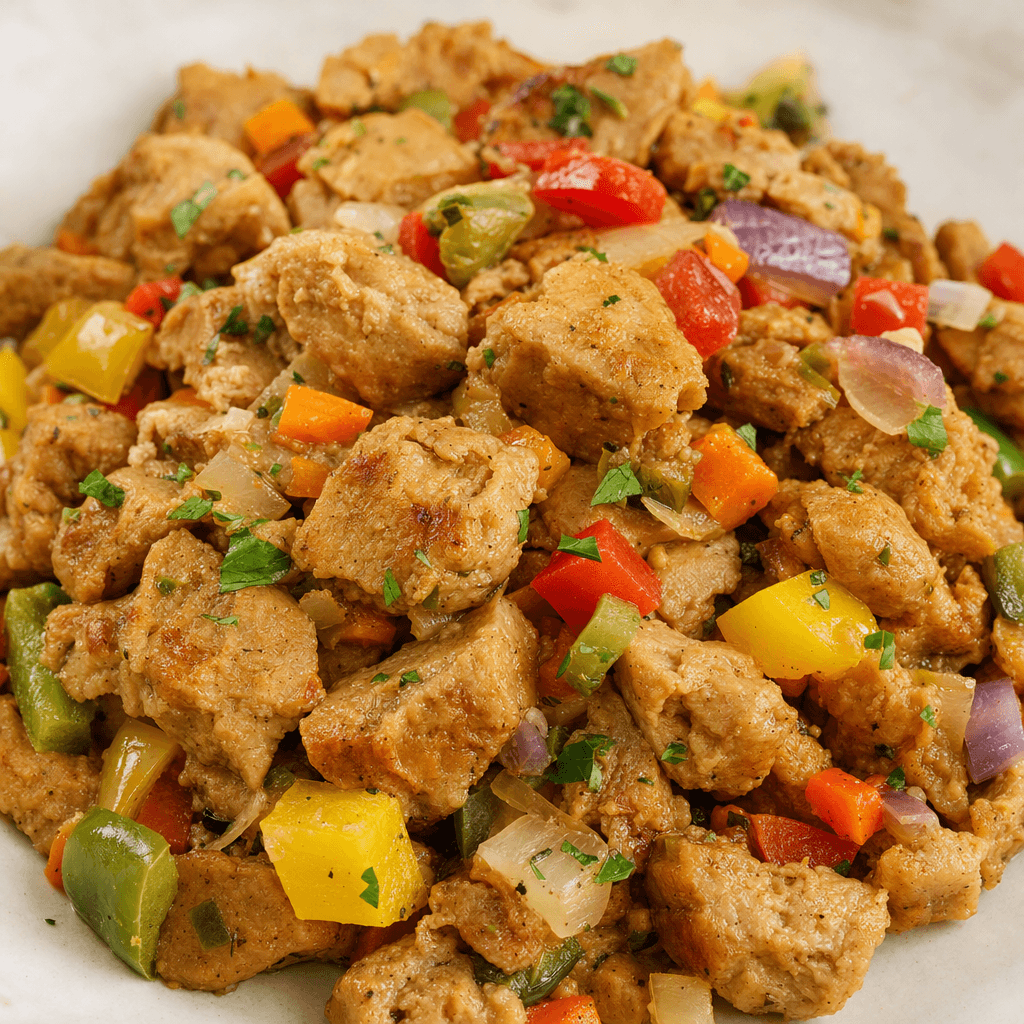
Plantero plant-based protein vegetable mix Calories
High-protein plant-based vegetable mix, vegan, fiber-rich
In season: Spring · Summer · Autumn · Winter
CALORIES · 100 G
GI
POTASSIUM · 100 G
FIBER · 100 G
Quick answer
100 g of Plantero plant-based protein vegetable mix has 120 calories. It contains 8 g of carbs, 15 g of protein, 2.5 g of fat and 5 g of fiber. Its 32 µg of Vitamin K covers 27% of the Daily Value. Its glycemic index is 30 (low), so it raises blood sugar slowly.
Plantero plant-based protein vegetable mix Nutrition Facts
Selected: 100 g
120
KCAL / 100G
Carbs
8g
· 3% DV
Protein
15g
· 30% DV
Fat
2.5g
· 3% DV
Fiber
5g
· 18% DV
DV is the share of the daily value covered, on a 2,000 kcal reference diet.
Calories come from: Carbs 28% · Protein 52% · Fat 20%
Plantero plant-based protein vegetable mix nutrition facts table · 100 g
| Nutrient | Amount | % DV |
|---|---|---|
| Calories | 120 kcal | |
| Total fat | 2.5 g | 3% |
| Saturated fat | 0.3 g | 2% |
| Trans fat | 0 g | |
| Sodium | 320 mg | 14% |
| Total carbohydrate | 8 g | 3% |
| Fiber | 5 g | 18% |
| Protein | 15 g | 30% |
Calories: Calories measure energy. Average daily need is 2,000 kcal. Excess calories are stored as fat, too few cause weight loss.
Carbs: Your body's primary energy source. The brain runs exclusively on carbs. Daily need: 275g.
Protein: Essential for muscle repair and cell growth. Daily need: 50g. Keeps you full and boosts metabolism.
Fat: Needed for hormone production and vitamin absorption. Daily need: 78g. Limit saturated fats, choose unsaturated.
Fiber: Critical for digestive health and satiety. Daily need: 28g. Stabilizes blood sugar, lowers cholesterol.

Log this food in EatBetter
100,000+ people use it
- Get your daily calorie target
- Snap your meal, log it in seconds
- See every vitamin and mineral

📸 Scan the code to get the app free.

How Many Calories in 1 Serving of Plantero plant-based protein vegetable mix?
| Serving | Amount | Calories |
|---|---|---|
| 1 serving (medium) | 100 g | 120 kcal |
| 1 serving (small) | 50 g | 60 kcal |
| 1 piece (small) | 80 g | 96 kcal |
| 100 g | 100 g | 120 kcal |
| 1 cup (medium) | 120 g | 144 kcal |
| 1 piece (medium) | 120 g | 144 kcal |
| 1 serving (large) | 150 g | 180 kcal |
| 1 piece (large) | 160 g | 192 kcal |
| 2 serving (double) | 200 g | 240 kcal |
| 1 pack (jumbo) | 250 g | 300 kcal |
Calculated from 120 calories per 100 g.
Frequently Asked Questions About Plantero plant-based protein vegetable mix
What is Plantero plant-based protein vegetable mix?
Plantero plant-based protein vegetable mix is a prepared food combining plant protein and vegetables. It can be served on its own or incorporated into a meal; its exact ingredients and preparation method depend on the product packaging.
How do you cook Plantero plant-based protein vegetable mix?
Follow the preparation directions on the Plantero plant-based protein vegetable mix package, since the product may require preparation before eating. Don’t assume it is ready to eat or use a particular cooking time unless the package gives that instruction.
What can you make with Plantero plant-based protein vegetable mix?
Plantero plant-based protein vegetable mix can be added to soups, grain bowls, pasta dishes, or vegetable sautés. Add it in a way that suits the package directions, and adjust the other ingredients to get the texture and flavor you want.
Can Plantero plant-based protein vegetable mix replace meat in recipes?
Yes, Plantero plant-based protein vegetable mix can replace meat in some recipes, but it won’t necessarily match meat’s flavor or texture. Try it in a dish where a mixed filling or protein component works, then adjust the seasoning and consistency.
What does Plantero plant-based protein vegetable mix taste like?
Plantero plant-based protein vegetable mix tastes of its particular plant protein and vegetables, but the exact ingredients are not specified here. The flavor may therefore vary; try it in a simply seasoned dish first so you can judge what to pair it with.
Is Plantero plant-based protein vegetable mix ready to eat?
Whether Plantero plant-based protein vegetable mix is ready to eat depends on its package instructions. If the directions call for cooking or another preparation step, follow them rather than treating the mix as a ready-to-eat food.
How much protein does Plantero plant-based protein vegetable mix provide?
Plantero plant-based protein vegetable mix provides 15 grams of protein per 100 grams. A typical 100-gram serving therefore provides 15 grams; how it fits into a meal depends on what else you eat that day.
How should you store Plantero plant-based protein vegetable mix after opening?
Store Plantero plant-based protein vegetable mix after opening according to the package directions and close the pack securely. The correct storage conditions and usable time can depend on the product’s form, so don’t assume a shelf life that isn’t stated.
Can you freeze Plantero plant-based protein vegetable mix?
Plantero plant-based protein vegetable mix may be freezable, but its form and package guidance matter. Freezing can change the texture, so check whether the instructions allow it and portion the mix before freezing if you expect to use it later.
Can you meal-prep with Plantero plant-based protein vegetable mix?
Yes, Plantero plant-based protein vegetable mix can be included in meal prep when prepared and stored as directed. Add it to meals you plan to refrigerate, and follow the package’s storage guidance rather than assuming the finished dish keeps for a particular number of days.
Plantero plant-based protein vegetable mix Vitamins & Minerals
Vitamins
Vitamin K
32µg · 27% DV
Vitamin C
18mg · 20% DV
B1
0.15mg · 13% DV
B6
0.18mg · 11% DV
Minerals
Manganese
0.6mg · 26% DV
Copper
0.18mg · 20% DV
Phosphorus
110mg · 16% DV
Sodium
320mg · 14% DV
Potassium ⭐
340mg · 10% DV
Plantero plant-based protein vegetable mix Glycemic Index
GLYCEMIC INDEX
GLYCEMIC LOAD
Accounts for portion size — a more realistic measure than GI alone.
How to Burn Off Plantero plant-based protein vegetable mix
To burn the 120 calories in 100 g:
🚶
Walking (5 km/h)
🏃
Running (8 km/h)
🚴
Cycling
🏊
Swimming
Times are calculated with the MET equation for a 70 kg adult. Actual burn varies with your weight, age and pace.
What is Plantero plant-based protein vegetable mix?
Plantero plant-based protein vegetable mix is a packaged blend of plant protein and vegetables, intended to add both to a meal. It is a versatile ingredient rather than a standalone dish; follow the pack directions for preparation, since the exact use depends on the product.
Its savoury profile can work in soups, grain bowls or vegetable dishes, and it can be served as part of a quick lunch or dinner. Per 100 g, it provides 15 g of protein and 5 g of fibre, making it a useful option for plant-based meals. Pair it with fresh vegetables or whole grains for a more complete plate.
How Nutritious Is Plantero plant-based protein vegetable mix?
Nutrient density
High
How many vitamins, minerals and how much fiber this food carries per calorie. A high score means a lot of nutrition for few calories.
Satiety score
High
An EatBetter score computed from fiber, protein and calorie density. A high score means staying full longer on the same calories.
Both scores are calculated per 100 g and do not change with the selected portion. The satiety score is EatBetter's own calculation, not a clinical measure.
Is Plantero plant-based protein vegetable mix Processed?
NOVA 3
Processed
1. Unprocessed
2. Minimally Processed
3. Processed
4. Ultra-Processed
NOVA classifies foods into 4 groups by industrial processing. NOVA 1 (unprocessed) is the healthiest.
Does Plantero plant-based protein vegetable mix Contain Allergens?
Contains these allergens:
Which Diets Is Plantero plant-based protein vegetable mix Good For?
Vegan
✓ Suitable
Vegetarian
✓ Suitable
Gluten-Free
✓ Suitable
Dairy-Free
— Not suitable
Mediterranean
✓ Suitable
Paleo
— Not suitable
Whole30
— Not suitable
DASH
— Not suitable
Keto
— Not suitable
Low FODMAP
— Not suitable
Plantero plant-based protein vegetable mix Fat Profile
SATURATED
0.3g
MONOUNSATURATED
0.7g
POLYUNSATURATED
1.1g
Omega 6:3 ratio 2.9:1
Below the ideal 4:1 — a good omega balance.
Compare Plantero plant-based protein vegetable mix
Foods Similar to Plantero plant-based protein vegetable mix
Have another question about Plantero plant-based protein vegetable mix?
Ask the AI nutrition coach — calories, portions, alternatives and more, answered in seconds in the app.

Scan calories with your camera
Instant AI nutrition analysis

Nutrition data compiled from USDA FoodData Central and scientific sources.