

Ready & Packaged Foods
All →Vegetables & Legumes
All →Desserts & Confectionery
All →Meat & Protein
All →Grains & Bakery
All →Beverages
All →Milk & Dairy
All →

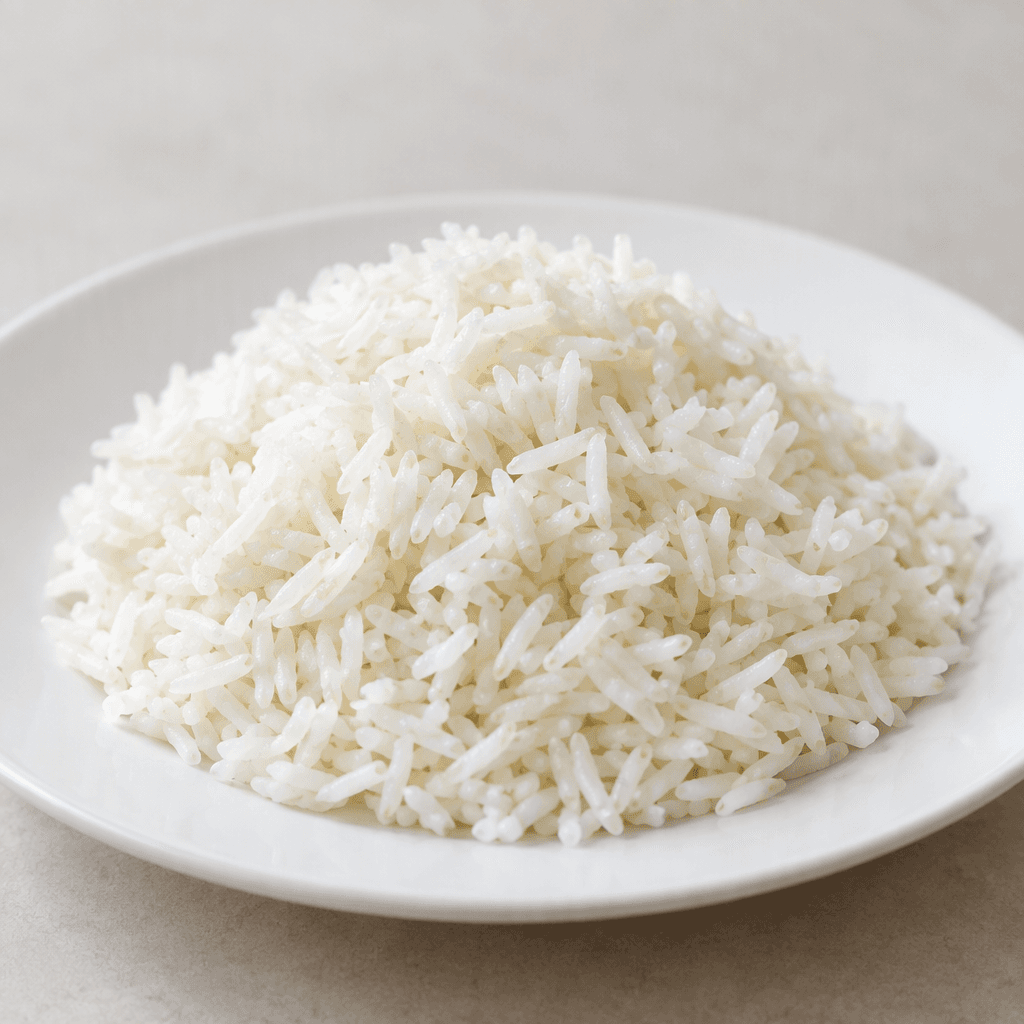
Rice Pilaf (low oil) Calories
Low oil, light pilaf, reduced fat, staple carbohydrate
In season: Spring · Summer · Autumn · Winter
CALORIES
GI
POTASSIUM
FIBER
Quick answer
1 cup (medium) of Rice Pilaf (low oil) (200 g) has 260 calories. That works out to 130 calories per 100 g. It contains 55 g of carbs, 5 g of protein, 2.4 g of fat and 1 g of fiber. Its 0.8 mg of Manganese covers 35% of the Daily Value. Its glycemic index is 65 (medium), so it raises blood sugar at a moderate pace.
What is Rice Pilaf (low oil)?
Rice Pilaf (low oil) is a simple rice side dish, made by briefly toasting rice in a little oil before cooking it with water or stock until the grains are tender and separate. Pilaf has many regional traditions; this light version reflects the everyday Turkish style of serving rice with a meal.
Its soft, fluffy texture and mild flavour make it a natural partner for grilled meat, chicken, beans or vegetables. It is mainly a source of starchy carbohydrate, with little fat in this preparation and relatively little protein or fibre, so it works best as one part of a varied plate rather than the whole meal. Add vegetables or beans alongside, or serve with yogurt, for a more satisfying combination.
Rice Pilaf (low oil) Nutrition Facts
Selected: 100 g
130
KCAL / 100G
Carbs
27.5g
· 10% DV
Protein
2.5g
· 5% DV
Fat
1.2g
· 2% DV
Fiber
0.5g
· 2% DV
DV is the share of the daily value covered, on a 2,000 kcal reference diet.
Calories come from: Carbs 84% · Protein 8% · Fat 8%

Log this food in EatBetter
100,000+ people use it
- Get your daily calorie target
- Snap your meal, log it in seconds
- See every vitamin and mineral

📸 Scan the code to get the app free.

Rice Pilaf (low oil) Vitamins & Minerals
Vitamins
B6
0.05mg · 3% DV
B5
0.13mg · 3% DV
B1
0.03mg · 3% DV
B3
0.4mg · 3% DV
Minerals
Selenium
2.5µg · 5% DV
Phosphorus
30mg · 4% DV
Potassium ⭐
26mg · 1% DV
Manganese
0mg · 0% DV
Copper
0mg · 0% DV
How Nutritious Is Rice Pilaf (low oil)?
Nutrient density
Low
How many vitamins, minerals and how much fiber this food carries per calorie. A high score means a lot of nutrition for few calories.
Satiety score
Low
An EatBetter score computed from fiber, protein and calorie density. A high score means staying full longer on the same calories.
Both scores are calculated per 100 g and do not change with the selected portion. The satiety score is EatBetter's own calculation, not a clinical measure.
Rice Pilaf (low oil) Glycemic Index
GLYCEMIC INDEX
GLYCEMIC LOAD
Accounts for portion size — a more realistic measure than GI alone.
How to Burn Off Rice Pilaf (low oil)
To burn the 130 calories in 100 g:
🚶
Walking (5 km/h)
🏃
Running (8 km/h)
🚴
Cycling
🏊
Swimming
Times are calculated with the MET equation for a 70 kg adult. Actual burn varies with your weight, age and pace.
Is Rice Pilaf (low oil) Processed?
NOVA 2
Minimally Processed
1. Unprocessed
2. Minimally Processed
3. Processed
4. Ultra-Processed
NOVA classifies foods into 4 groups by industrial processing. NOVA 1 (unprocessed) is the healthiest.
Does Rice Pilaf (low oil) Contain Allergens?
No known major allergens
Which Diets Is Rice Pilaf (low oil) Good For?
Vegan
✓ Suitable
Vegetarian
✓ Suitable
Gluten-Free
✓ Suitable
Dairy-Free
— Not suitable
Mediterranean
✓ Suitable
Paleo
— Not suitable
Whole30
— Not suitable
DASH
— Not suitable
Keto
— Not suitable
Low FODMAP
— Not suitable
Rice Pilaf (low oil) Fat Profile
SATURATED
0.25g
MONOUNSATURATED
0.35g
POLYUNSATURATED
0.36g
Omega 6:3 ratio 32:1
Above the ideal 4:1 (32:1).
Compare Rice Pilaf (low oil)
Foods Similar to Rice Pilaf (low oil)
Frequently Asked Questions About Rice Pilaf (low oil)
What is the difference between low-oil rice pilaf and plain cooked rice?
Low-oil rice pilaf is cooked using a pilaf method: the grains are briefly toasted, then simmered in measured liquid until tender. Plain rice is usually boiled or steamed without that preliminary toasting step.
Which rice works best for low-oil rice pilaf?
Long-grain rice, such as basmati, usually gives low-oil rice pilaf distinct, fluffy grains. Medium-grain varieties make a softer, slightly stickier pilaf, so choose based on the texture you want.
How much water should I use for low-oil rice pilaf?
A common starting point for low-oil rice pilaf is about one and a half parts water to one part long-grain rice by volume. The exact amount changes with the rice variety and whether it has been soaked.
Should I rinse rice before making low-oil rice pilaf?
Yes, rinsing rice before making low-oil rice pilaf removes loose surface starch, which can make the cooked grains stick together. Rinse until the water is mostly clear, then drain the rice well before toasting it.
Why does low-oil rice pilaf turn mushy?
Low-oil rice pilaf often turns mushy when it has too much liquid, is stirred during simmering, or cooks for too long. Measure the liquid, keep the lid on, and let the pilaf rest before gently fluffing it.
Can I make low-oil rice pilaf with broth instead of water?
Yes, broth works in low-oil rice pilaf and adds savory flavor without requiring extra oil. Use unsalted or lower-sodium broth if you want to control the salt, since broth can already be quite salty.
How long does low-oil rice pilaf keep in the fridge?
Low-oil rice pilaf keeps for up to three days in a covered container in the refrigerator. Cool it promptly rather than leaving cooked rice at room temperature, since bacteria can grow in cooked rice.
Can low-oil rice pilaf be frozen?
Yes, freeze low-oil rice pilaf in airtight, meal-sized portions once it has cooled promptly. Thaw it in the refrigerator or reheat it from frozen until steaming hot; the grains may be softer than freshly cooked pilaf.
How do you reheat low-oil rice pilaf without drying it out?
Add a small splash of water to low-oil rice pilaf before reheating it, then cover the pan or microwave-safe dish to trap steam. Heat until steaming throughout, and reheat only the portion you plan to eat.
What goes well with low-oil rice pilaf?
Low-oil rice pilaf pairs well with grilled vegetables, beans, roasted chicken, or saucy stews. Its mild flavor also works alongside dishes with spices or a tangy sauce, making it a versatile side.
Have another question about Rice Pilaf (low oil)?
Ask the AI nutrition coach — calories, portions, alternatives and more, answered in seconds in the app.

Scan calories with your camera
Instant AI nutrition analysis

Nutrition data compiled from USDA FoodData Central and scientific sources.