

Ready & Packaged Foods
All →Vegetables & Legumes
All →Desserts & Confectionery
All →Meat & Protein
All →Grains & Bakery
All →Beverages
All →Milk & Dairy
All →

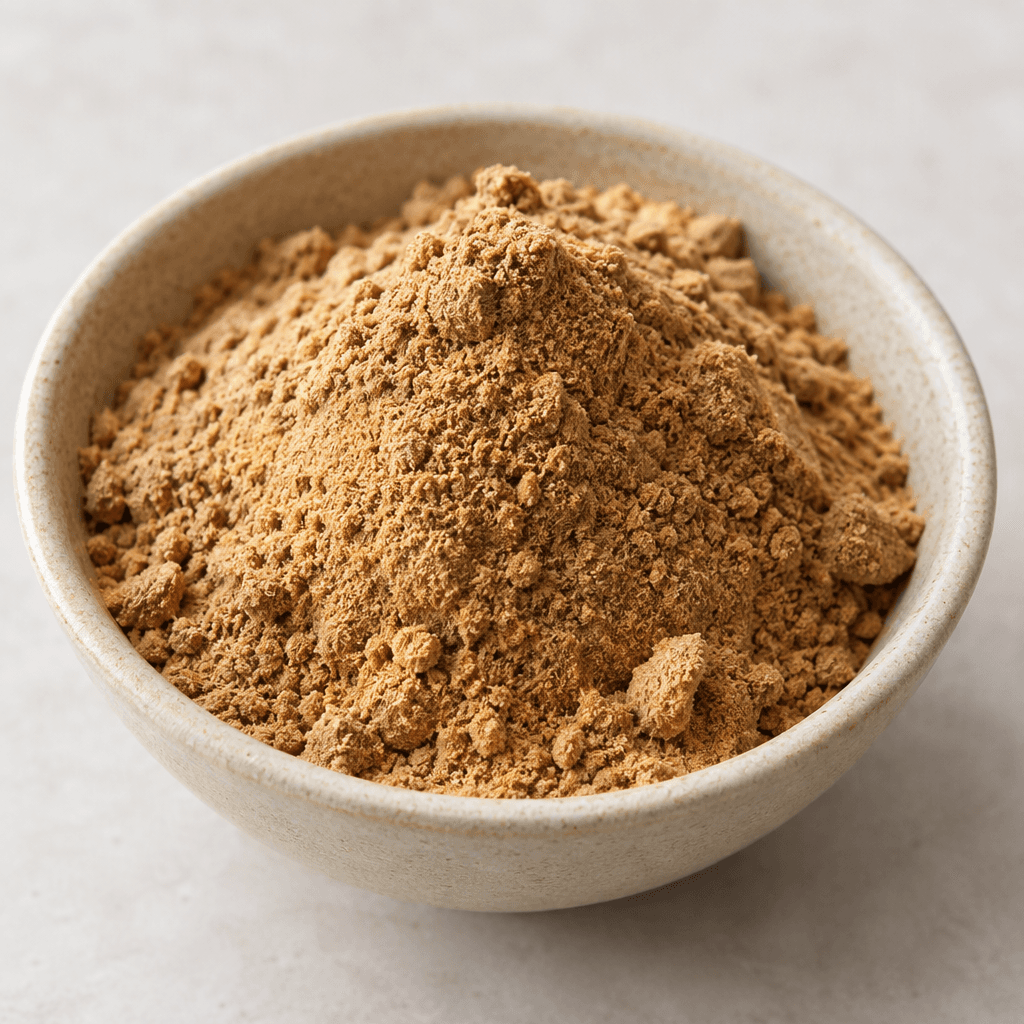
Peanut butter powder Calories
Peanut butter powder
In season: Spring · Summer · Autumn · Winter
CALORIES
GI
POTASSIUM
FIBER
Quick answer
2 tablespoon (medium) of Peanut butter powder (12 g) has 45 calories. That works out to 375 calories per 100 g. It contains 3.4 g of carbs, 5.8 g of protein, 1.4 g of fat and 0.7 g of fiber. Its 0.2 mg of Copper covers 17% of the Daily Value. Its glycemic index is 20 (low), so it raises blood sugar slowly.
What is Peanut butter powder?
Peanut butter powder is made by pressing much of the oil from roasted peanuts, then grinding the remaining peanut solids into a fine, dry powder. It has a concentrated roasted-peanut flavour and a slightly grainy feel. Stir it with water to make a spreadable paste, or use it dry in recipes; the consistency is easy to adjust to taste.
It’s commonly added to smoothies, porridge, yoghurt and baking, or mixed into a quick spread. Compared with regular peanut butter, it is protein-rich and contains less fat, making it useful when you want peanut flavour without as much richness. Start with a little water and mix gradually, or pair it with banana or plain yoghurt for a simple snack.
Peanut butter powder Nutrition Facts
Selected: 100 g
375
KCAL / 100G
Carbs
28g
· 10% DV
Protein
48g
· 96% DV
Fat
12g
· 15% DV
Fiber
6g
· 21% DV
DV is the share of the daily value covered, on a 2,000 kcal reference diet.
Calories come from: Carbs 27% · Protein 47% · Fat 26%
Peanut butter powder Vitamins & Minerals
Vitamins
B3
17mg · 106% DV
Biotin
30µg · 100% DV
Vitamin E
7mg · 47% DV
B1
0.5mg · 42% DV
Minerals
Copper
1mg · 111% DV
Manganese
2mg · 87% DV
Phosphorus
480mg · 69% DV
Magnesium
180mg · 43% DV
How Nutritious Is Peanut butter powder?
Nutrient density
High
How many vitamins, minerals and how much fiber this food carries per calorie. A high score means a lot of nutrition for few calories.
Satiety score
High
An EatBetter score computed from fiber, protein and calorie density. A high score means staying full longer on the same calories.
Both scores are calculated per 100 g and do not change with the selected portion. The satiety score is EatBetter's own calculation, not a clinical measure.
Peanut butter powder Glycemic Index
GLYCEMIC INDEX
GLYCEMIC LOAD
Accounts for portion size — a more realistic measure than GI alone.
How to Burn Off Peanut butter powder
To burn the 375 calories in 100 g:
🚶
Walking (5 km/h)
🏃
Running (8 km/h)
🚴
Cycling
🏊
Swimming
Times are calculated with the MET equation for a 70 kg adult. Actual burn varies with your weight, age and pace.
Is Peanut butter powder Processed?
NOVA 3
Processed
1. Unprocessed
2. Minimally Processed
3. Processed
4. Ultra-Processed
NOVA classifies foods into 4 groups by industrial processing. NOVA 1 (unprocessed) is the healthiest.
Does Peanut butter powder Contain Allergens?
Contains these allergens:
Which Diets Is Peanut butter powder Good For?
Vegan
✓ Suitable
Vegetarian
✓ Suitable
Gluten-Free
✓ Suitable
Dairy-Free
— Not suitable
Mediterranean
✓ Suitable
Paleo
✓ Suitable
Whole30
— Not suitable
DASH
— Not suitable
Keto
— Not suitable
Low FODMAP
— Not suitable
Peanut butter powder Fat Profile
SATURATED
2.5g
MONOUNSATURATED
6.5g
POLYUNSATURATED
4.6g
Omega 6:3 ratio 90:1
Above the ideal 4:1 (90:1).
Compare Peanut butter powder
Foods Similar to Peanut butter powder
Frequently Asked Questions About Peanut butter powder
What is peanut butter powder made from?
Peanut butter powder is usually made by pressing much of the oil out of roasted peanuts, then grinding the remaining peanut solids into a powder. Ingredients vary by brand, so some products may also contain salt, sugar, or other additions.
How do you turn peanut butter powder into peanut butter?
Stir water into peanut butter powder a little at a time until it forms a smooth paste. Add more water for a thinner consistency or less for a thicker one; the amount needed varies between products and according to your preferred texture.
Does peanut butter powder taste like regular peanut butter?
Peanut butter powder has a recognizable roasted-peanut flavor, but it is less rich and creamy than regular peanut butter because much of the oil has been removed. Mixing it with water makes a paste, though the texture still will not be identical.
Can you use peanut butter powder in smoothies?
Yes, peanut butter powder blends easily into smoothies and adds peanut flavor without first making a paste. Blend it with the other ingredients, or mix it with a little liquid beforehand if your blender tends to leave dry clumps.
Can you bake with peanut butter powder?
Yes, peanut butter powder works in baked goods such as cookies, muffins, and pancakes. It can replace some flour or add peanut flavor, but it does not supply the same fat as peanut butter, so replacing peanut butter directly may change the texture.
Can peanut butter powder replace peanut butter in a recipe?
Not as a direct one-for-one swap in every recipe. Peanut butter contributes both moisture and fat, while the powder has much less oil; reconstitute it with water for a paste, and expect to adjust the recipe if its fat content matters.
How do you use peanut butter powder in overnight oats?
Stir peanut butter powder into the oats and milk or another liquid before refrigerating them overnight. Mixing it with the liquid first helps prevent dry pockets, and you can add more powder in the morning if you want a stronger peanut flavor.
Can you eat peanut butter powder without mixing it?
Yes, peanut butter powder can be eaten dry, but it may feel chalky and absorb moisture in your mouth. It is usually easier to mix it into a drink, yogurt, oatmeal, or a paste before eating.
Does peanut butter powder go bad after opening?
Yes, peanut butter powder can lose flavor or spoil if it is exposed to moisture, heat, or air. Keep the package tightly closed in a cool, dry place, and follow any storage instructions printed on the product.
Is peanut butter powder useful for weight loss?
Peanut butter powder can make it easier to add peanut flavor to meals without using as much of the fat-rich spread. It does not cause weight loss on its own, but it can fit into meals chosen to support your overall eating plan.
Have another question about Peanut butter powder?
Ask the AI nutrition coach — calories, portions, alternatives and more, answered in seconds in the app.

Scan calories with your camera
Instant AI nutrition analysis

Nutrition data compiled from USDA FoodData Central and scientific sources.