

Ready & Packaged Foods
All →Vegetables & Legumes
All →Desserts & Confectionery
All →Meat & Protein
All →Grains & Bakery
All →Beverages
All →Milk & Dairy
All →

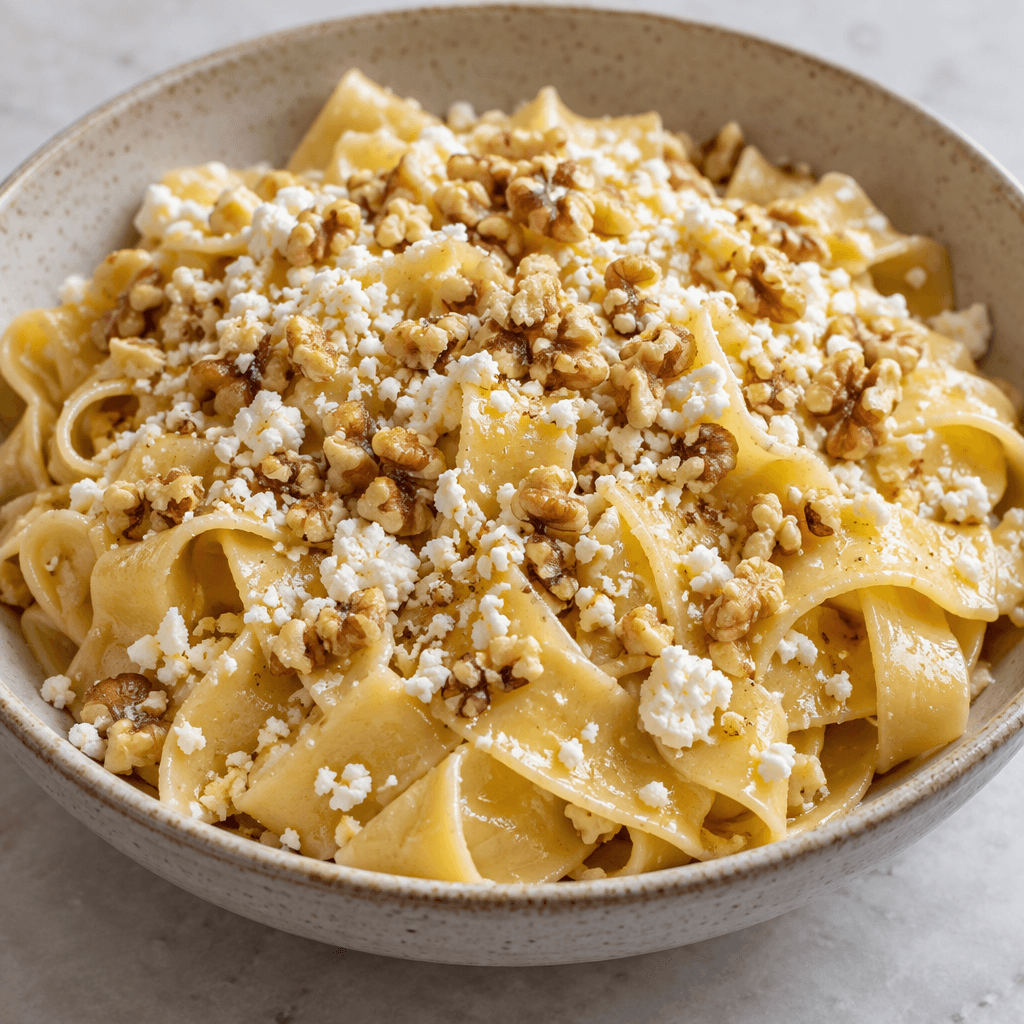
Pasta with keş Calories
Traditional pasta dish with fermented dairy keş, providing carbohydrates plus protein and calcium
CALORIES
GI
POTASSIUM
FIBER
Quick answer
1 cup (medium) of Pasta with keş (220 g) has 409 calories. That works out to 186 calories per 100 g. It contains 61.2 g of carbs, 16.3 g of protein, 10.8 g of fat and 3.5 g of fiber. Its 30.8 µg of Selenium covers 56% of the Daily Value. Its glycemic index is 52 (medium), so it raises blood sugar at a moderate pace.
What is Pasta with keş?
Pasta with keş is a Turkish home-style dish, especially associated with the Bolu region. It combines cooked pasta with keş, a firm, salty dairy food made by drying strained yogurt; the keş is usually crumbled or grated over the pasta, often with butter.
Served hot, it has a savory, tangy taste, softened by the richness of butter. Some versions include walnuts for extra crunch. The pasta supplies most of the carbohydrates, while keş adds some protein and calcium. For a balanced meal, pair it with a crisp salad or cooked vegetables; using butter sparingly keeps the dish lighter without losing its distinctive flavor.
Pasta with keş Nutrition Facts
Selected: 100 g
186
KCAL / 100G
Carbs
27.8g
· 10% DV
Protein
7.4g
· 15% DV
Fat
4.9g
· 6% DV
Fiber
1.6g
· 6% DV
DV is the share of the daily value covered, on a 2,000 kcal reference diet.
Calories come from: Carbs 60% · Protein 16% · Fat 24%
Pasta with keş Vitamins & Minerals
Vitamins
B2
0.12mg · 9% DV
B12
0.22µg · 9% DV
B1
0.08mg · 7% DV
B3
1.1mg · 7% DV
Minerals
Selenium
14µg · 25% DV
Phosphorus
122mg · 17% DV
Calcium
118mg · 12% DV
Zinc
1mg · 9% DV
How Nutritious Is Pasta with keş?
Nutrient density
Medium
How many vitamins, minerals and how much fiber this food carries per calorie. A high score means a lot of nutrition for few calories.
Satiety score
Medium
An EatBetter score computed from fiber, protein and calorie density. A high score means staying full longer on the same calories.
Both scores are calculated per 100 g and do not change with the selected portion. The satiety score is EatBetter's own calculation, not a clinical measure.
Pasta with keş Glycemic Index
GLYCEMIC INDEX
GLYCEMIC LOAD
Accounts for portion size — a more realistic measure than GI alone.
How to Burn Off Pasta with keş
To burn the 186 calories in 100 g:
🚶
Walking (5 km/h)
🏃
Running (8 km/h)
🚴
Cycling
🏊
Swimming
Times are calculated with the MET equation for a 70 kg adult. Actual burn varies with your weight, age and pace.
Is Pasta with keş Processed?
NOVA 3
Processed
1. Unprocessed
2. Minimally Processed
3. Processed
4. Ultra-Processed
NOVA classifies foods into 4 groups by industrial processing. NOVA 1 (unprocessed) is the healthiest.
Does Pasta with keş Contain Allergens?
Contains these allergens:
Which Diets Is Pasta with keş Good For?
Vegan
— Not suitable
Vegetarian
✓ Suitable
Gluten-Free
— Not suitable
Dairy-Free
— Not suitable
Mediterranean
✓ Suitable
Paleo
— Not suitable
Whole30
— Not suitable
DASH
— Not suitable
Keto
— Not suitable
Low FODMAP
— Not suitable
Pasta with keş Fat Profile
SATURATED
2.1g
MONOUNSATURATED
1.5g
POLYUNSATURATED
0.5g
Omega 6:3 ratio 14:1
Above the ideal 4:1 (14:1).
Compare Pasta with keş
Foods Similar to Pasta with keş
Frequently Asked Questions About Pasta with keş
What is pasta with keş?
Pasta with keş is a Turkish dish of pasta or noodles topped with keş, a salty, dried dairy product, often with walnuts and butter. Its distinctive flavor comes from the tangy, concentrated keş rather than from a conventional pasta sauce.
How do you make pasta with keş?
To make pasta with keş, boil and drain the pasta, then toss it with crumbled keş. Many Turkish versions briefly fry the keş and chopped walnuts in butter before mixing them in; taste before adding salt because keş can be salty.
What is keş in pasta with keş made from?
Keş is a traditional Turkish dried dairy food, usually made from strained yogurt or a similar cultured dairy product. It is salty and crumbly, and its concentrated tang gives pasta with keş its characteristic taste.
Where does pasta with keş come from?
Pasta with keş is associated especially with Bolu cuisine in Turkey. Local versions commonly pair noodles with crumbled keş and sometimes walnuts, though household recipes and the exact pasta used can vary.
What does keş taste like in pasta with keş?
Keş gives pasta with keş a salty, tangy, concentrated dairy flavor. It is more intense than a mild fresh cheese, so crumble it in gradually and taste the dish before seasoning it further.
Can you use regular pasta for pasta with keş?
Yes, regular pasta works for pasta with keş, although Turkish-style erişte noodles are the traditional choice. Short shapes or thin noodles both hold the crumbled topping well; cook them just until tender so they do not become soft when tossed.
Can you make pasta with keş without walnuts?
Yes, walnuts are common in pasta with keş but are not essential. Leave them out for a simpler version, or add them only at the end for crunch; the keş and butter still provide the dish’s defining flavor.
What can you use instead of keş in pasta with keş?
A well-drained, lightly salted curd cheese can approximate keş in pasta with keş, but it will taste milder and contain more moisture. Add it gradually and reduce other salt; fresh ricotta is not an exact match for traditional keş.
What should you serve with pasta with keş?
Serve pasta with keş alongside a simple salad or vegetables to balance its rich, salty topping. A lightly dressed salad works especially well; the dish can also be served on its own as a main course.
How should you store and reheat pasta with keş?
Store leftover pasta with keş in a covered container in the refrigerator and eat it within three days. Reheat it gently in a pan with a splash of water, or covered in a microwave, stirring so the pasta warms evenly.
Have another question about Pasta with keş?
Ask the AI nutrition coach — calories, portions, alternatives and more, answered in seconds in the app.

Scan calories with your camera
Instant AI nutrition analysis

Nutrition data compiled from USDA FoodData Central and scientific sources.