

Ready & Packaged Foods
All →Vegetables & Legumes
All →Desserts & Confectionery
All →Meat & Protein
All →Grains & Bakery
All →Beverages
All →Milk & Dairy
All →

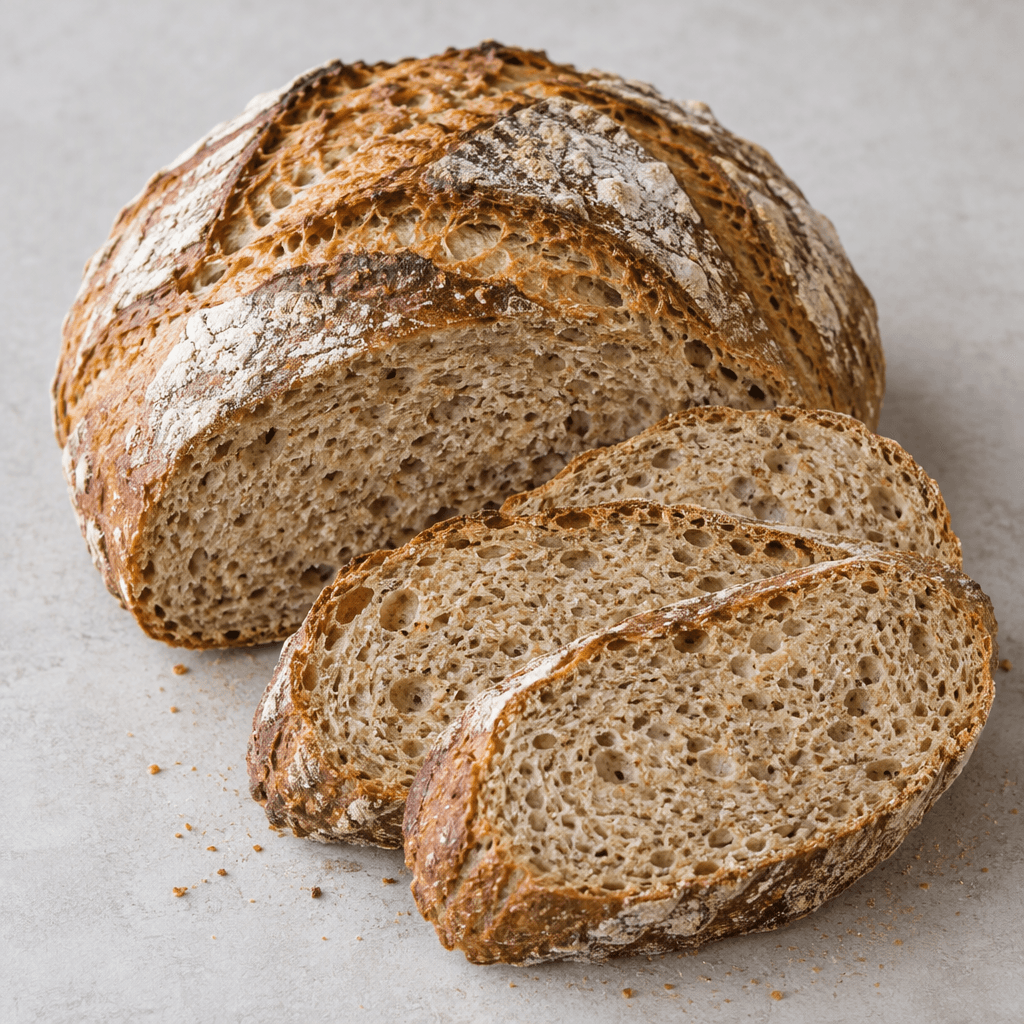
Organic bread Calories
Organic whole grain bread made with natural, additive-free ingredients.
In season: Spring · Summer · Autumn · Winter
CALORIES
GI
POTASSIUM
FIBER
Quick answer
1 slice (medium) of Organic bread (35 g) has 81 calories. That works out to 230 calories per 100 g. It contains 15.1 g of carbs, 2.8 g of protein, 0.9 g of fat and 1.8 g of fiber. Its 0.2 mg of Manganese covers 11% of the Daily Value. Its glycemic index is 65 (medium), so it raises blood sugar at a moderate pace.
What is Organic bread?
Organic bread is a loaf made with flour and other ingredients from organic production. This rustic-style version is described as whole grain and made without additives; its flour-dusted crust and hearty crumb suit everyday meals as well as a bakery-style table loaf. Recipes and textures vary, from softly risen slices to denser, tangy sourdough.
It is commonly eaten at breakfast or alongside soup, salads and cooked dishes. Toast it for a crisp edge, or pair a slice with cheese, eggs, avocado or olive oil. With 5 g of fibre per 100 g, it can make a more filling base for sandwiches than a refined white loaf. For a lighter meal, keep the topping simple and add fresh vegetables.
Organic bread Nutrition Facts
Selected: 100 g
230
KCAL / 100G
Carbs
43g
· 16% DV
Protein
8g
· 16% DV
Fat
2.5g
· 3% DV
Fiber
5g
· 18% DV
DV is the share of the daily value covered, on a 2,000 kcal reference diet.
Calories come from: Carbs 76% · Protein 14% · Fat 10%
Organic bread Vitamins & Minerals
Vitamins
B1
0.22mg · 18% DV
B3
2.1mg · 13% DV
Folate
35µg · 9% DV
Biotin
2µg · 7% DV
Minerals
Manganese
1mg · 43% DV
Selenium
11µg · 20% DV
Sodium
400mg · 17% DV
Phosphorus
90mg · 13% DV
How Nutritious Is Organic bread?
Nutrient density
Medium
How many vitamins, minerals and how much fiber this food carries per calorie. A high score means a lot of nutrition for few calories.
Satiety score
Medium
An EatBetter score computed from fiber, protein and calorie density. A high score means staying full longer on the same calories.
Both scores are calculated per 100 g and do not change with the selected portion. The satiety score is EatBetter's own calculation, not a clinical measure.
Organic bread Glycemic Index
GLYCEMIC INDEX
GLYCEMIC LOAD
Accounts for portion size — a more realistic measure than GI alone.
How to Burn Off Organic bread
To burn the 230 calories in 100 g:
🚶
Walking (5 km/h)
🏃
Running (8 km/h)
🚴
Cycling
🏊
Swimming
Times are calculated with the MET equation for a 70 kg adult. Actual burn varies with your weight, age and pace.
Is Organic bread Processed?
NOVA 2
Minimally Processed
1. Unprocessed
2. Minimally Processed
3. Processed
4. Ultra-Processed
NOVA classifies foods into 4 groups by industrial processing. NOVA 1 (unprocessed) is the healthiest.
Does Organic bread Contain Allergens?
Contains these allergens:
Which Diets Is Organic bread Good For?
Vegan
✓ Suitable
Vegetarian
✓ Suitable
Gluten-Free
— Not suitable
Dairy-Free
— Not suitable
Mediterranean
✓ Suitable
Paleo
— Not suitable
Whole30
— Not suitable
DASH
— Not suitable
Keto
— Not suitable
Low FODMAP
— Not suitable
Organic bread Fat Profile
SATURATED
0.4g
MONOUNSATURATED
0.3g
POLYUNSATURATED
1.2g
Omega 6:3 ratio 7.1:1
Above the ideal 4:1 (7.1:1).
Compare Organic bread
Foods Similar to Organic bread
Frequently Asked Questions About Organic bread
What makes organic bread different from regular bread?
Organic bread is made with ingredients grown and handled under organic standards. This organic bread is whole grain and made without additives, but organic labeling alone does not mean every loaf is whole grain or additive-free.
Is organic bread healthier than conventional bread?
This organic bread offers whole grains and additive-free ingredients, which may make it a useful choice. But “organic” alone does not make bread more nutritious; the grain used and the rest of the ingredient list matter too.
Is organic bread always whole-grain?
No, organic bread is not always whole-grain. Organic describes how ingredients are produced, not whether the flour is whole-grain or refined. This loaf is whole grain, but check the product’s ingredient information for other loaves.
Does organic bread contain preservatives?
This organic bread is made with natural, additive-free ingredients. Organic bread as a category is not automatically preservative-free, though; recipes and production methods differ, so the organic label by itself does not settle that question.
How should you store organic bread?
Keep organic bread in a clean, breathable bread bag or bread box at room temperature, away from heat and moisture. Avoid refrigerating it, since cold temperatures can make bread stale faster.
Can you freeze organic bread?
Yes, organic bread freezes well. Slice it first, seal the slices in a freezer-safe bag, and take out only what you need; you can thaw a slice at room temperature or toast it straight from frozen.
Does organic bread go moldy faster?
It can, especially when made without preservatives, but organic certification itself does not determine how quickly bread molds. Keep the loaf dry and sealed, and discard the whole loaf if you see mold anywhere on it.
Is organic bread better for blood sugar?
Not necessarily. Organic status does not determine how bread affects blood sugar; this loaf’s whole-grain ingredients may provide more fiber than refined bread, but portion size and what you eat with it also matter.
Can organic bread help with weight loss?
It can fit into a weight-loss eating pattern, but organic bread does not cause weight loss on its own. The whole grains in this loaf provide fiber, which can help make a meal more filling.
Is organic sourdough bread different from regular organic bread?
Yes. Organic refers to how the ingredients are produced, while sourdough describes a fermentation method using a starter culture. A bread can be organic, sourdough, both, or neither; organic bread is not automatically sourdough.
Have another question about Organic bread?
Ask the AI nutrition coach — calories, portions, alternatives and more, answered in seconds in the app.

Scan calories with your camera
Instant AI nutrition analysis

Nutrition data compiled from USDA FoodData Central and scientific sources.