

Ready & Packaged Foods
All →Vegetables & Legumes
All →Desserts & Confectionery
All →Meat & Protein
All →Grains & Bakery
All →Beverages
All →Milk & Dairy
All →

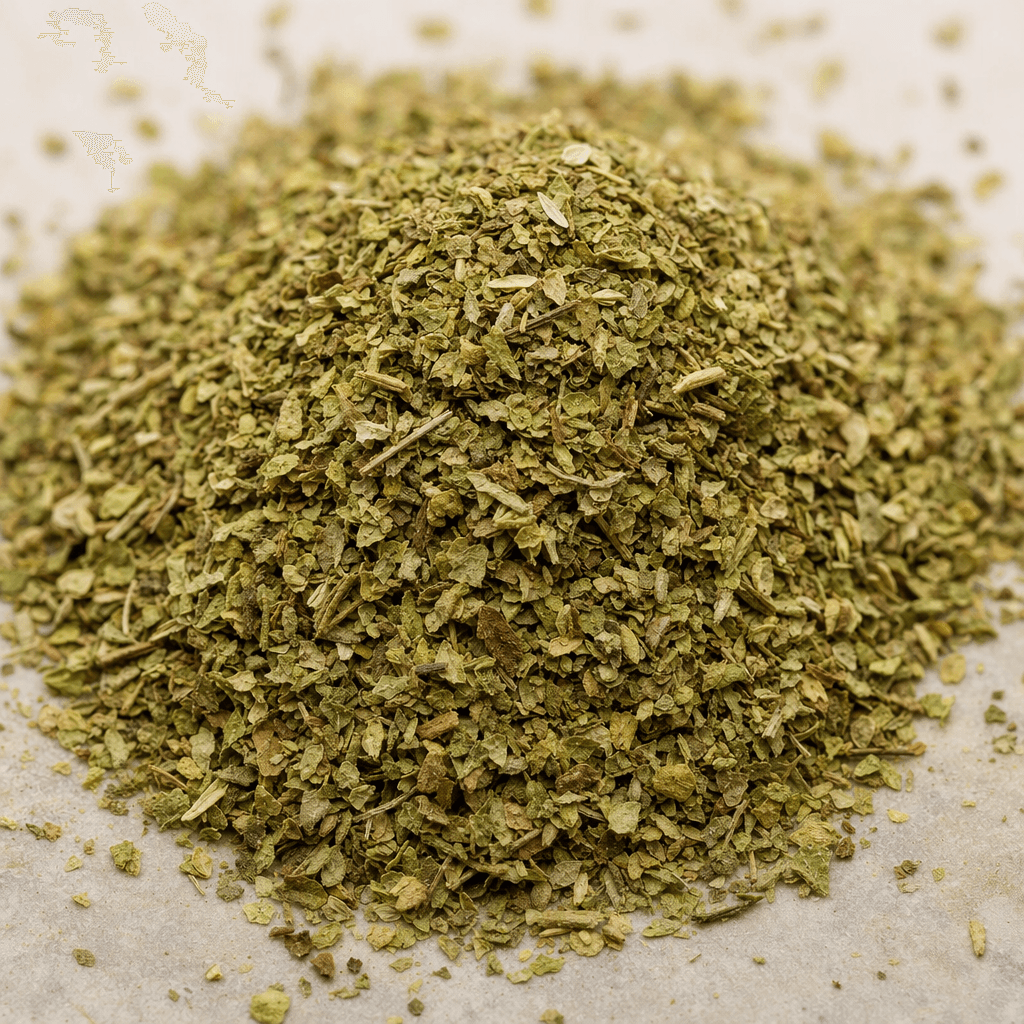
Oregano Calories
Aromatic, antioxidant, rich in vitamins and minerals
In season: Spring · Summer · Autumn · Winter
CALORIES
GI
POTASSIUM
FIBER
Quick answer
1 tablespoon (medium) of Oregano (5 g) has 13 calories. That works out to 265 calories per 100 g. It contains 3.5 g of carbs, 0.5 g of protein, 0.2 g of fat and 2.1 g of fiber. Its 31.1 µg of Vitamin K covers 26% of the Daily Value. Its glycemic index is 5 (low), so it raises blood sugar slowly.
What is Oregano?
Oregano is a fragrant herb whose leaves are used fresh or dried, especially in Mediterranean cooking. Its savoury, slightly peppery aroma becomes more concentrated when dried. Across the Mediterranean and in kitchens worldwide, it is commonly sprinkled over pizza, pasta sauces, roasted vegetables and grilled fish or meat; it also works well with tomatoes, olive oil and beans.
Oregano brings plenty of flavour in a small amount, so it can help a dish taste well-seasoned without relying on extra salt. Like other dried herbs, it contains fibre and micronutrients, though typical portions are modest. Add it near the end of cooking for a fresher aroma, or earlier when you want it to infuse a sauce.
Oregano Nutrition Facts
Selected: 100 g
265
KCAL / 100G
Carbs
69g
· 25% DV
Protein
9g
· 18% DV
Fat
4.3g
· 6% DV
Fiber
42.5g
· 152% DV
DV is the share of the daily value covered, on a 2,000 kcal reference diet.
Calories come from: Carbs 79% · Protein 10% · Fat 11%
Oregano Vitamins & Minerals
Vitamins
Vitamin K
621µg · 518% DV
Vitamin A
1700µg · 189% DV
Vitamin E
11.6mg · 77% DV
B6
1.04mg · 61% DV
Minerals
Iron
44mg · 244% DV
Manganese
5mg · 217% DV
Calcium
1597mg · 160% DV
Copper
1mg · 111% DV
How Nutritious Is Oregano?
Nutrient density
Very high
How many vitamins, minerals and how much fiber this food carries per calorie. A high score means a lot of nutrition for few calories.
Satiety score
Medium
An EatBetter score computed from fiber, protein and calorie density. A high score means staying full longer on the same calories.
Both scores are calculated per 100 g and do not change with the selected portion. The satiety score is EatBetter's own calculation, not a clinical measure.
Oregano Glycemic Index
GLYCEMIC INDEX
GLYCEMIC LOAD
Accounts for portion size — a more realistic measure than GI alone.
How to Burn Off Oregano
To burn the 265 calories in 100 g:
🚶
Walking (5 km/h)
🏃
Running (8 km/h)
🚴
Cycling
🏊
Swimming
Times are calculated with the MET equation for a 70 kg adult. Actual burn varies with your weight, age and pace.
Is Oregano Processed?
NOVA 2
Minimally Processed
1. Unprocessed
2. Minimally Processed
3. Processed
4. Ultra-Processed
NOVA classifies foods into 4 groups by industrial processing. NOVA 1 (unprocessed) is the healthiest.
Does Oregano Contain Allergens?
No known major allergens
Which Diets Is Oregano Good For?
Vegan
✓ Suitable
Vegetarian
✓ Suitable
Gluten-Free
✓ Suitable
Dairy-Free
— Not suitable
Mediterranean
✓ Suitable
Paleo
✓ Suitable
Whole30
— Not suitable
DASH
— Not suitable
Keto
✓ Suitable
Low FODMAP
— Not suitable
Oregano Fat Profile
SATURATED
1.55g
MONOUNSATURATED
0.67g
POLYUNSATURATED
1.45g
Omega 6:3 ratio 2.5:1
Below the ideal 4:1 — a good omega balance.
Compare Oregano
Foods Similar to Oregano
Frequently Asked Questions About Oregano
What is oregano used for?
Oregano is used to add a savory, aromatic flavor to tomato sauces, pizza, pasta, grilled vegetables, and meat. It is especially common in Mediterranean cooking; dried oregano works well in long-cooked dishes, while fresh leaves suit finishing and salads.
Is oregano good for you?
Yes, oregano contains antioxidant plant compounds and contributes vitamins and minerals. It is generally used in small amounts as a seasoning, so it should be enjoyed for flavor rather than treated as a concentrated health remedy.
What is the difference between oregano and marjoram?
Oregano and marjoram are related herbs, but oregano usually has a sharper, more pungent flavor, while marjoram is milder and sweeter. They can sometimes replace one another in recipes, though the finished dish will taste different.
Can you use fresh oregano instead of dried oregano?
Yes, fresh oregano can replace dried oregano, but the flavor is usually less concentrated. Add fresh leaves near the end of cooking to preserve their aroma; dried oregano is convenient for sauces and dishes that simmer longer.
When should you add oregano to a dish?
Add dried oregano during cooking so its flavor has time to infuse the dish. Fresh oregano is often best added near the end or just before serving, since prolonged cooking can dull its brighter, leafy aroma.
How should you store fresh oregano?
Store fresh oregano in the refrigerator, loosely wrapped in a slightly damp paper towel or with its stems in a glass of water. Keep dried oregano in an airtight container away from heat, light, and moisture.
Can you eat oregano leaves raw?
Yes, fresh oregano leaves can be eaten raw. Their assertive flavor suits small amounts in salads, dressings, and dips; chop or tear the leaves just before serving to release their aroma without letting them dominate.
Does oregano lose its flavor when cooked?
Oregano does not lose all its flavor when cooked, but long cooking can soften its aroma. Dried oregano generally holds up well in simmered sauces, while fresh oregano tastes livelier when added toward the end.
Can oregano be used instead of basil?
Yes, oregano can stand in for basil in some tomato-based sauces, but it has a more pungent, earthy flavor. Use less oregano at first, especially in pesto or other recipes where basil’s fresh, sweet character is central.
Can oregano tea cure a cough?
No, oregano tea is not proven to cure a cough. It can be a warm, aromatic drink, but it should not replace established care or prescribed medicines; persistent or severe symptoms need appropriate medical attention.
Have another question about Oregano?
Ask the AI nutrition coach — calories, portions, alternatives and more, answered in seconds in the app.

Scan calories with your camera
Instant AI nutrition analysis

Nutrition data compiled from USDA FoodData Central and scientific sources.