

Ready & Packaged Foods
All →Vegetables & Legumes
All →Desserts & Confectionery
All →Meat & Protein
All →Grains & Bakery
All →Beverages
All →Milk & Dairy
All →

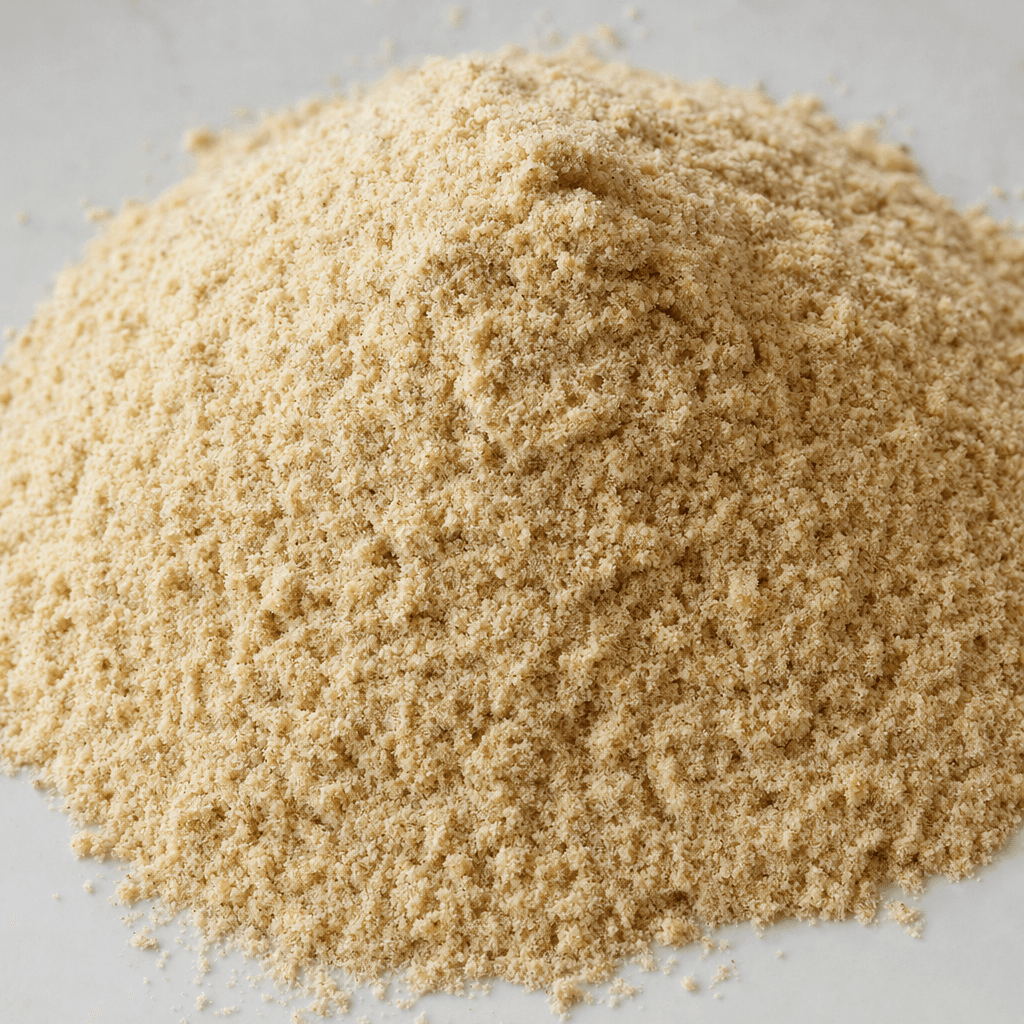
Oleaster Seed Powder Calories
Rich in fiber, minerals, and antioxidants
In season: Autumn · Winter
CALORIES
GI
POTASSIUM
FIBER
Quick answer
1 tablespoon (medium) of Oleaster Seed Powder (10 g) has 32 calories. That works out to 320 calories per 100 g. It contains 3.5 g of carbs, 1 g of protein, 1.3 g of fat and 1.8 g of fiber. Its glycemic index is 30 (low), so it raises blood sugar slowly.
What is Oleaster Seed Powder?
Oleaster Seed Powder is made by drying and grinding the hard seeds found inside oleaster fruit, a fruit associated with the Mediterranean and parts of western and central Asia. It is distinct from powder made from the fruit itself, and is used as an add-in rather than usually eaten on its own.
Its flavour is mild and earthy, with a subtle nut-like quality, and it can thicken whatever it is stirred into. Try it in yoghurt, porridge, or a smoothie, as people might with other seed powders in breakfast bowls. It is notably fibre-rich, with 18 g of fibre per 100 g. Start with a small amount mixed into something moist, so its texture blends in easily.
Oleaster Seed Powder Nutrition Facts
Selected: 100 g
320
KCAL / 100G
Carbs
35g
· 13% DV
Protein
10.2g
· 20% DV
Fat
12.5g
· 16% DV
Fiber
18g
· 64% DV
DV is the share of the daily value covered, on a 2,000 kcal reference diet.
Calories come from: Carbs 48% · Protein 14% · Fat 38%
Oleaster Seed Powder Vitamins & Minerals
Vitamins
B1
0.18mg · 15% DV
Vitamin E
2.1mg · 14% DV
B5
0.6mg · 12% DV
B2
0.11mg · 8% DV
Minerals
Iron
3mg · 17% DV
Magnesium
60mg · 14% DV
Phosphorus
95mg · 14% DV
Calcium
120mg · 12% DV
How Nutritious Is Oleaster Seed Powder?
Nutrient density
High
How many vitamins, minerals and how much fiber this food carries per calorie. A high score means a lot of nutrition for few calories.
Satiety score
Medium
An EatBetter score computed from fiber, protein and calorie density. A high score means staying full longer on the same calories.
Both scores are calculated per 100 g and do not change with the selected portion. The satiety score is EatBetter's own calculation, not a clinical measure.
Oleaster Seed Powder Glycemic Index
GLYCEMIC INDEX
GLYCEMIC LOAD
Accounts for portion size — a more realistic measure than GI alone.
How to Burn Off Oleaster Seed Powder
To burn the 320 calories in 100 g:
🚶
Walking (5 km/h)
🏃
Running (8 km/h)
🚴
Cycling
🏊
Swimming
Times are calculated with the MET equation for a 70 kg adult. Actual burn varies with your weight, age and pace.
Is Oleaster Seed Powder Processed?
NOVA 2
Minimally Processed
1. Unprocessed
2. Minimally Processed
3. Processed
4. Ultra-Processed
NOVA classifies foods into 4 groups by industrial processing. NOVA 1 (unprocessed) is the healthiest.
Does Oleaster Seed Powder Contain Allergens?
No known major allergens
Which Diets Is Oleaster Seed Powder Good For?
Vegan
✓ Suitable
Vegetarian
✓ Suitable
Gluten-Free
✓ Suitable
Dairy-Free
— Not suitable
Mediterranean
✓ Suitable
Paleo
✓ Suitable
Whole30
— Not suitable
DASH
— Not suitable
Keto
✓ Suitable
Low FODMAP
— Not suitable
Oleaster Seed Powder Fat Profile
SATURATED
2.8g
MONOUNSATURATED
5.2g
POLYUNSATURATED
3.5g
Omega 6:3 ratio 6:1
Above the ideal 4:1 (6:1).
Compare Oleaster Seed Powder
Foods Similar to Oleaster Seed Powder
Frequently Asked Questions About Oleaster Seed Powder
What is oleaster seed powder made from?
Oleaster seed powder is made by grinding the seeds of the oleaster, also called Russian olive. It is minimally processed: the seeds are prepared and milled into a powder rather than turned into a highly refined ingredient.
What are the benefits of oleaster seed powder?
Oleaster seed powder provides fiber, minerals, and antioxidants, so it can add these to foods. It is a food ingredient, not a proven treatment or cure for a health condition.
How do you use oleaster seed powder?
Mix oleaster seed powder into yogurt, oatmeal, a smoothie, or another moist food. Its fine but fibrous texture can feel gritty when eaten dry, so mixing it thoroughly usually makes it easier to eat.
How much oleaster seed powder should you take per day?
A typical serving is about one medium tablespoon, or 10 grams. That is a serving size, not a proven daily requirement; start with less if you are not used to fiber-rich foods.
What does oleaster seed powder taste like?
Oleaster seed powder generally has an earthy, seed-like taste that may come across as slightly bitter or astringent. Combining it with yogurt or oatmeal can soften the flavor without needing to cook it.
Is oleaster seed powder the same as oleaster fruit powder?
No. Oleaster seed powder is ground from the seed, while oleaster fruit powder is made from the fruit portion. They are different ingredients and can vary in taste, texture, and nutrient composition.
Does oleaster seed powder dissolve in water?
No, oleaster seed powder does not dissolve completely in water. Its fiber remains suspended and may settle, so stir it again just before drinking or mix it into a thicker food instead.
Can you cook with oleaster seed powder?
Yes, you can stir oleaster seed powder into porridge or add a small amount to baked foods. Its fiber can make mixtures denser, so it works best as an addition rather than a one-for-one flour replacement.
How should oleaster seed powder be stored?
Store oleaster seed powder in a tightly closed container in a cool, dry place away from sunlight. Keeping moisture out helps preserve its texture and freshness; use a dry spoon when serving it.
Can oleaster seed powder cause side effects?
Yes, large amounts of oleaster seed powder may cause gas, bloating, or changes in bowel habits because it is rich in fiber. Increase your intake gradually and drink enough fluids.
Have another question about Oleaster Seed Powder?
Ask the AI nutrition coach — calories, portions, alternatives and more, answered in seconds in the app.

Scan calories with your camera
Instant AI nutrition analysis

Nutrition data compiled from USDA FoodData Central and scientific sources.