

Ready & Packaged Foods
All →Vegetables & Legumes
All →Desserts & Confectionery
All →Meat & Protein
All →Grains & Bakery
All →Beverages
All →Milk & Dairy
All →

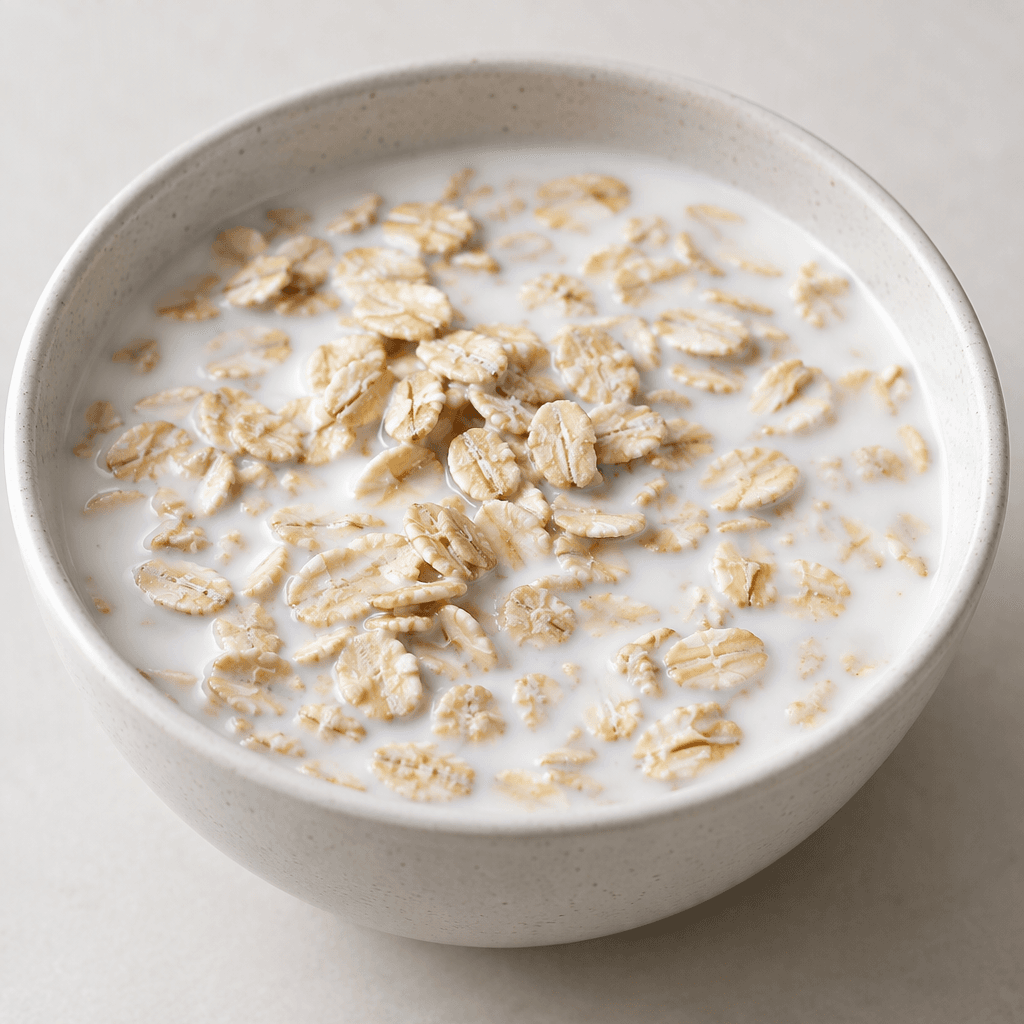
Oats with milk Calories
Oats with milk, source of fiber and protein
In season: Spring · Summer · Autumn · Winter
CALORIES
GI
POTASSIUM
FIBER
Quick answer
1 cup (medium) of Oats with milk (220 g) has 202 calories. That works out to 92 calories per 100 g. It contains 29.5 g of carbs, 9 g of protein, 5.9 g of fat and 3.5 g of fiber. Its 0.8 mg of Manganese covers 36% of the Daily Value. Its glycemic index is 55 (medium), so it raises blood sugar at a moderate pace.
What is Oats with milk?
Oats with milk is a simple bowl of oat flakes combined with milk, eaten warm after cooking or cold after soaking. It is a familiar breakfast in many places rather than a dish tied to one particular region, and its texture can range from loose and milky to soft and porridge-like.
It suits a quick breakfast or snack, with fruit, cinnamon, nuts or seeds added for flavour and crunch. Oats contribute fibre, while the milk adds protein, making the bowl more substantial than plain cereal. For a lighter version, leave out added sugar and let fresh fruit provide the sweetness.
Oats with milk Nutrition Facts
Selected: 100 g
92
KCAL / 100G
Carbs
13.4g
· 5% DV
Protein
4.1g
· 8% DV
Fat
2.7g
· 3% DV
Fiber
1.6g
· 6% DV
DV is the share of the daily value covered, on a 2,000 kcal reference diet.
Calories come from: Carbs 57% · Protein 17% · Fat 26%
Oats with milk Vitamins & Minerals
Vitamins
B12
0.35µg · 15% DV
B2
0.16mg · 12% DV
B1
0.08mg · 7% DV
B5
0.34mg · 7% DV
Minerals
Phosphorus
86mg · 12% DV
Zinc
1mg · 9% DV
Calcium
68mg · 7% DV
Iron
1mg · 6% DV
How Nutritious Is Oats with milk?
Nutrient density
High
How many vitamins, minerals and how much fiber this food carries per calorie. A high score means a lot of nutrition for few calories.
Satiety score
Medium
An EatBetter score computed from fiber, protein and calorie density. A high score means staying full longer on the same calories.
Both scores are calculated per 100 g and do not change with the selected portion. The satiety score is EatBetter's own calculation, not a clinical measure.
Oats with milk Glycemic Index
GLYCEMIC INDEX
GLYCEMIC LOAD
Accounts for portion size — a more realistic measure than GI alone.
How to Burn Off Oats with milk
To burn the 92 calories in 100 g:
🚶
Walking (5 km/h)
🏃
Running (8 km/h)
🚴
Cycling
🏊
Swimming
Times are calculated with the MET equation for a 70 kg adult. Actual burn varies with your weight, age and pace.
Is Oats with milk Processed?
NOVA 2
Minimally Processed
1. Unprocessed
2. Minimally Processed
3. Processed
4. Ultra-Processed
NOVA classifies foods into 4 groups by industrial processing. NOVA 1 (unprocessed) is the healthiest.
Does Oats with milk Contain Allergens?
Contains these allergens:
Which Diets Is Oats with milk Good For?
Vegan
— Not suitable
Vegetarian
✓ Suitable
Gluten-Free
— Not suitable
Dairy-Free
— Not suitable
Mediterranean
✓ Suitable
Paleo
— Not suitable
Whole30
— Not suitable
DASH
— Not suitable
Keto
— Not suitable
Low FODMAP
— Not suitable
Oats with milk Fat Profile
SATURATED
1.5g
MONOUNSATURATED
0.7g
POLYUNSATURATED
0.35g
Omega 6:3 ratio 16:1
Above the ideal 4:1 (16:1).
Compare Oats with milk
Foods Similar to Oats with milk
Frequently Asked Questions About Oats with milk
How do you make oats with milk in the microwave?
To make oats with milk in the microwave, combine them in a deep, microwave-safe bowl and heat in short bursts, stirring between each one. The mixture can bubble over, so use a larger bowl than you think you need.
Can you soak oats with milk overnight?
Yes, you can soak oats with milk overnight. Keep the mixture covered in the refrigerator so the oats soften without cooking. Stir before eating, and add a splash of milk if they have absorbed more than you like.
Are rolled or quick oats better for oats with milk?
Rolled oats usually give oats with milk a pleasantly soft texture while keeping some bite. Quick oats soften faster and can turn mushy, while steel-cut oats stay chewier and generally need cooking rather than a brief soak.
Can you eat oats with milk without cooking them?
Yes, oats with milk can be eaten without cooking. Letting the mixture stand gives the flakes time to absorb liquid and soften; eating it straight away is also fine if you prefer a firmer, more textured cereal.
What milk works best for oats with milk?
Cow’s milk gives oats with milk a creamy taste, while unsweetened plant-based milks can also be used if you prefer their flavor. Choose a milk that suits your needs, and stir well because some alternatives separate when heated.
Why do oats with milk turn gluey?
Oats with milk can turn gluey when they are overcooked or stirred constantly, which releases more starch from the flakes. Cook them gently and stop when they reach the texture you want; they will thicken further as they cool.
How should you store leftover oats with milk?
Store leftover oats with milk in a covered container in the refrigerator and eat them soon. The oats continue absorbing milk as they sit, so stir in a little more before serving. Discard them if they smell sour or look unusual.
Should you add milk before or after cooking oats?
You can add milk before cooking oats for a creamier, softer result, or stir it in afterward to loosen cooked oats. When cooking directly in milk, use gentle heat and stir occasionally so it does not scorch on the pan.
Is oats with milk a filling breakfast?
Oats with milk can make a filling breakfast because the oats provide fiber and the milk adds protein. Adding fruit or nuts can make it more substantial; a very small serving may not keep you satisfied for long.
Do oats with milk raise blood sugar?
Yes, oats with milk can raise blood sugar because both oats and milk contain carbohydrates. The rise varies with the portion and additions; sweeteners can increase it. People managing diabetes can follow their own care plan when choosing portions.
Have another question about Oats with milk?
Ask the AI nutrition coach — calories, portions, alternatives and more, answered in seconds in the app.

Scan calories with your camera
Instant AI nutrition analysis

Nutrition data compiled from USDA FoodData Central and scientific sources.