

Ready & Packaged Foods
All →Vegetables & Legumes
All →Desserts & Confectionery
All →Meat & Protein
All →Grains & Bakery
All →Beverages
All →Milk & Dairy
All →

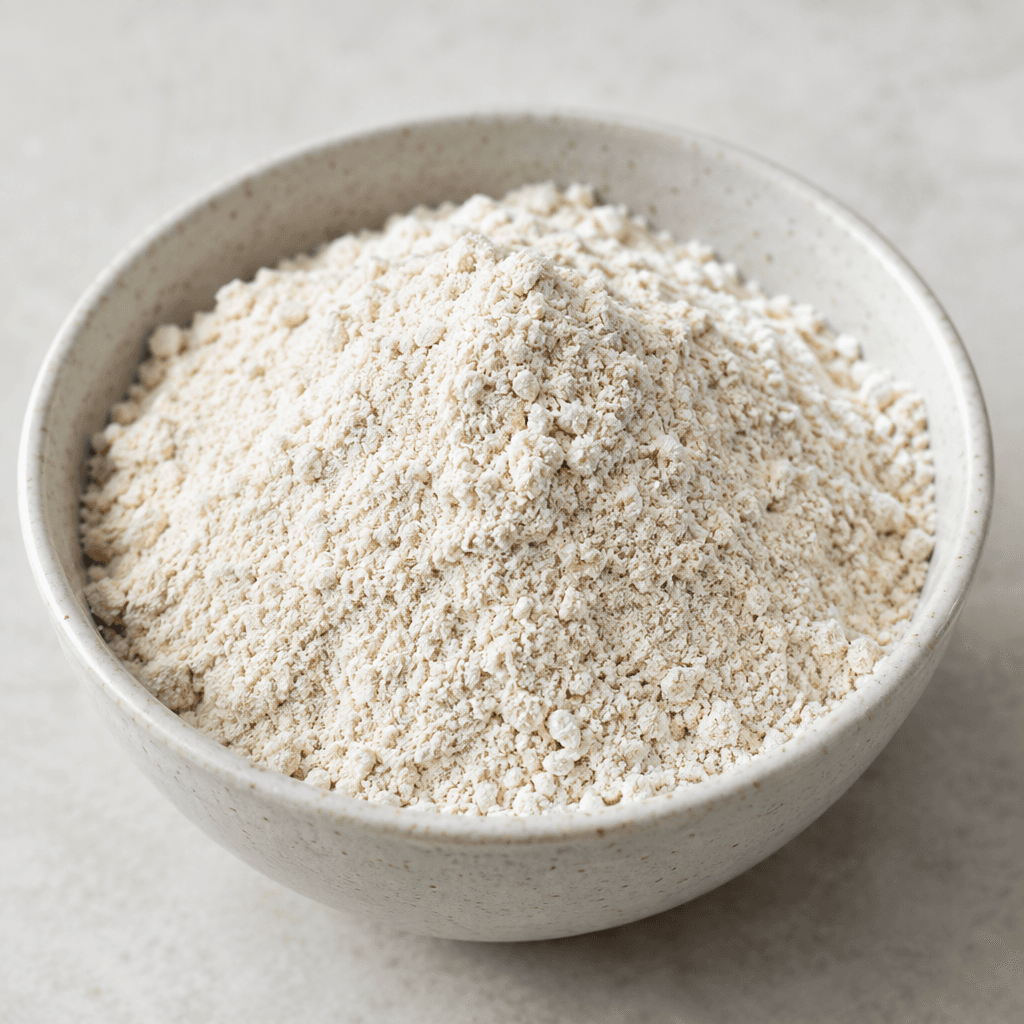
Oatmeal (Finely Ground) Calories
High in fiber and complex carbs, low glycemic index
In season: Spring · Summer · Autumn · Winter
CALORIES
GI
POTASSIUM
FIBER
Quick answer
1 cup (medium) of Oatmeal (Finely Ground) (80 g) has 296 calories. That works out to 370 calories per 100 g. It contains 54.2 g of carbs, 10.6 g of protein, 5.2 g of fat and 8.1 g of fiber. Its 3.9 mg of Manganese covers 170% of the Daily Value. Its glycemic index is 55 (medium), so it raises blood sugar at a moderate pace.
What is Oatmeal (Finely Ground)?
Finely ground oatmeal is made by grinding oats into smaller, softer particles than standard rolled oats. Its mild, slightly nutty flavour and quick-cooking texture make it an easy base for porridge; it also blends smoothly into pancake batter, muffins and smoothies. In many places, it is served warm with milk or water and topped with fruit, nuts, spices or a spoonful of yoghurt, while overnight versions are popular when a no-cook breakfast is convenient.
It provides complex carbohydrates and substantial fibre, with 10.1 g of fibre per 100 g. For a lighter bowl, cook it with water or milk and add fresh fruit for sweetness. Its fine texture also works well when you want oats to thicken a smoothie or soften into a batter.
Oatmeal (Finely Ground) Nutrition Facts
Selected: 100 g
370
KCAL / 100G
Carbs
67.7g
· 25% DV
Protein
13.2g
· 26% DV
Fat
6.5g
· 8% DV
Fiber
10.1g
· 36% DV
DV is the share of the daily value covered, on a 2,000 kcal reference diet.
Calories come from: Carbs 71% · Protein 14% · Fat 15%
Oatmeal (Finely Ground) Vitamins & Minerals
Vitamins
B1
0.46mg · 38% DV
Biotin
7µg · 23% DV
B5
1.1mg · 22% DV
B2
0.14mg · 11% DV
Minerals
Manganese
5mg · 217% DV
Phosphorus
410mg · 59% DV
Selenium
28µg · 51% DV
Magnesium
138mg · 33% DV
How Nutritious Is Oatmeal (Finely Ground)?
Nutrient density
High
How many vitamins, minerals and how much fiber this food carries per calorie. A high score means a lot of nutrition for few calories.
Satiety score
Medium
An EatBetter score computed from fiber, protein and calorie density. A high score means staying full longer on the same calories.
Both scores are calculated per 100 g and do not change with the selected portion. The satiety score is EatBetter's own calculation, not a clinical measure.
Oatmeal (Finely Ground) Glycemic Index
GLYCEMIC INDEX
GLYCEMIC LOAD
Accounts for portion size — a more realistic measure than GI alone.
How to Burn Off Oatmeal (Finely Ground)
To burn the 370 calories in 100 g:
🚶
Walking (5 km/h)
🏃
Running (8 km/h)
🚴
Cycling
🏊
Swimming
Times are calculated with the MET equation for a 70 kg adult. Actual burn varies with your weight, age and pace.
Is Oatmeal (Finely Ground) Processed?
NOVA 2
Minimally Processed
1. Unprocessed
2. Minimally Processed
3. Processed
4. Ultra-Processed
NOVA classifies foods into 4 groups by industrial processing. NOVA 1 (unprocessed) is the healthiest.
Does Oatmeal (Finely Ground) Contain Allergens?
No known major allergens
Which Diets Is Oatmeal (Finely Ground) Good For?
Vegan
✓ Suitable
Vegetarian
✓ Suitable
Gluten-Free
✓ Suitable
Dairy-Free
— Not suitable
Mediterranean
✓ Suitable
Paleo
✓ Suitable
Whole30
— Not suitable
DASH
— Not suitable
Keto
— Not suitable
Low FODMAP
— Not suitable
Oatmeal (Finely Ground) Fat Profile
SATURATED
1.2g
MONOUNSATURATED
2.2g
POLYUNSATURATED
2.3g
Omega 6:3 ratio 19.1:1
Above the ideal 4:1 (19.1:1).
Compare Oatmeal (Finely Ground)
Foods Similar to Oatmeal (Finely Ground)
Frequently Asked Questions About Oatmeal (Finely Ground)
How do you cook finely ground oatmeal?
Cook finely ground oatmeal with milk or water over low heat, stirring often. It thickens faster than rolled oats, so add liquid gradually and take it off the heat once it reaches the texture you want.
Can you eat finely ground oatmeal raw?
Yes, you can eat finely ground oatmeal without cooking it by stirring it into yogurt, milk, or a smoothie. It absorbs liquid as it sits, so let the mixture soften briefly if you prefer a less powdery texture.
What is the difference between finely ground oatmeal and oat flour?
They are very similar: both are made by grinding oats. Finely ground oatmeal may have a slightly coarser texture, while oat flour is usually milled more uniformly. They can often substitute for one another, though the result may feel different.
Can finely ground oatmeal be used instead of rolled oats?
Sometimes, but the texture will change. Finely ground oatmeal absorbs liquid quickly and makes a smoother, thicker porridge, while rolled oats keep more of their shape and chew. For recipes that rely on whole flakes, the swap may not work as well.
Can you make overnight oats with finely ground oatmeal?
Yes, finely ground oatmeal works for overnight oats, but it becomes much smoother and thicker than rolled oats. Stir it well with the liquid and refrigerate it; add more liquid before eating if it has set too firmly.
Can finely ground oatmeal replace flour in baking?
It can replace some of the flour in many baking recipes, but a one-for-one swap may make baked goods denser or more crumbly. Oats absorb liquid differently and do not form gluten, so start with recipes designed for oat flour when possible.
How do you use finely ground oatmeal in a smoothie?
Blend finely ground oatmeal with the other smoothie ingredients until smooth. Because it thickens as it absorbs liquid, start with a small amount and adjust the drink's consistency with more liquid after blending.
How should finely ground oatmeal be stored?
Keep finely ground oatmeal in an airtight container in a cool, dry place, away from strong odors and moisture. Discard it if you notice mold, damp clumps, or an unusual rancid smell.
Does finely ground oatmeal raise blood sugar?
Yes, its carbohydrates can raise blood sugar, while its fiber may help make the response more gradual than with foods low in fiber. People with diabetes can consider their portion and pair it with protein or other foods as part of their meal plan.
Does finely ground oatmeal help with weight loss?
It does not cause weight loss on its own, but its fiber can help some people feel satisfied for longer. Using a measured portion in a meal with fruit or yogurt may make it easier to build a filling breakfast.
Have another question about Oatmeal (Finely Ground)?
Ask the AI nutrition coach — calories, portions, alternatives and more, answered in seconds in the app.

Scan calories with your camera
Instant AI nutrition analysis

Nutrition data compiled from USDA FoodData Central and scientific sources.