

Ready & Packaged Foods
All →Vegetables & Legumes
All →Desserts & Confectionery
All →Meat & Protein
All →Grains & Bakery
All →Beverages
All →Milk & Dairy
All →

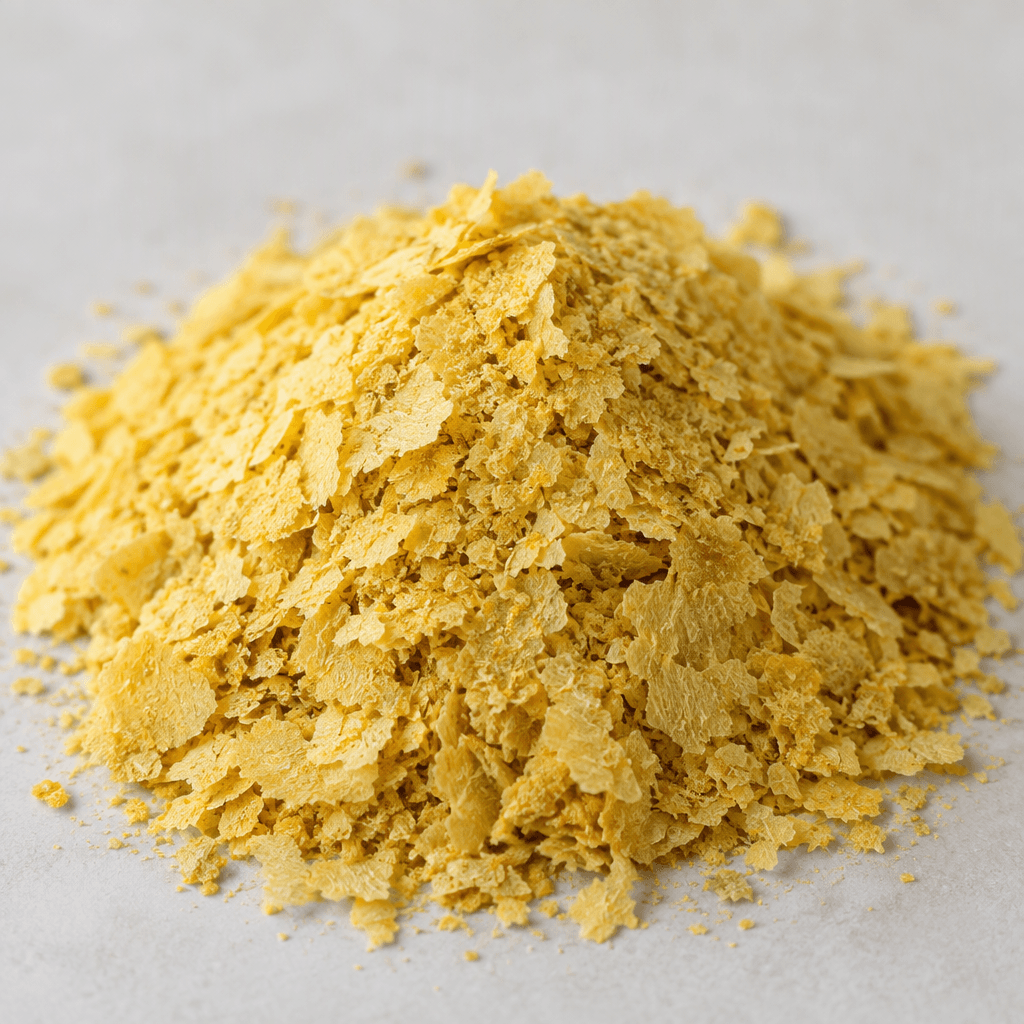
Nutritional Yeast Calories
High protein and B vitamin source, vegan cheese flavor
In season: Spring · Summer · Autumn · Winter
CALORIES
GI
POTASSIUM
FIBER
Quick answer
2 tablespoon (medium) of Nutritional Yeast (10 g) has 35 calories. That works out to 350 calories per 100 g. It contains 3.5 g of carbs, 5 g of protein, 0.5 g of fat and 2 g of fiber. Its 4 mg of B1 covers 333% of the Daily Value. Its glycemic index is 15 (low), so it raises blood sugar slowly.
What is Nutritional Yeast?
Nutritional yeast is made from yeast, commonly Saccharomyces cerevisiae, that is grown, deactivated and dried into flakes or powder. Unlike baking yeast, it will not make dough rise; it is used as a savoury seasoning, especially in plant-based cooking.
Its flavour is gently nutty and umami-rich, with a cheese-like quality. Sprinkle it over pasta, popcorn, soups or roasted vegetables, or stir it into sauces for extra savouriness. It is popular in vegan kitchens around the world, while its use varies in everyday cooking elsewhere. Nutritional yeast is protein- and fibre-rich, so a small serving can add substance as well as flavour. Try it with lemon and olive oil on vegetables, and taste before adding salt.
Nutritional Yeast Nutrition Facts
Selected: 100 g
350
KCAL / 100G
Carbs
35g
· 13% DV
Protein
50g
· 100% DV
Fat
5g
· 6% DV
Fiber
20g
· 71% DV
DV is the share of the daily value covered, on a 2,000 kcal reference diet.
Calories come from: Carbs 36% · Protein 52% · Fat 12%
Nutritional Yeast Vitamins & Minerals
Vitamins
B1
40mg · 3333% DV
B12
40µg · 1667% DV
B2
18mg · 1385% DV
Folate
2400µg · 600% DV
Minerals
Phosphorus
1200mg · 171% DV
Zinc
8mg · 73% DV
Magnesium
200mg · 48% DV
Manganese
1mg · 43% DV
How Nutritious Is Nutritional Yeast?
Nutrient density
Very high
How many vitamins, minerals and how much fiber this food carries per calorie. A high score means a lot of nutrition for few calories.
Satiety score
High
An EatBetter score computed from fiber, protein and calorie density. A high score means staying full longer on the same calories.
Both scores are calculated per 100 g and do not change with the selected portion. The satiety score is EatBetter's own calculation, not a clinical measure.
Nutritional Yeast Glycemic Index
GLYCEMIC INDEX
GLYCEMIC LOAD
Accounts for portion size — a more realistic measure than GI alone.
How to Burn Off Nutritional Yeast
To burn the 350 calories in 100 g:
🚶
Walking (5 km/h)
🏃
Running (8 km/h)
🚴
Cycling
🏊
Swimming
Times are calculated with the MET equation for a 70 kg adult. Actual burn varies with your weight, age and pace.
Is Nutritional Yeast Processed?
NOVA 3
Processed
1. Unprocessed
2. Minimally Processed
3. Processed
4. Ultra-Processed
NOVA classifies foods into 4 groups by industrial processing. NOVA 1 (unprocessed) is the healthiest.
Does Nutritional Yeast Contain Allergens?
No known major allergens
Which Diets Is Nutritional Yeast Good For?
Vegan
✓ Suitable
Vegetarian
✓ Suitable
Gluten-Free
✓ Suitable
Dairy-Free
— Not suitable
Mediterranean
✓ Suitable
Paleo
✓ Suitable
Whole30
— Not suitable
DASH
— Not suitable
Keto
✓ Suitable
Low FODMAP
— Not suitable
Nutritional Yeast Fat Profile
SATURATED
1g
MONOUNSATURATED
1.5g
POLYUNSATURATED
2.5g
Omega 6:3 ratio 12.5:1
Above the ideal 4:1 (12.5:1).
Compare Nutritional Yeast
Foods Similar to Nutritional Yeast
Frequently Asked Questions About Nutritional Yeast
What is nutritional yeast made from?
Nutritional yeast is made from yeast, commonly Saccharomyces cerevisiae, that is grown, harvested, deactivated, and dried. It is sold as flakes or powder and is different from baking yeast: it will not ferment dough or make bread rise.
How do you use nutritional yeast?
Sprinkle nutritional yeast over pasta, popcorn, roasted vegetables, or salads, or stir it into soups and sauces. Its savory, cheese-like flavor works well as a finishing seasoning; start with a small amount and add more to taste.
What does nutritional yeast taste like?
Nutritional yeast tastes savory and slightly nutty, with a flavor many people compare to cheese or broth. The flavor can vary by brand, so try a little before adding it to a dish, especially if you are using it as a topping.
Does nutritional yeast contain vitamin B12?
Nutritional yeast contains vitamin B12 only when it has been fortified with it. Unfortified nutritional yeast is not a dependable B12 source, so people avoiding animal foods should not rely on it alone to meet their B12 needs.
What is the difference between nutritional yeast and brewer’s yeast?
Nutritional yeast is deactivated and sold as a savory seasoning, while brewer’s yeast is associated with beer production and often has a more bitter taste. They are not interchangeable in every recipe, particularly when flavor is important.
Can you eat nutritional yeast without cooking it?
Yes, nutritional yeast can be eaten without cooking; it is already deactivated and is commonly sprinkled directly onto food. Add it to popcorn, toast, or a salad, or stir it into a finished dish for a stronger savory flavor.
Does nutritional yeast melt like cheese?
No, nutritional yeast does not melt like cheese. The flakes can soften when stirred into a warm sauce, but they will not become stretchy or creamy on their own; blend them with other ingredients to make a smooth vegan sauce.
Can nutritional yeast replace Parmesan cheese?
Nutritional yeast can provide a savory, cheese-like flavor in place of Parmesan, but it does not have Parmesan’s texture or melting properties. Sprinkle it over pasta or blend it with nuts and seasoning for a crumbly topping.
Does nutritional yeast cause yeast infections?
There is no good evidence that eating nutritional yeast causes vaginal yeast infections. Nutritional yeast is deactivated, and eating it is not the same as introducing an active yeast infection; persistent symptoms should be assessed by a healthcare professional.
How should you store nutritional yeast after opening?
Keep nutritional yeast tightly sealed in a cool, dry place after opening. Moisture can make the flakes clump and affect their quality, so use a dry spoon and avoid storing the container near a steaming stove or sink.
Have another question about Nutritional Yeast?
Ask the AI nutrition coach — calories, portions, alternatives and more, answered in seconds in the app.

Scan calories with your camera
Instant AI nutrition analysis

Nutrition data compiled from USDA FoodData Central and scientific sources.