

Ready & Packaged Foods
All →Vegetables & Legumes
All →Desserts & Confectionery
All →Meat & Protein
All →Grains & Bakery
All →Beverages
All →Milk & Dairy
All →

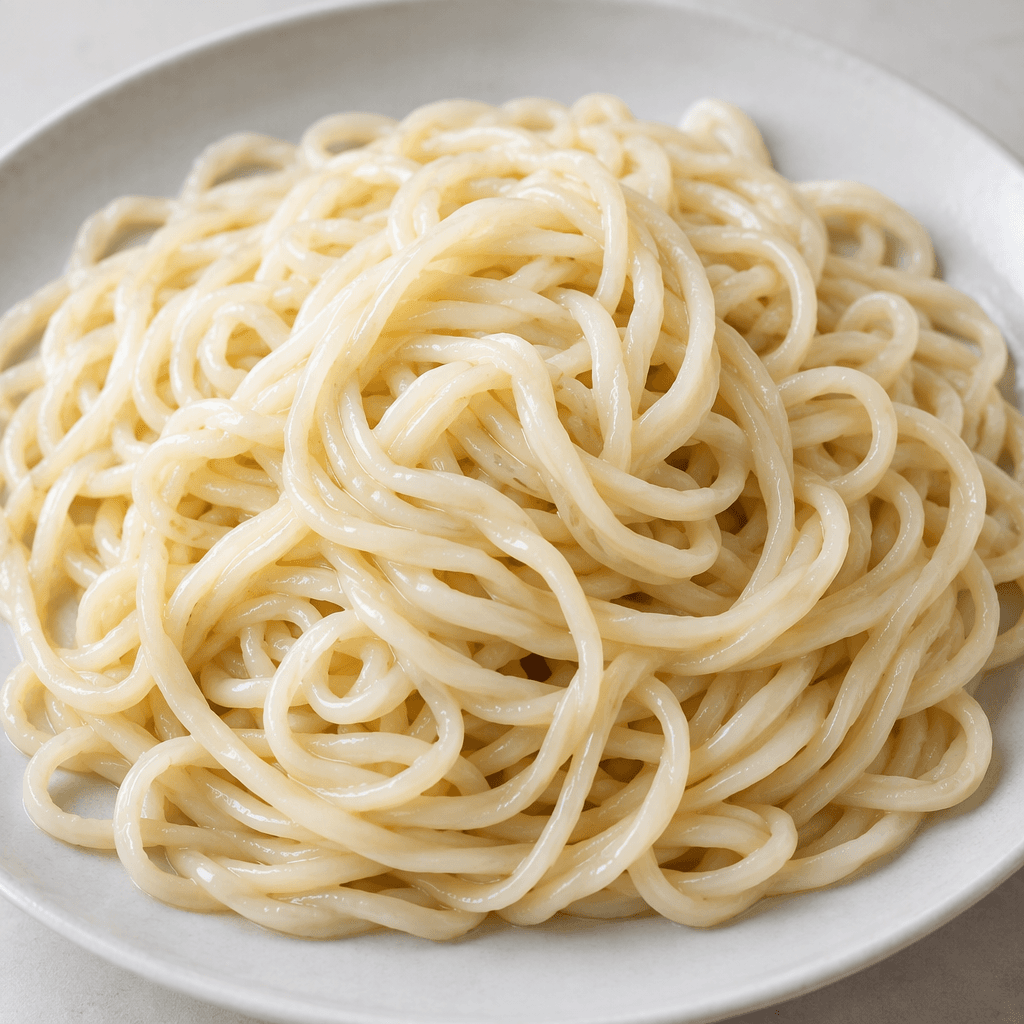
Cooked noodles Calories
Plain cooked noodles; moderate energy, low fiber
CALORIES
GI
POTASSIUM
FIBER
Quick answer
1 cup (medium) of Cooked noodles (160 g) has 221 calories. That works out to 138 calories per 100 g. It contains 40 g of carbs, 7.2 g of protein, 3.4 g of fat and 1.9 g of fiber. Its 28.8 µg of Selenium covers 52% of the Daily Value. Its glycemic index is 50 (medium), so it raises blood sugar at a moderate pace.
What is Cooked noodles?
Cooked noodles are noodles boiled until tender, usually made from wheat flour and water. They are a versatile staple rather than one particular regional dish, with different shapes and styles used across many cuisines.
Their soft, slightly springy strands take on sauces and broths readily. They are often served in soups or tossed into a quick stir-fry with vegetables and a source of protein; in many homes, they also make an easy base for a simple bowl meal. Cooked noodles provide mostly carbohydrates and are relatively low in fibre. Add vegetables and beans, tofu, meat or seafood for a more balanced meal, or keep the dish lighter with a broth-based sauce and modest amounts of oil.
Cooked noodles Nutrition Facts
Selected: 100 g
138
KCAL / 100G
Carbs
25g
· 9% DV
Protein
4.5g
· 9% DV
Fat
2.1g
· 3% DV
Fiber
1.2g
· 4% DV
DV is the share of the daily value covered, on a 2,000 kcal reference diet.
Calories come from: Carbs 73% · Protein 13% · Fat 14%
Cooked noodles Vitamins & Minerals
Vitamins
B1
0.06mg · 5% DV
B3
0.8mg · 5% DV
Folate
18µg · 5% DV
B5
0.15mg · 3% DV
Minerals
Selenium
18µg · 33% DV
Phosphorus
58mg · 8% DV
Iron
1mg · 6% DV
Magnesium
18mg · 4% DV
How Nutritious Is Cooked noodles?
Nutrient density
Low
How many vitamins, minerals and how much fiber this food carries per calorie. A high score means a lot of nutrition for few calories.
Satiety score
Medium
An EatBetter score computed from fiber, protein and calorie density. A high score means staying full longer on the same calories.
Both scores are calculated per 100 g and do not change with the selected portion. The satiety score is EatBetter's own calculation, not a clinical measure.
Cooked noodles Glycemic Index
GLYCEMIC INDEX
GLYCEMIC LOAD
Accounts for portion size — a more realistic measure than GI alone.
How to Burn Off Cooked noodles
To burn the 138 calories in 100 g:
🚶
Walking (5 km/h)
🏃
Running (8 km/h)
🚴
Cycling
🏊
Swimming
Times are calculated with the MET equation for a 70 kg adult. Actual burn varies with your weight, age and pace.
Is Cooked noodles Processed?
NOVA 3
Processed
1. Unprocessed
2. Minimally Processed
3. Processed
4. Ultra-Processed
NOVA classifies foods into 4 groups by industrial processing. NOVA 1 (unprocessed) is the healthiest.
Does Cooked noodles Contain Allergens?
Contains these allergens:
Which Diets Is Cooked noodles Good For?
Vegan
— Not suitable
Vegetarian
✓ Suitable
Gluten-Free
— Not suitable
Dairy-Free
— Not suitable
Mediterranean
— Not suitable
Paleo
— Not suitable
Whole30
— Not suitable
DASH
— Not suitable
Keto
— Not suitable
Low FODMAP
— Not suitable
Cooked noodles Fat Profile
SATURATED
0.45g
MONOUNSATURATED
0.38g
POLYUNSATURATED
0.63g
Omega 6:3 ratio 62:1
Above the ideal 4:1 (62:1).
Compare Cooked noodles
Foods Similar to Cooked noodles
Frequently Asked Questions About Cooked noodles
How long do cooked noodles last in the fridge?
Cooked noodles usually keep for 3–4 days in a covered container in the refrigerator. Refrigerate them promptly after cooking, and store sauced noodles the same way rather than leaving them out to cool for hours.
Can you reheat cooked noodles?
Yes, you can reheat cooked noodles. Warm them in a pan with a splash of water or sauce, stirring until hot throughout; in a microwave, cover and stir partway through so they heat evenly.
Can you freeze cooked noodles?
Yes, cooked noodles can be frozen, although they may turn softer or clump after thawing. Cool them, portion into airtight containers, and thaw in the refrigerator before reheating thoroughly.
How do you keep cooked noodles from sticking together?
Toss cooked noodles with sauce soon after draining, or add a little oil if you are storing them plain. For refrigerated noodles, loosen them with a splash of water while reheating.
Should you rinse cooked noodles after boiling?
Usually, no: draining cooked noodles is enough, and skipping the rinse helps sauce cling to them. Rinse them under cold water only when you want to cool them quickly for a cold noodle salad.
Can you eat cooked noodles cold?
Yes, cooked noodles can be eaten cold in salads or chilled noodle dishes. Cool and refrigerate them promptly after cooking, then add vegetables and dressing shortly before serving.
How long can cooked noodles sit out at room temperature?
Cooked noodles should not sit at room temperature for more than 2 hours, or 1 hour in very hot conditions. Discard noodles left out longer instead of relying on reheating to make them safe.
Why do cooked noodles turn mushy?
Cooked noodles turn mushy when they boil too long or sit in hot liquid or sauce after cooking. Follow the package timing, drain them as soon as tender, and combine with sauce close to serving.
Can you put cooked noodles in soup?
Yes, cooked noodles work in soup, but add them near the end so they do not soak up too much broth and become mushy. If storing leftovers, keep the noodles separate from the soup when possible.
Can cooked noodles be used for a stir-fry?
Yes, cooked noodles are convenient for stir-fries. Add them after the vegetables and sauce are nearly ready, then toss briefly over high heat; prolonged cooking can make the noodles soft and sticky.
Have another question about Cooked noodles?
Ask the AI nutrition coach — calories, portions, alternatives and more, answered in seconds in the app.

Scan calories with your camera
Instant AI nutrition analysis

Nutrition data compiled from USDA FoodData Central and scientific sources.