

Ready & Packaged Foods
All →Vegetables & Legumes
All →Desserts & Confectionery
All →Meat & Protein
All →Grains & Bakery
All →Beverages
All →Milk & Dairy
All →

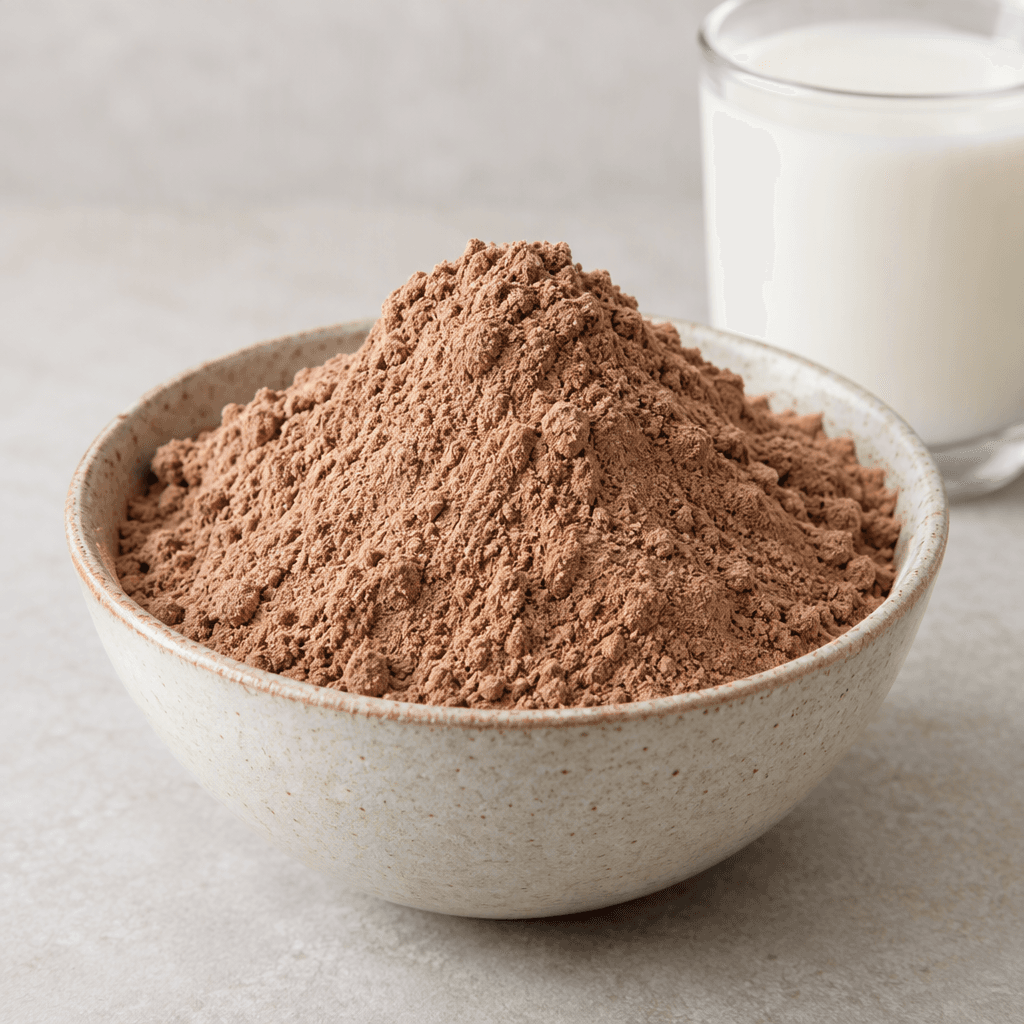
Nesquik Calories
Chocolate milk powder, popular for kids, fortified with vitamins and minerals
CALORIES
GI
POTASSIUM
FIBER
Quick answer
2 tablespoon (medium) of Nesquik (20 g) has 76 calories. That works out to 380 calories per 100 g. It contains 16.6 g of carbs, 1.4 g of protein, 0.4 g of fat and 0.7 g of fiber. Its 0.2 mg of B2 covers 18% of the Daily Value. Its glycemic index is 65 (high), so it raises blood sugar quickly.
What is Nesquik?
Nesquik is a branded chocolate-flavoured drink powder, commonly mixed into milk and fortified with vitamins and minerals. It is especially popular with children at breakfast, but can also be stirred into a glass of milk as an easy snack. The fine powder has a sweet, cocoa-forward taste and blends into cold or warm milk; stir well for an even drink. Its nutritional profile is mainly carbohydrate, with relatively little protein, so it is more of a sweetened drink mix than a substantial source of nourishment. For a less sweet cup, use unsweetened milk and add only as much powder as you like; it also works well alongside a more filling breakfast.
Nesquik Nutrition Facts
Selected: 100 g
380
KCAL / 100G
Carbs
83g
· 30% DV
Protein
7.2g
· 14% DV
Fat
2.2g
· 3% DV
Fiber
3.5g
· 13% DV
DV is the share of the daily value covered, on a 2,000 kcal reference diet.
Calories come from: Carbs 87% · Protein 8% · Fat 5%
Nesquik Vitamins & Minerals
Vitamins
B2
1.2mg · 92% DV
Biotin
25µg · 83% DV
B5
3.5mg · 70% DV
Vitamin C
60mg · 67% DV
Minerals
Copper
1mg · 111% DV
Zinc
5mg · 45% DV
Manganese
1mg · 43% DV
Calcium
400mg · 40% DV
How Nutritious Is Nesquik?
Nutrient density
Medium
How many vitamins, minerals and how much fiber this food carries per calorie. A high score means a lot of nutrition for few calories.
Satiety score
Low
An EatBetter score computed from fiber, protein and calorie density. A high score means staying full longer on the same calories.
Both scores are calculated per 100 g and do not change with the selected portion. The satiety score is EatBetter's own calculation, not a clinical measure.
Nesquik Glycemic Index
GLYCEMIC INDEX
GLYCEMIC LOAD
Accounts for portion size — a more realistic measure than GI alone.
How to Burn Off Nesquik
To burn the 380 calories in 100 g:
🚶
Walking (5 km/h)
🏃
Running (8 km/h)
🚴
Cycling
🏊
Swimming
Times are calculated with the MET equation for a 70 kg adult. Actual burn varies with your weight, age and pace.
Is Nesquik Processed?
NOVA 3
Processed
1. Unprocessed
2. Minimally Processed
3. Processed
4. Ultra-Processed
NOVA classifies foods into 4 groups by industrial processing. NOVA 1 (unprocessed) is the healthiest.
Does Nesquik Contain Allergens?
No known major allergens
Which Diets Is Nesquik Good For?
Vegan
— Not suitable
Vegetarian
✓ Suitable
Gluten-Free
— Not suitable
Dairy-Free
— Not suitable
Mediterranean
— Not suitable
Paleo
— Not suitable
Whole30
— Not suitable
DASH
— Not suitable
Keto
— Not suitable
Low FODMAP
— Not suitable
Nesquik Fat Profile
SATURATED
1.3g
MONOUNSATURATED
0.5g
POLYUNSATURATED
0.3g
Omega 6:3 ratio 4:1
Below the ideal 4:1 — a good omega balance.
Compare Nesquik
Foods Similar to Nesquik
Frequently Asked Questions About Nesquik
How do you make Nesquik chocolate milk?
Stir Nesquik into a glass of milk until the powder is evenly mixed. For a smoother drink, first blend the powder with a small splash of milk to make a paste, then add the rest and stir again.
Is Nesquik the same as cocoa powder?
No. Nesquik is a sweetened chocolate drink mix, while unsweetened cocoa powder is mainly cocoa and has a much more bitter taste. If you swap Nesquik for cocoa in a recipe, reduce the added sugar and expect a milder chocolate flavor.
Can you make Nesquik with water instead of milk?
Yes, you can mix Nesquik with water, but the drink will be thinner and less creamy than one made with milk. Stir the powder into a small amount of water first, then add more to help it blend smoothly.
Does Nesquik dissolve in hot milk?
Yes, Nesquik generally mixes more easily into warm milk than cold milk. Add the powder while stirring, and avoid boiling the milk; very hot milk is unnecessary for making the drink.
Why does Nesquik clump in milk?
Nesquik can clump when a large amount of dry powder hits milk at once. Add it gradually while stirring, or mix it into a small splash of milk first to form a smooth paste before adding the rest.
Can you use Nesquik in baking?
Yes, Nesquik can add a mild chocolate flavor to cakes, cookies, or frosting. Because it is sweetened and less cocoa-rich than baking cocoa, adjust the recipe’s sugar and don’t expect the same deep chocolate taste.
Does Nesquik contain caffeine?
Nesquik contains cocoa, which naturally contributes a small amount of caffeine. It is not a caffeine-free cocoa product, although it is not typically used as a significant caffeine source; the amount can vary between products.
Is Nesquik healthy for children?
Nesquik can flavor milk, but its added sugar makes it better as an occasional choice than a daily drink for children. Plain milk and water are better everyday options, with balanced meals providing the rest of a child’s nutrition.
Does Nesquik powder need to be refrigerated?
No, dry Nesquik powder does not need refrigeration. Keep it sealed in a cool, dry cupboard and use a dry spoon; refrigerate milk only after preparing the drink, just as you would any other milk.
Can toddlers drink Nesquik?
Toddlers can have a small serving, but Nesquik adds sugar to milk and is not needed for their nutrition. Offer plain milk and water routinely, and keep sweetened drinks occasional so they don’t displace more nutritious foods.
Have another question about Nesquik?
Ask the AI nutrition coach — calories, portions, alternatives and more, answered in seconds in the app.

Scan calories with your camera
Instant AI nutrition analysis

Nutrition data compiled from USDA FoodData Central and scientific sources.