

Ready & Packaged Foods
All →Vegetables & Legumes
All →Desserts & Confectionery
All →Meat & Protein
All →Grains & Bakery
All →Beverages
All →Milk & Dairy
All →

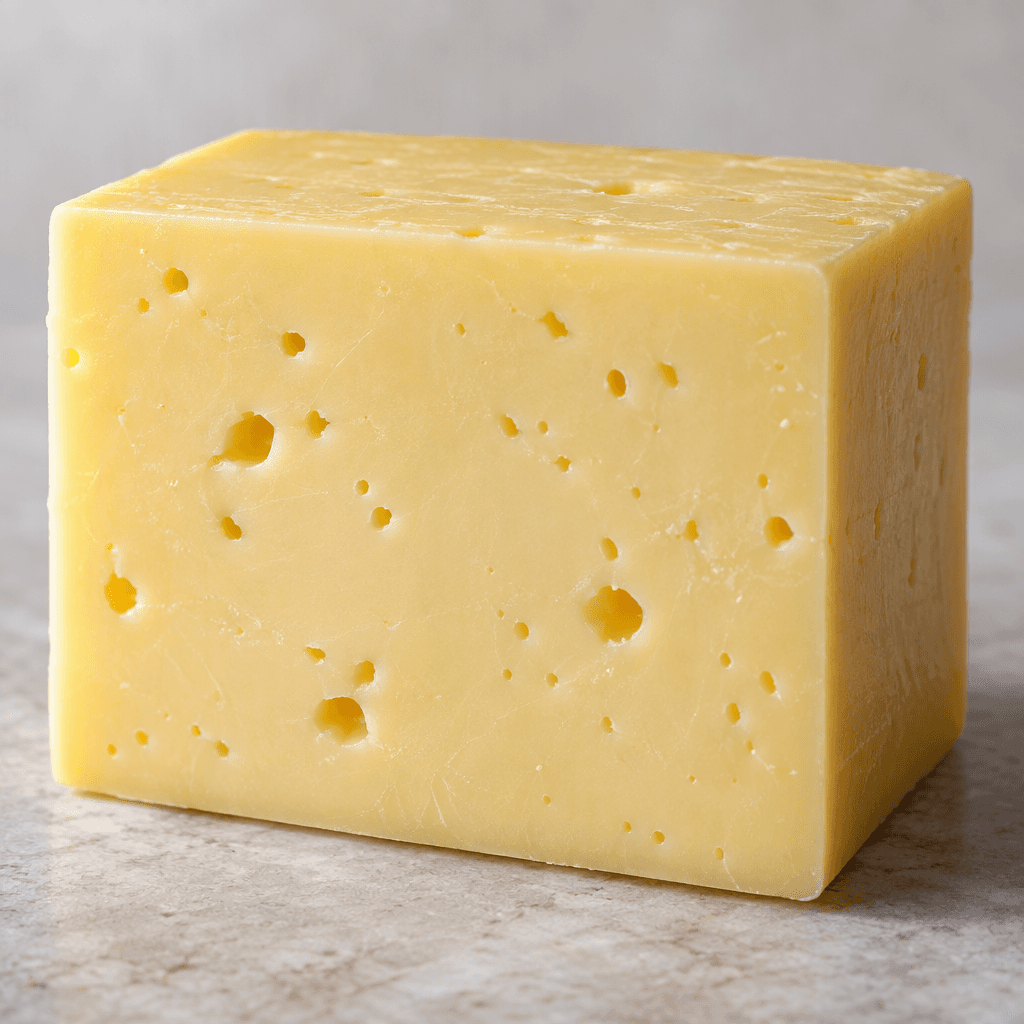
Muratbey Kaşar Cheese Calories
Rich in protein and calcium, classic Turkish Kasar cheese.
In season: Spring · Summer · Autumn · Winter
CALORIES · 100 G
GI
POTASSIUM · 100 G
FIBER · 100 G
Quick answer
1 slice (medium) of Muratbey Kaşar Cheese (30 g) has 107 calories. That works out to 357 calories per 100 g. It contains 0.6 g of carbs, 7.5 g of protein, 8.1 g of fat and 0 g of fiber. Its 150 mg of Phosphorus covers 21% of the Daily Value. Its glycemic index is 0 (low), so it raises blood sugar slowly.
Muratbey Kaşar Cheese Nutrition Facts
Selected: 1 slice (medium) · 30 g
107
KCAL / 30G
Carbs
0.6g
· 0% DV
Protein
7.5g
· 15% DV
Fat
8.1g
· 10% DV
Fiber
0g
· 0% DV
DV is the share of the daily value covered, on a 2,000 kcal reference diet.
Calories come from: Carbs 2% · Protein 28% · Fat 70%
Muratbey Kaşar Cheese nutrition facts table · 1 slice (medium) (30 g)
| Nutrient | Amount | % DV |
|---|---|---|
| Calories | 107 kcal | |
| Total fat | 8.1 g | 10% |
| Saturated fat | 5.1 g | 26% |
| Trans fat | 0.15 g | |
| Sodium | 240 mg | 10% |
| Total carbohydrate | 0.6 g | 0% |
| Fiber | 0 g | 0% |
| Protein | 7.5 g | 15% |
Calories: Calories measure energy. Average daily need is 2,000 kcal. Excess calories are stored as fat, too few cause weight loss.
Carbs: Your body's primary energy source. The brain runs exclusively on carbs. Daily need: 275g.
Protein: Essential for muscle repair and cell growth. Daily need: 50g. Keeps you full and boosts metabolism.
Fat: Needed for hormone production and vitamin absorption. Daily need: 78g. Limit saturated fats, choose unsaturated.
Fiber: Critical for digestive health and satiety. Daily need: 28g. Stabilizes blood sugar, lowers cholesterol.

Log this food in EatBetter
100,000+ people use it
- Get your daily calorie target
- Snap your meal, log it in seconds
- See every vitamin and mineral

📸 Scan the code to get the app free.

How Many Calories in 1 Slice of Muratbey Kaşar Cheese?
| Serving | Amount | Calories |
|---|---|---|
| 1 slice (medium) | 30 g | 107 kcal |
| 1 tablespoon (grated) | 10 g | 36 kcal |
| 1 slice (thin) | 20 g | 71 kcal |
| 1 piece (small) | 25 g | 89 kcal |
| 1 serving (medium) | 40 g | 143 kcal |
| 1 slice (thick) | 50 g | 179 kcal |
| 1 piece (large) | 50 g | 179 kcal |
| 1 serving (large) | 80 g | 286 kcal |
| 100 g | 100 g | 357 kcal |
| 1 cup (grated) | 100 g | 357 kcal |
Calculated from 357 calories per 100 g.
Frequently Asked Questions About Muratbey Kaşar Cheese
What is Muratbey Kaşar Cheese?
Muratbey Kaşar Cheese is a semi-hard Turkish cheese used in everyday cooking. Kaşar has a mild, savoury flavour and can be sliced, grated or melted. Its texture and taste vary with how long the cheese is aged.
Does Muratbey Kaşar Cheese melt well?
Yes, Muratbey Kaşar Cheese softens and melts when heated, making it useful for toasties and baked dishes. Grate or slice it evenly, and use moderate heat so the bread or other ingredients do not overcook before the cheese melts.
How is Muratbey Kaşar Cheese different from cheddar?
Muratbey Kaşar Cheese is a Turkish kaşar, while cheddar is a distinct cheese with its own production and ageing traditions. Kaşar is often milder and works well in Turkish dishes; cheddar can have a sharper flavour, especially when aged.
How should you store Muratbey Kaşar Cheese after opening?
Keep Muratbey Kaşar Cheese refrigerated in its original wrapping or a sealed container after opening. Wrap the cut surface well to limit drying and odour absorption, and follow the package’s storage instructions rather than relying on a fixed number of days.
Can you freeze Muratbey Kaşar Cheese?
Yes, Muratbey Kaşar Cheese can be frozen, though thawing may make its texture drier or crumbly. Divide it into portions, seal them well, and use the thawed cheese in cooked dishes such as toasties, sauces or bakes.
Can you use Muratbey Kaşar Cheese on pizza?
Yes, Muratbey Kaşar Cheese melts on pizza and can be grated over the top. It gives a mild, savoury finish; combine it with another pizza cheese if you want a different balance of flavour or texture.
What can you use instead of Muratbey Kaşar Cheese?
For a similar role, use another mild semi-hard cheese that melts well. Mozzarella gives a softer, stretchier result, while cheddar brings a stronger flavour. The best substitute depends on whether the recipe needs melting, browning or a distinctly Turkish kaşar taste.
Is Muratbey Kaşar Cheese good for grilled cheese sandwiches?
Yes, Muratbey Kaşar Cheese works well in grilled cheese sandwiches because it melts as the bread browns. Slice it thinly and spread it evenly across the bread; cooking over moderate heat helps the centre melt without scorching the outside.
Can you eat Muratbey Kaşar Cheese without cooking it?
Yes, Muratbey Kaşar Cheese can be eaten as it is. Serve it sliced with bread or fruit, or add it to a cold sandwich; refrigerate the opened cheese and keep it wrapped between servings.
Is Muratbey Kaşar Cheese safe to eat during pregnancy?
Yes, Muratbey Kaşar Cheese is suitable during pregnancy if it is made with pasteurized milk. Check the packaging or confirm with the manufacturer if the milk treatment is unclear; unpasteurized cheese can carry harmful bacteria.
Muratbey Kaşar Cheese Vitamins & Minerals
Vitamins
B12
0.45µg · 19% DV
B2
0.11mg · 8% DV
Vitamin A
66µg · 7% DV
B5
0.15mg · 3% DV
Minerals
Phosphorus
150mg · 21% DV
Calcium
210mg · 21% DV
Sodium
240mg · 10% DV
Zinc
1.05mg · 10% DV
Potassium ⭐
36mg · 1% DV
Muratbey Kaşar Cheese Glycemic Index
GLYCEMIC INDEX
GLYCEMIC LOAD
Accounts for portion size — a more realistic measure than GI alone.
How to Burn Off Muratbey Kaşar Cheese
To burn the 107 calories in 1 slice (medium) (30 g):
🚶
Walking (5 km/h)
🏃
Running (8 km/h)
🚴
Cycling
🏊
Swimming
Times are calculated with the MET equation for a 70 kg adult. Actual burn varies with your weight, age and pace.
What is Muratbey Kaşar Cheese?
Muratbey Kaşar Cheese is a branded version of kaşar, a Turkish semi-hard cheese traditionally made from cow’s milk. It has a smooth, sliceable texture and a mild, milky flavour that becomes more savoury as the cheese matures. It also melts readily, making it useful both at the table and in cooking.
In Turkey, kaşar is a familiar breakfast cheese, served with bread, olives and tea, and it is a favourite for toasties, börek and baked dishes. It is filling and provides protein and calcium; a 100 g portion contains 25 g of protein. For a lighter meal, use a thin slice in a sandwich with tomato and fresh greens, or grate a little over vegetables.
How Nutritious Is Muratbey Kaşar Cheese?
Nutrient density
Medium
How many vitamins, minerals and how much fiber this food carries per calorie. A high score means a lot of nutrition for few calories.
Satiety score
Low
An EatBetter score computed from fiber, protein and calorie density. A high score means staying full longer on the same calories.
Both scores are calculated per 100 g and do not change with the selected portion. The satiety score is EatBetter's own calculation, not a clinical measure.
Is Muratbey Kaşar Cheese Processed?
NOVA 3
Processed
1. Unprocessed
2. Minimally Processed
3. Processed
4. Ultra-Processed
NOVA classifies foods into 4 groups by industrial processing. NOVA 1 (unprocessed) is the healthiest.
Does Muratbey Kaşar Cheese Contain Allergens?
Contains these allergens:
Which Diets Is Muratbey Kaşar Cheese Good For?
Vegan
— Not suitable
Vegetarian
✓ Suitable
Gluten-Free
— Not suitable
Dairy-Free
— Not suitable
Mediterranean
✓ Suitable
Paleo
— Not suitable
Whole30
— Not suitable
DASH
— Not suitable
Keto
— Not suitable
Low FODMAP
— Not suitable
Muratbey Kaşar Cheese Fat Profile
SATURATED
5.1g
MONOUNSATURATED
2.25g
POLYUNSATURATED
0.3g
Omega 6:3 ratio 7:1
Above the ideal 4:1 (7:1).
Compare Muratbey Kaşar Cheese
Foods Similar to Muratbey Kaşar Cheese
Have another question about Muratbey Kaşar Cheese?
Ask the AI nutrition coach — calories, portions, alternatives and more, answered in seconds in the app.

Scan calories with your camera
Instant AI nutrition analysis

Nutrition data compiled from USDA FoodData Central and scientific sources.