

Ready & Packaged Foods
All →Vegetables & Legumes
All →Desserts & Confectionery
All →Meat & Protein
All →Grains & Bakery
All →Beverages
All →Milk & Dairy
All →

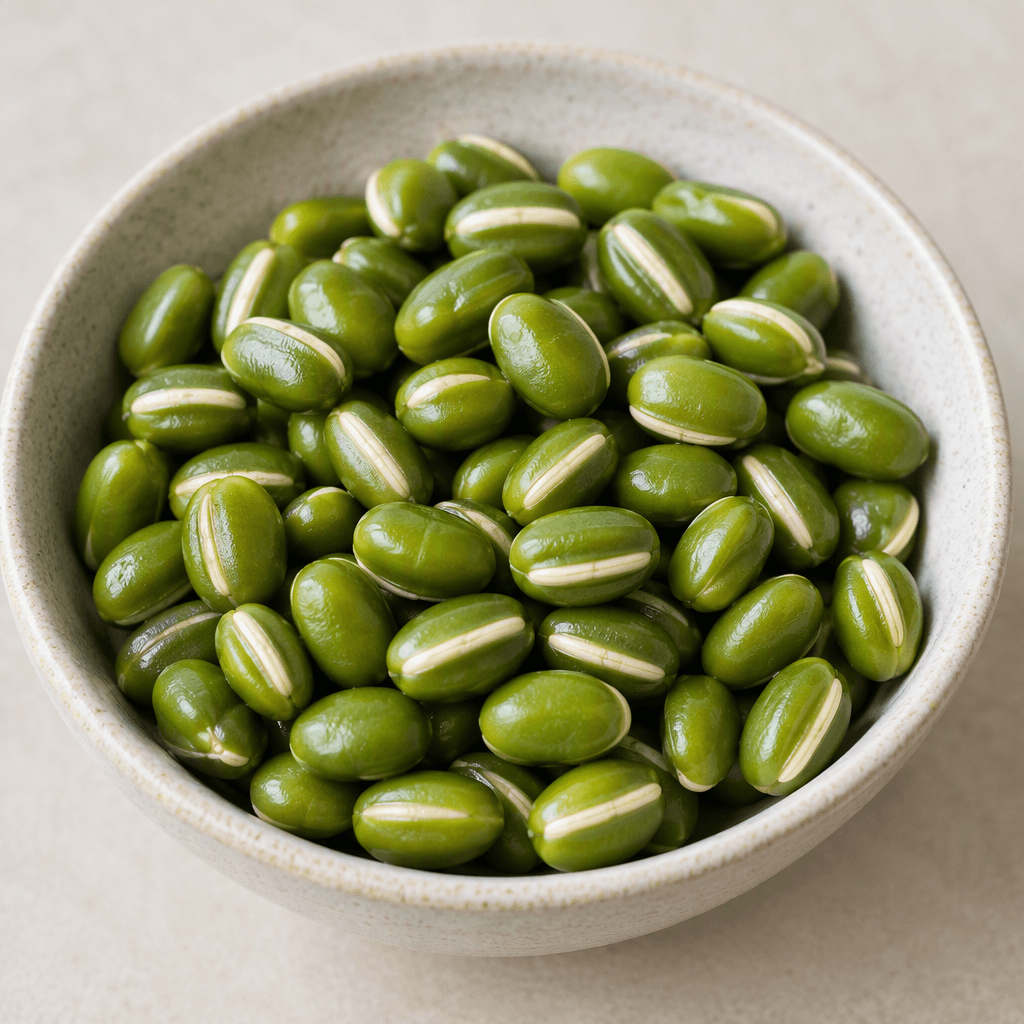
Mung Beans Calories
High in protein and fiber, low fat, vegan-friendly legume
In season: Spring · Summer · Autumn · Winter
CALORIES
GI
POTASSIUM
FIBER
Quick answer
1 cup (medium) of Mung Beans (200 g) has 694 calories. That works out to 347 calories per 100 g. It contains 125.2 g of carbs, 47.8 g of protein, 2.4 g of fat and 32.6 g of fiber. Its 1250 µg of Folate covers 313% of the Daily Value. Its glycemic index is 25 (low), so it raises blood sugar slowly.
What is Mung Beans?
Mung beans are small green legumes thought to have originated in South Asia. They’re eaten whole in many cuisines, while split and hulled forms are common in Indian dals; the whole beans can also be sprouted for use in salads and stir-fries.
Once cooked, they become tender but usually hold their shape, with a mild, earthy taste. Serve them in soups, curries or grain bowls, or chill them and toss with herbs and a bright dressing. They’re a protein- and fibre-rich choice with little fat, and work well in plant-based meals. Pair them with vegetables and grains for a satisfying dish, or use the sprouts for a crisp, lighter addition.
Mung Beans Nutrition Facts
Selected: 100 g
347
KCAL / 100G
Carbs
62.6g
· 23% DV
Protein
23.9g
· 48% DV
Fat
1.2g
· 2% DV
Fiber
16.3g
· 58% DV
DV is the share of the daily value covered, on a 2,000 kcal reference diet.
Calories come from: Carbs 70% · Protein 27% · Fat 3%
Mung Beans Vitamins & Minerals
Vitamins
Folate
625µg · 156% DV
B1
0.62mg · 52% DV
B5
1.9mg · 38% DV
Biotin
7µg · 23% DV
Minerals
Copper
1mg · 111% DV
Phosphorus
367mg · 52% DV
Manganese
1mg · 43% DV
Iron
7mg · 39% DV
How Nutritious Is Mung Beans?
Nutrient density
Very high
How many vitamins, minerals and how much fiber this food carries per calorie. A high score means a lot of nutrition for few calories.
Satiety score
High
An EatBetter score computed from fiber, protein and calorie density. A high score means staying full longer on the same calories.
Both scores are calculated per 100 g and do not change with the selected portion. The satiety score is EatBetter's own calculation, not a clinical measure.
Mung Beans Glycemic Index
GLYCEMIC INDEX
GLYCEMIC LOAD
Accounts for portion size — a more realistic measure than GI alone.
How to Burn Off Mung Beans
To burn the 347 calories in 100 g:
🚶
Walking (5 km/h)
🏃
Running (8 km/h)
🚴
Cycling
🏊
Swimming
Times are calculated with the MET equation for a 70 kg adult. Actual burn varies with your weight, age and pace.
Is Mung Beans Processed?
NOVA 1
Unprocessed
1. Unprocessed
2. Minimally Processed
3. Processed
4. Ultra-Processed
NOVA classifies foods into 4 groups by industrial processing. NOVA 1 (unprocessed) is the healthiest.
Does Mung Beans Contain Allergens?
No known major allergens
Which Diets Is Mung Beans Good For?
Vegan
✓ Suitable
Vegetarian
✓ Suitable
Gluten-Free
✓ Suitable
Dairy-Free
— Not suitable
Mediterranean
✓ Suitable
Paleo
✓ Suitable
Whole30
— Not suitable
DASH
— Not suitable
Keto
✓ Suitable
Low FODMAP
— Not suitable
Mung Beans Fat Profile
SATURATED
0.35g
MONOUNSATURATED
0.21g
POLYUNSATURATED
0.39g
Omega 6:3 ratio 5.3:1
Above the ideal 4:1 (5.3:1).
Compare Mung Beans
Foods Similar to Mung Beans
Frequently Asked Questions About Mung Beans
How do you cook mung beans?
Rinse mung beans, then simmer them in plenty of water until tender. Keep them whole for salads or cook them longer for soups and stews. Add acidic ingredients such as lemon or tomatoes after the beans soften, since acid can slow cooking.
Do mung beans need to be soaked before cooking?
No, mung beans do not have to be soaked before cooking. Soaking them for a few hours can shorten the cooking time and help them cook evenly. If you soak them, drain and rinse them before adding fresh water to the pot.
How long do mung beans take to cook?
Unsoaked mung beans typically take about 25–35 minutes to simmer until tender; soaked beans may cook faster. The exact time varies with how old the beans are, so start checking near the end and stop while the skins and centers are still intact.
How do you sprout mung beans at home?
To sprout mung beans, soak them overnight, drain them well, and place them in a clean jar away from direct sunlight. Rinse and drain them several times a day, keeping the beans moist but not sitting in water. Refrigerate the sprouts once they are ready and use them promptly.
Are mung beans the same as moong dal?
Not exactly: moong dal usually means split mung beans, often with the green skins removed, while mung beans are the whole beans. They come from the same plant, but split dal cooks faster and produces a softer, creamier result.
What do mung beans taste like?
Mung beans have a mild, slightly sweet, earthy flavor. Their soft but distinct texture works well with aromatic spices, ginger, garlic, and coconut milk, and their gentle taste also makes them a good fit for salads and soups.
Can you eat mung beans raw?
No, dried mung beans should not be eaten raw; they are hard to digest and need cooking. Mung bean sprouts are eaten raw in some dishes, but raw sprouts can carry harmful bacteria, so cooking them is the safer choice, especially for people at higher risk of foodborne illness.
How should you store mung beans?
Store dried mung beans in an airtight container in a cool, dry place away from sunlight. Refrigerate cooked mung beans in a covered container and use them within a few days, or freeze them in portions for longer storage.
Do mung beans cause gas?
Yes, mung beans can cause gas or bloating for some people because they contain fermentable carbohydrates. Soaking and draining them, cooking them thoroughly, and starting with a smaller serving may make them easier to tolerate.
Are mung beans good for weight loss?
Mung beans can support a filling meal because their protein and fiber help with satiety. They do not cause weight loss on their own, but adding them to soups, salads, or grain bowls can make a meal more satisfying.
Have another question about Mung Beans?
Ask the AI nutrition coach — calories, portions, alternatives and more, answered in seconds in the app.

Scan calories with your camera
Instant AI nutrition analysis

Nutrition data compiled from USDA FoodData Central and scientific sources.