

Ready & Packaged Foods
All →Vegetables & Legumes
All →Desserts & Confectionery
All →Meat & Protein
All →Grains & Bakery
All →Beverages
All →Milk & Dairy
All →

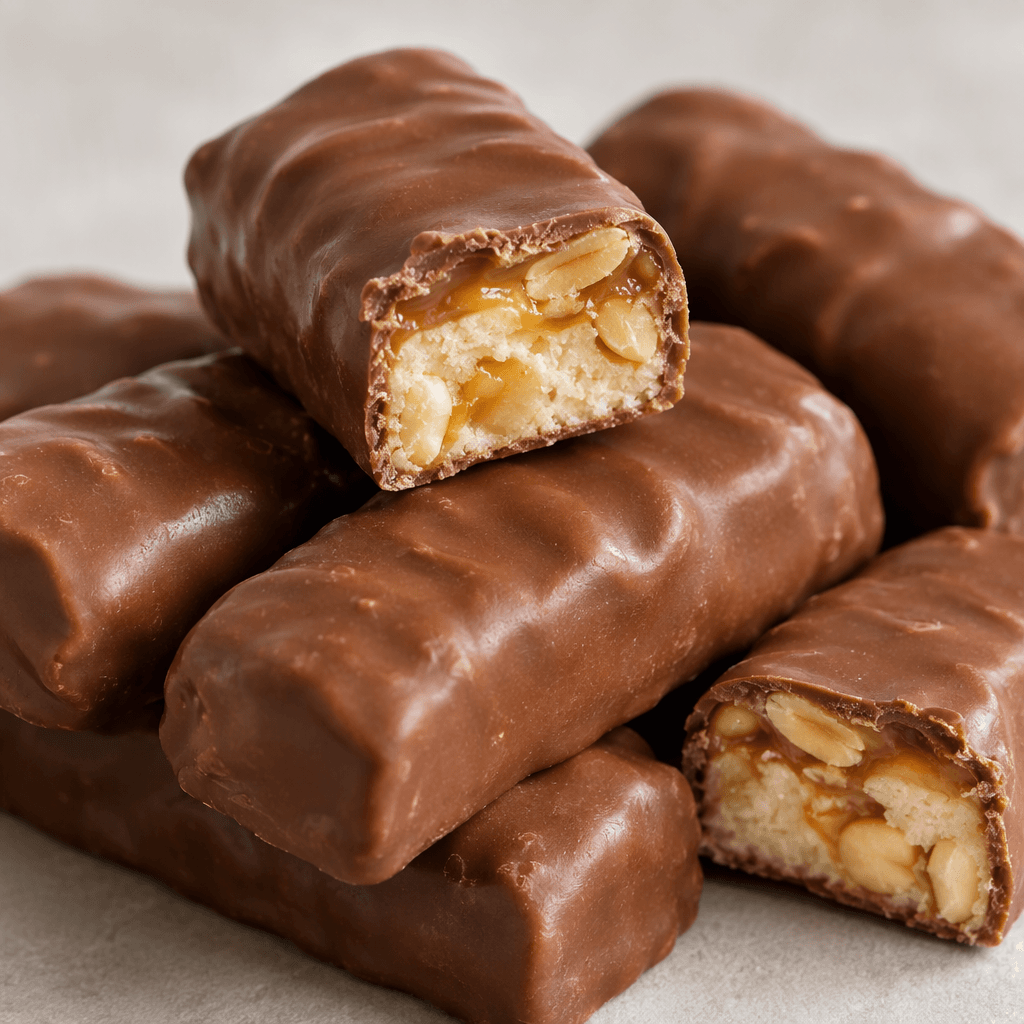
Mini Metro chocolate Calories
Mini Metro chocolate
CALORIES · 100 G
GI
POTASSIUM · 100 G
FIBER · 100 G
Quick answer
1 piece (mini) of Mini Metro chocolate (18 g) has 87 calories. That works out to 485 calories per 100 g. It contains 11.6 g of carbs, 1 g of protein, 4.1 g of fat and 0.5 g of fiber. Its 0.1 mg of Copper covers 6% of the Daily Value. Its glycemic index is 65 (high), so it raises blood sugar quickly.
Mini Metro chocolate Nutrition Facts
Selected: 1 piece (mini) · 18 g
87
KCAL / 18G
Carbs
11.6g
· 4% DV
Protein
1g
· 2% DV
Fat
4.1g
· 5% DV
Fiber
0.5g
· 2% DV
DV is the share of the daily value covered, on a 2,000 kcal reference diet.
Calories come from: Carbs 53% · Protein 5% · Fat 42%
Mini Metro chocolate nutrition facts table · 1 piece (mini) (18 g)
| Nutrient | Amount | % DV |
|---|---|---|
| Calories | 87 kcal | |
| Total fat | 4.1 g | 5% |
| Saturated fat | 2.43 g | 12% |
| Trans fat | 0.02 g | |
| Sodium | 16 mg | 1% |
| Total carbohydrate | 11.6 g | 4% |
| Fiber | 0.5 g | 2% |
| Protein | 1 g | 2% |
Calories: Calories measure energy. Average daily need is 2,000 kcal. Excess calories are stored as fat, too few cause weight loss.
Carbs: Your body's primary energy source. The brain runs exclusively on carbs. Daily need: 275g.
Protein: Essential for muscle repair and cell growth. Daily need: 50g. Keeps you full and boosts metabolism.
Fat: Needed for hormone production and vitamin absorption. Daily need: 78g. Limit saturated fats, choose unsaturated.
Fiber: Critical for digestive health and satiety. Daily need: 28g. Stabilizes blood sugar, lowers cholesterol.

Log this food in EatBetter
100,000+ people use it
- Get your daily calorie target
- Snap your meal, log it in seconds
- See every vitamin and mineral

📸 Scan the code to get the app free.

How Many Calories in 1 Mini Metro chocolate?
| Serving | Amount | Calories |
|---|---|---|
| 1 piece (mini) | 18 g | 87 kcal |
| 2 piece (mini) | 36 g | 175 kcal |
| 1 piece (small) | 36 g | 175 kcal |
| 1 piece (medium) | 45 g | 218 kcal |
| 3 piece (mini) | 54 g | 262 kcal |
| 1 piece (large) | 60 g | 291 kcal |
| 1 pack (mini) | 90 g | 437 kcal |
| 100 g | 100 g | 485 kcal |
Calculated from 485 calories per 100 g.
Frequently Asked Questions About Mini Metro chocolate
What is Mini Metro chocolate made of?
Mini Metro chocolate is a chocolate-coated caramel confection. The exact ingredients and proportions can vary by product version, so use the package’s current ingredient list if you need to check for a particular ingredient or allergy.
Is Mini Metro chocolate the same as a full-size Metro bar?
Mini Metro chocolate is a smaller-format product, but the name alone does not guarantee that its recipe matches the full-size Metro bar exactly. Compare the packages if you need to confirm differences in ingredients or nutrition.
Why is Mini Metro chocolate so chewy and sticky?
Its caramel center gives Mini Metro chocolate a chewy texture and can make it stick to teeth. Chew it slowly, drink some water afterward, and brush your teeth after eating sticky sweets as part of your usual dental care.
How should you store Mini Metro chocolate?
Keep Mini Metro chocolate sealed in a cool, dry place away from direct sunlight. Heat can soften its coating, while refrigeration may make it harder or cause surface changes; follow any storage directions printed on the wrapper.
Can you melt Mini Metro chocolate for baking?
Yes, you can melt Mini Metro chocolate, but its caramel center can make the result thick and stretchy rather than smooth like plain chocolate. Heat it gently in short intervals, and avoid using it where a fluid chocolate coating is essential.
Can Mini Metro chocolate be used as a cake or ice-cream topping?
Yes, chopped Mini Metro chocolate can be scattered over cake or ice cream for a caramel-and-chocolate topping. Its chewy caramel may stay firm when cold, so small pieces are easier to bite than large chunks.
Does Mini Metro chocolate contain caffeine?
Yes, chocolate made with cocoa can contain a small amount of naturally occurring caffeine. The amount in Mini Metro chocolate is not provided here, so people who are sensitive to caffeine may prefer not to eat it late in the day.
Is Mini Metro chocolate suitable for young children?
Older children who can chew and swallow confidently can have Mini Metro chocolate occasionally. Its sticky caramel can be difficult for very young children to manage, so supervise them and avoid giving it to a child who cannot safely chew it.
Can Mini Metro chocolate cause weight gain?
Eating Mini Metro chocolate frequently or in large portions can add to overall energy intake and contribute to weight gain over time. One piece does not cause weight gain on its own; treat it as an occasional sweet rather than a meal replacement.
Can you make a homemade version of Mini Metro chocolate?
Yes, you can make a homemade caramel bar and coat it with melted chocolate. Homemade versions may have a different texture and keeping time from packaged Mini Metro chocolate, so store them safely and eat them promptly.
Mini Metro chocolate Vitamins & Minerals
Vitamins
B2
0.02mg · 2% DV
B12
0.04µg · 2% DV
B5
0.05mg · 1% DV
Vitamin E
0.13mg · 1% DV
Minerals
Copper
0.05mg · 6% DV
Phosphorus
27mg · 4% DV
Manganese
0.05mg · 2% DV
Calcium
22mg · 2% DV
Potassium ⭐
38mg · 1% DV
Sodium
16mg · 1% DV
Mini Metro chocolate Glycemic Index
GLYCEMIC INDEX
GLYCEMIC LOAD
Accounts for portion size — a more realistic measure than GI alone.
How to Burn Off Mini Metro chocolate
To burn the 87 calories in 1 piece (mini) (18 g):
🚶
Walking (5 km/h)
🏃
Running (8 km/h)
🚴
Cycling
🏊
Swimming
Times are calculated with the MET equation for a 70 kg adult. Actual burn varies with your weight, age and pace.
What is Mini Metro chocolate?
Mini Metro chocolate is the bite-sized version of the Metro bar sold in Turkey. It pairs a soft, chewy caramel centre with peanuts and a milk-chocolate coating, making it a compact sweet rather than a plain chocolate square. Its small format is handy when you want a little treat without opening a full-size bar.
The filling is sticky and yielding, with the peanuts adding a roasted note against the sweet caramel and chocolate. In Turkey, it is commonly enjoyed as an easy snack between meals or alongside tea or coffee; elsewhere, it works just as well as an occasional lunchbox or desk-side treat. It is energy-dense and supplies mostly carbohydrate and fat, at 485 kcal per 100 g. For a lighter snack, keep to one mini piece and pair it with fresh fruit.
How Nutritious Is Mini Metro chocolate?
Nutrient density
Low
How many vitamins, minerals and how much fiber this food carries per calorie. A high score means a lot of nutrition for few calories.
Satiety score
Low
An EatBetter score computed from fiber, protein and calorie density. A high score means staying full longer on the same calories.
Both scores are calculated per 100 g and do not change with the selected portion. The satiety score is EatBetter's own calculation, not a clinical measure.
Is Mini Metro chocolate Processed?
NOVA 4
Ultra-Processed
1. Unprocessed
2. Minimally Processed
3. Processed
4. Ultra-Processed
NOVA classifies foods into 4 groups by industrial processing. NOVA 1 (unprocessed) is the healthiest.
Does Mini Metro chocolate Contain Allergens?
Contains these allergens:
Which Diets Is Mini Metro chocolate Good For?
Vegan
— Not suitable
Vegetarian
✓ Suitable
Gluten-Free
— Not suitable
Dairy-Free
— Not suitable
Mediterranean
— Not suitable
Paleo
— Not suitable
Whole30
— Not suitable
DASH
— Not suitable
Keto
— Not suitable
Low FODMAP
— Not suitable
Mini Metro chocolate Fat Profile
SATURATED
2.43g
MONOUNSATURATED
1.17g
POLYUNSATURATED
0.18g
Compare Mini Metro chocolate
Foods Similar to Mini Metro chocolate
Have another question about Mini Metro chocolate?
Ask the AI nutrition coach — calories, portions, alternatives and more, answered in seconds in the app.

Scan calories with your camera
Instant AI nutrition analysis

Nutrition data compiled from USDA FoodData Central and scientific sources.