

Ready & Packaged Foods
All →Vegetables & Legumes
All →Desserts & Confectionery
All →Meat & Protein
All →Grains & Bakery
All →Beverages
All →Milk & Dairy
All →

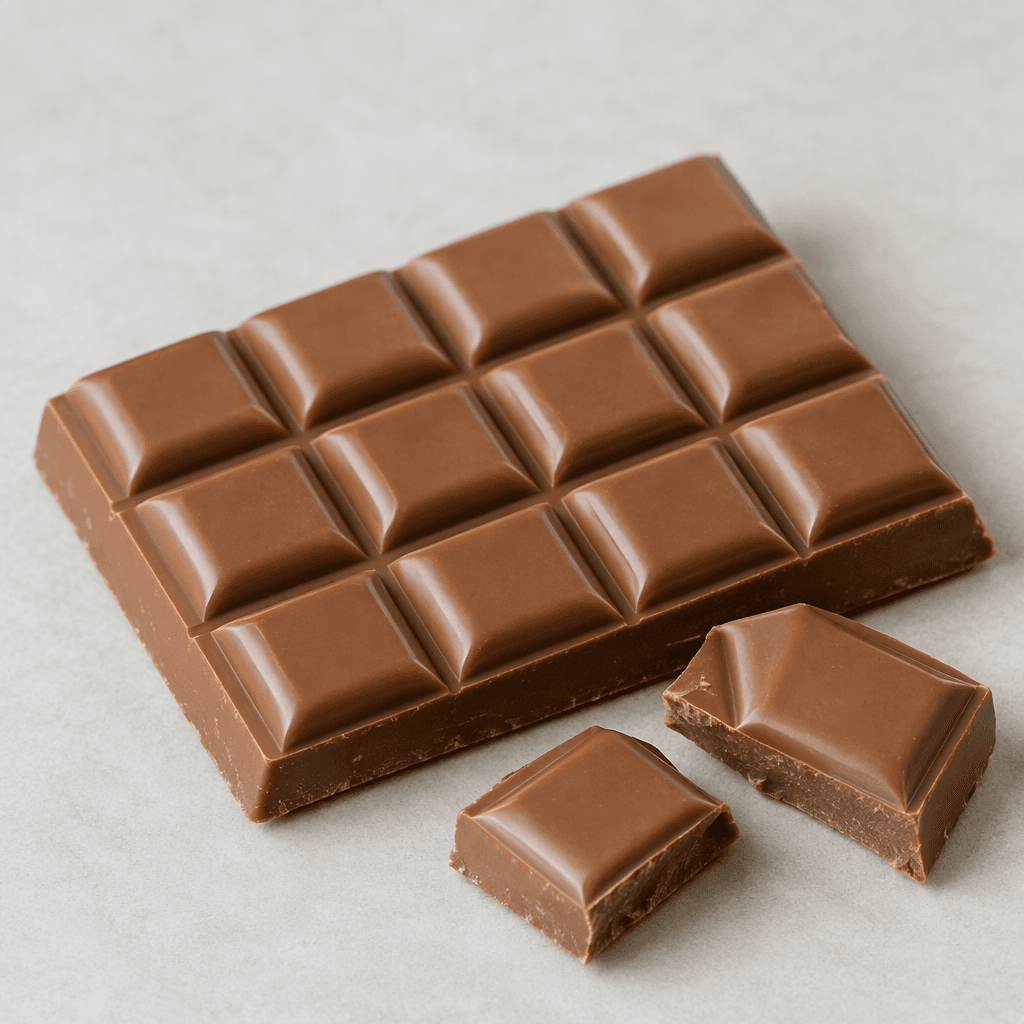
Milka chocolate Calories
Milk chocolate, creamy texture, popular European brand
CALORIES
GI
POTASSIUM
FIBER
Quick answer
1 piece (medium) of Milka chocolate (25 g) has 134 calories. That works out to 535 calories per 100 g. It contains 14 g of carbs, 1.8 g of protein, 7.8 g of fat and 0.6 g of fiber. Its 0.1 mg of Copper covers 11% of the Daily Value. Its glycemic index is 45 (medium), so it raises blood sugar at a moderate pace.
What is Milka chocolate?
Milka chocolate is a packaged milk chocolate brand with roots in the Swiss Suchard company, which introduced the name in 1901. Its familiar purple wrapper and Alpine-inspired imagery have made it a widely recognised European chocolate, sold in bars divided into easy-to-break squares.
The texture is smooth and creamy, with a sweet, milky flavour. It is commonly enjoyed a few squares at a time as a snack, shared with tea or coffee, or used in simple desserts. It is energy-dense, so a modest portion works well when you want something sweet without eating a whole bar. Try it alongside fresh fruit, or let a piece melt into warm milk for a richer drink.
Milka chocolate Nutrition Facts
Selected: 100 g
535
KCAL / 100G
Carbs
56g
· 20% DV
Protein
7g
· 14% DV
Fat
31g
· 40% DV
Fiber
2.5g
· 9% DV
DV is the share of the daily value covered, on a 2,000 kcal reference diet.
Calories come from: Carbs 42% · Protein 5% · Fat 53%
Milka chocolate Vitamins & Minerals
Vitamins
B2
0.32mg · 25% DV
B12
0.5µg · 21% DV
B5
0.7mg · 14% DV
Vitamin E
1.2mg · 8% DV
Minerals
Phosphorus
210mg · 30% DV
Calcium
220mg · 22% DV
Magnesium
60mg · 14% DV
Iron
2mg · 11% DV
How Nutritious Is Milka chocolate?
Nutrient density
Low
How many vitamins, minerals and how much fiber this food carries per calorie. A high score means a lot of nutrition for few calories.
Satiety score
Low
An EatBetter score computed from fiber, protein and calorie density. A high score means staying full longer on the same calories.
Both scores are calculated per 100 g and do not change with the selected portion. The satiety score is EatBetter's own calculation, not a clinical measure.
Milka chocolate Glycemic Index
GLYCEMIC INDEX
GLYCEMIC LOAD
Accounts for portion size — a more realistic measure than GI alone.
How to Burn Off Milka chocolate
To burn the 535 calories in 100 g:
🚶
Walking (5 km/h)
🏃
Running (8 km/h)
🚴
Cycling
🏊
Swimming
Times are calculated with the MET equation for a 70 kg adult. Actual burn varies with your weight, age and pace.
Is Milka chocolate Processed?
NOVA 4
Ultra-Processed
1. Unprocessed
2. Minimally Processed
3. Processed
4. Ultra-Processed
NOVA classifies foods into 4 groups by industrial processing. NOVA 1 (unprocessed) is the healthiest.
Does Milka chocolate Contain Allergens?
Contains these allergens:
Which Diets Is Milka chocolate Good For?
Vegan
— Not suitable
Vegetarian
✓ Suitable
Gluten-Free
— Not suitable
Dairy-Free
— Not suitable
Mediterranean
— Not suitable
Paleo
— Not suitable
Whole30
— Not suitable
DASH
— Not suitable
Keto
— Not suitable
Low FODMAP
— Not suitable
Milka chocolate Fat Profile
SATURATED
19g
MONOUNSATURATED
8g
POLYUNSATURATED
1g
Omega 6:3 ratio 25:1
Above the ideal 4:1 (25:1).
Compare Milka chocolate
Foods Similar to Milka chocolate
Frequently Asked Questions About Milka chocolate
Where is Milka chocolate made?
Milka chocolate originated in Switzerland, where it was first produced in 1901. The brand is now owned by Mondelez International, and its products are made in several European countries rather than at one single factory.
What is Milka chocolate made of?
Classic Milka milk chocolate is made mainly from sugar, milk powder, cocoa butter and cocoa mass, with emulsifiers and flavouring also used. Recipes differ between plain bars and varieties with fillings, biscuits or other additions.
Why is there a purple cow on Milka chocolate?
The purple cow is Milka’s advertising mascot, chosen to make the brand’s Alpine milk-chocolate image distinctive and memorable. It is a brand character, not an ingredient or an indication that the chocolate contains a purple colouring.
Is Milka chocolate real chocolate?
Yes, classic Milka bars are milk chocolate made with cocoa mass and cocoa butter, not merely cocoa-flavoured candy coating. Filled Milka varieties can also contain biscuits, cream or other ingredients alongside the chocolate.
Does Milka chocolate contain palm oil?
The classic Alpine Milk bar recipe generally uses cocoa butter and milk fats, while some filled Milka products may use palm or other vegetable oils in their fillings. Ingredients vary by product and market.
Why does Milka chocolate taste so creamy?
Milka’s creamy texture comes largely from its milk ingredients and cocoa butter. Cocoa butter softens and melts near body temperature, while the milk-rich recipe gives the chocolate its characteristic mild, smooth taste.
Does Milka chocolate contain caffeine?
Yes, Milka chocolate contains a small amount of caffeine because it contains cocoa. The amount varies by variety and portion; it is much less concentrated than coffee, but people who are very caffeine-sensitive may still notice it.
Can you melt Milka chocolate for baking?
Yes, Milka chocolate melts well for drizzling, dipping or mixing into baking. Break it into pieces and heat it gently over a double boiler or in short microwave bursts, stirring often because milk chocolate can scorch easily.
Is Milka chocolate made by Cadbury?
No, Milka chocolate is not made by Cadbury. Both brands belong to Mondelez International, but Milka is a separate brand with its own recipes and packaging.
Can dogs eat Milka chocolate?
No, dogs should not eat Milka chocolate. Cocoa contains theobromine, which is toxic to dogs; milk chocolate has less than dark chocolate, but the risk still depends on how much the dog eats and its size.
Have another question about Milka chocolate?
Ask the AI nutrition coach — calories, portions, alternatives and more, answered in seconds in the app.

Scan calories with your camera
Instant AI nutrition analysis

Nutrition data compiled from USDA FoodData Central and scientific sources.