

Ready & Packaged Foods
All →Vegetables & Legumes
All →Desserts & Confectionery
All →Meat & Protein
All →Grains & Bakery
All →Beverages
All →Milk & Dairy
All →

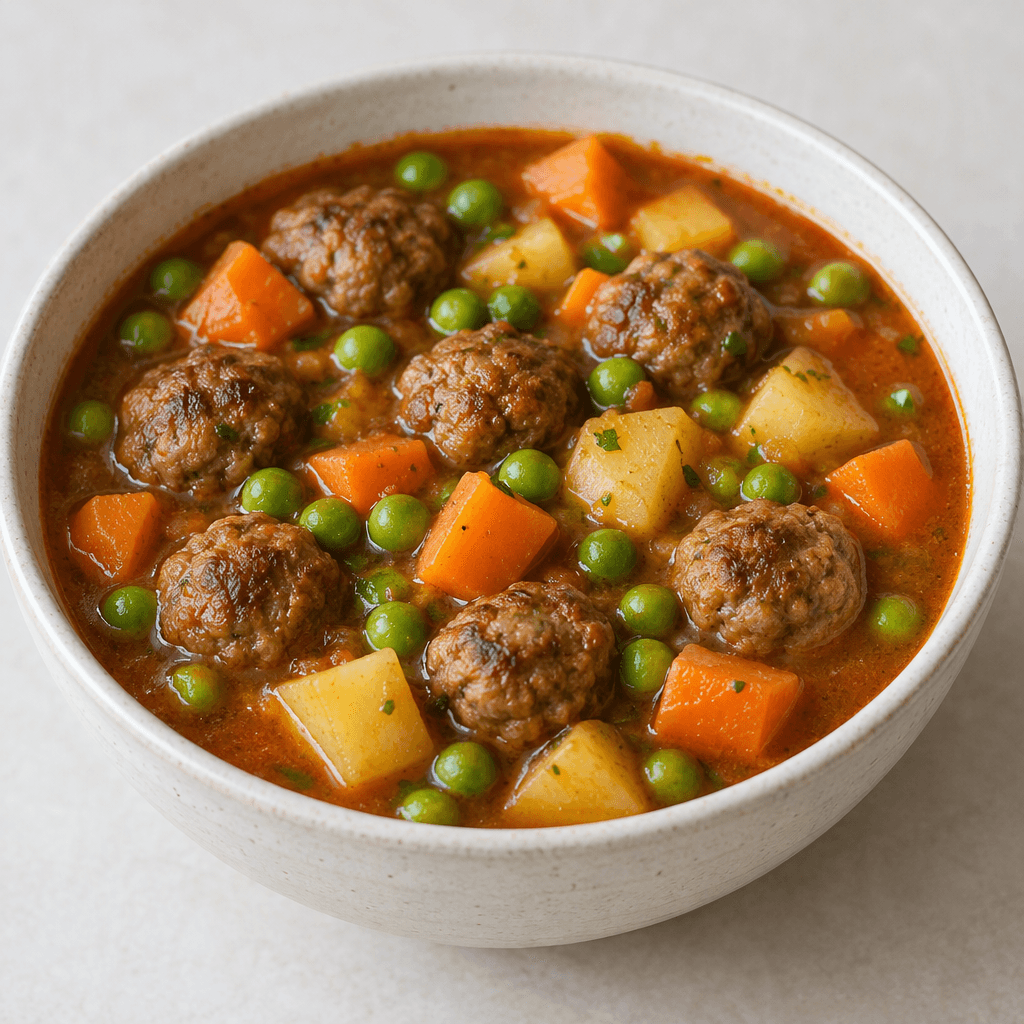
Meatball pea stew Calories
Rich in protein and fiber, contains iron and folate
In season: Spring · Summer
CALORIES
GI
POTASSIUM
FIBER
Quick answer
1 serving (medium) of Meatball pea stew (220 g) has 242 calories. That works out to 110 calories per 100 g. It contains 25.3 g of carbs, 15.8 g of protein, 7.9 g of fat and 6.2 g of fiber. Its 1 µg of B12 covers 41% of the Daily Value. Its glycemic index is 45 (low), so it raises blood sugar slowly.
What is Meatball pea stew?
Meatball pea stew brings small browned meatballs together with peas, potato and carrot in a tomato-based broth. It is a home-style one-pot meal, with the vegetables and seasoning varying from kitchen to kitchen. The peas add a gentle sweetness, while the tender meatballs make the stew hearty and savoury.
Serve it hot for lunch or dinner, with bread to soak up the broth or alongside rice; a spoonful of yoghurt is another simple pairing. Meatballs provide protein, while peas and vegetables contribute fibre, so the dish offers more than a meat-only stew. For a lighter bowl, use a modest amount of oil and add extra peas or other vegetables.
Meatball pea stew Nutrition Facts
Selected: 100 g
110
KCAL / 100G
Carbs
11.5g
· 4% DV
Protein
7.2g
· 14% DV
Fat
3.6g
· 5% DV
Fiber
2.8g
· 10% DV
DV is the share of the daily value covered, on a 2,000 kcal reference diet.
Calories come from: Carbs 43% · Protein 27% · Fat 30%
Meatball pea stew Vitamins & Minerals
Vitamins
B12
0.45µg · 19% DV
Vitamin K
13µg · 11% DV
Folate
38µg · 10% DV
Vitamin C
9mg · 10% DV
Minerals
Sodium
330mg · 14% DV
Phosphorus
85mg · 12% DV
Selenium
6.2µg · 11% DV
Zinc
1mg · 9% DV
How Nutritious Is Meatball pea stew?
Nutrient density
Medium
How many vitamins, minerals and how much fiber this food carries per calorie. A high score means a lot of nutrition for few calories.
Satiety score
Medium
An EatBetter score computed from fiber, protein and calorie density. A high score means staying full longer on the same calories.
Both scores are calculated per 100 g and do not change with the selected portion. The satiety score is EatBetter's own calculation, not a clinical measure.
Meatball pea stew Glycemic Index
GLYCEMIC INDEX
GLYCEMIC LOAD
Accounts for portion size — a more realistic measure than GI alone.
How to Burn Off Meatball pea stew
To burn the 110 calories in 100 g:
🚶
Walking (5 km/h)
🏃
Running (8 km/h)
🚴
Cycling
🏊
Swimming
Times are calculated with the MET equation for a 70 kg adult. Actual burn varies with your weight, age and pace.
Is Meatball pea stew Processed?
NOVA 2
Minimally Processed
1. Unprocessed
2. Minimally Processed
3. Processed
4. Ultra-Processed
NOVA classifies foods into 4 groups by industrial processing. NOVA 1 (unprocessed) is the healthiest.
Does Meatball pea stew Contain Allergens?
No known major allergens
Which Diets Is Meatball pea stew Good For?
Vegan
— Not suitable
Vegetarian
— Not suitable
Gluten-Free
— Not suitable
Dairy-Free
— Not suitable
Mediterranean
✓ Suitable
Paleo
— Not suitable
Whole30
— Not suitable
DASH
— Not suitable
Keto
— Not suitable
Low FODMAP
— Not suitable
Meatball pea stew Fat Profile
SATURATED
1.1g
MONOUNSATURATED
1.3g
POLYUNSATURATED
0.22g
Omega 6:3 ratio 4.5:1
Above the ideal 4:1 (4.5:1).
Compare Meatball pea stew
Foods Similar to Meatball pea stew
Frequently Asked Questions About Meatball pea stew
How do you make meatball pea stew?
Meatball pea stew is made by simmering seasoned meatballs with peas in a tomato-based broth, often with diced potato and carrot. Brown the meatballs first, soften onion with tomato paste, then add the vegetables and hot stock; simmer gently until everything is cooked through.
What meat is best for meatball pea stew?
Ground beef is a common choice for meatball pea stew because it holds its shape and gives the broth a savory flavor. A beef-and-lamb mixture also works, while very lean mince can make the meatballs dry unless you avoid overmixing and overcooking them.
Should you brown the meatballs before adding them to meatball pea stew?
Browning the meatballs before adding them to meatball pea stew is optional, but it helps them hold together and adds a deeper flavor to the broth. Sear them briefly rather than cooking them through; they finish cooking as the stew simmers.
Can you use frozen peas in meatball pea stew?
Yes, frozen peas work well in meatball pea stew and can go straight into the pot without thawing. Add them later than the meatballs and firm vegetables so they stay whole and tender instead of turning mushy.
What should you serve with meatball pea stew?
Meatball pea stew pairs well with crusty bread, rice, or a simple grain such as bulgur to soak up its tomato broth. A crisp green salad or plain yogurt makes a refreshing contrast to the warm, savory stew.
Can you make meatball pea stew without potatoes?
Yes, meatball pea stew can be made without potatoes; the peas, meatballs, and broth still make a complete, hearty dish. Add extra carrots or another firm vegetable if you want more bulk, and check the broth near the end since omitting potatoes makes it less starchy.
How do you keep meatball pea stew from becoming watery?
To keep meatball pea stew from becoming watery, use only enough broth to just cover the ingredients and simmer it uncovered near the end. Avoid adding frozen peas with excess ice, and let the stew stand briefly before serving so its broth settles and thickens.
Can you freeze meatball pea stew?
Yes, meatball pea stew can be frozen in sealed portions once it has cooled. The meatballs and peas generally freeze well, but potatoes may become soft or grainy after thawing. Defrost it in the refrigerator and reheat thoroughly, stirring gently to keep the meatballs intact.
How long does leftover meatball pea stew keep in the refrigerator?
Leftover meatball pea stew keeps well when promptly refrigerated in a covered container. Reheat only the portion you plan to eat, until it is steaming throughout, and discard it if it has been left at room temperature for an extended time or smells unusual.
Can you make meatball pea stew in a slow cooker?
Yes, meatball pea stew can be made in a slow cooker, though browning the meatballs and onion first gives the broth more flavor. Add the peas later in cooking so they retain their shape, and avoid cutting the potatoes too small because they soften over a long simmer.
Have another question about Meatball pea stew?
Ask the AI nutrition coach — calories, portions, alternatives and more, answered in seconds in the app.

Scan calories with your camera
Instant AI nutrition analysis

Nutrition data compiled from USDA FoodData Central and scientific sources.