

Ready & Packaged Foods
All →Vegetables & Legumes
All →Desserts & Confectionery
All →Meat & Protein
All →Grains & Bakery
All →Beverages
All →Milk & Dairy
All →

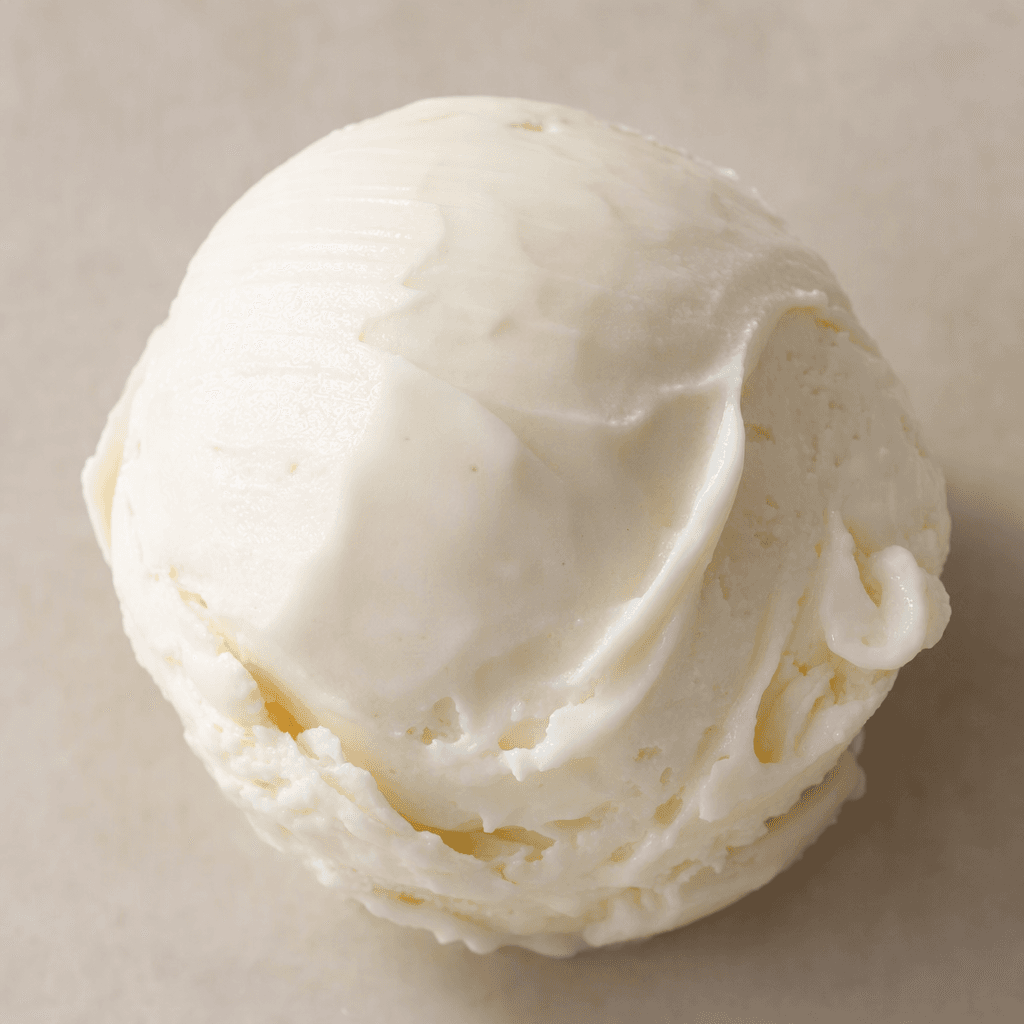
Maraş ice cream with goat milk Calories
Traditional stretchy ice cream made with goat milk and salep
In season: Spring · Summer · Autumn · Winter
CALORIES
GI
POTASSIUM
FIBER
Quick answer
100 g of Maraş ice cream with goat milk has 215 calories. It contains 24.8 g of carbs, 4.6 g of protein, 11.2 g of fat and 0.2 g of fiber. Its 112 mg of Phosphorus covers 16% of the Daily Value. Its glycemic index is 58 (medium), so it raises blood sugar at a moderate pace.
What is Maraş ice cream with goat milk?
Maraş ice cream with goat milk is a traditional Turkish ice cream associated with Kahramanmaraş. Goat’s milk and sugar give it its creamy base, while salep—a thickening ingredient made from orchid tubers—helps create its famously dense, elastic texture.
It is often served in a cone or cup, and its stretchy consistency can make it easier to eat with a fork or knife than to scoop. In Turkey it is enjoyed as a cooling treat in warm weather or as dessert after a meal; elsewhere, it is a distinctive alternative to softer-style ice cream. It is sweet and energy-dense, with about 215 calories per 100 g. For a lighter serving, choose a smaller portion and pair it with fresh fruit.
Maraş ice cream with goat milk Nutrition Facts
Selected: 100 g
215
KCAL / 100G
Carbs
24.8g
· 9% DV
Protein
4.6g
· 9% DV
Fat
11.2g
· 14% DV
Fiber
0.2g
· 1% DV
DV is the share of the daily value covered, on a 2,000 kcal reference diet.
Calories come from: Carbs 45% · Protein 8% · Fat 47%
Maraş ice cream with goat milk Vitamins & Minerals
Vitamins
B2
0.18mg · 14% DV
B12
0.28µg · 12% DV
Vitamin A
82µg · 9% DV
B5
0.42mg · 8% DV
Minerals
Phosphorus
112mg · 16% DV
Calcium
145mg · 14% DV
Iodine
8µg · 5% DV
Potassium ⭐
185mg · 5% DV
How Nutritious Is Maraş ice cream with goat milk?
Nutrient density
Low
How many vitamins, minerals and how much fiber this food carries per calorie. A high score means a lot of nutrition for few calories.
Satiety score
Low
An EatBetter score computed from fiber, protein and calorie density. A high score means staying full longer on the same calories.
Both scores are calculated per 100 g and do not change with the selected portion. The satiety score is EatBetter's own calculation, not a clinical measure.
Maraş ice cream with goat milk Glycemic Index
GLYCEMIC INDEX
GLYCEMIC LOAD
Accounts for portion size — a more realistic measure than GI alone.
How to Burn Off Maraş ice cream with goat milk
To burn the 215 calories in 100 g:
🚶
Walking (5 km/h)
🏃
Running (8 km/h)
🚴
Cycling
🏊
Swimming
Times are calculated with the MET equation for a 70 kg adult. Actual burn varies with your weight, age and pace.
Is Maraş ice cream with goat milk Processed?
NOVA 3
Processed
1. Unprocessed
2. Minimally Processed
3. Processed
4. Ultra-Processed
NOVA classifies foods into 4 groups by industrial processing. NOVA 1 (unprocessed) is the healthiest.
Does Maraş ice cream with goat milk Contain Allergens?
Contains these allergens:
Which Diets Is Maraş ice cream with goat milk Good For?
Vegan
— Not suitable
Vegetarian
✓ Suitable
Gluten-Free
✓ Suitable
Dairy-Free
— Not suitable
Mediterranean
✓ Suitable
Paleo
— Not suitable
Whole30
— Not suitable
DASH
— Not suitable
Keto
— Not suitable
Low FODMAP
— Not suitable
Maraş ice cream with goat milk Fat Profile
SATURATED
7.1g
MONOUNSATURATED
2.8g
POLYUNSATURATED
0.4g
Omega 6:3 ratio 3.4:1
Below the ideal 4:1 — a good omega balance.
Compare Maraş ice cream with goat milk
Foods Similar to Maraş ice cream with goat milk
Frequently Asked Questions About Maraş ice cream with goat milk
What is Maraş ice cream with goat milk made of?
Maraş ice cream with goat milk is traditionally made with goat milk, sugar and salep, a thickening ingredient derived from certain orchid tubers. The mixture is churned and worked to create its dense, stretchy texture.
Why is Maraş ice cream with goat milk so stretchy?
Maraş ice cream with goat milk gets its stretchy texture from salep and the way the mixture is worked while freezing. Salep thickens it, while traditional beating makes the ice cream unusually dense and elastic.
Where does Maraş ice cream with goat milk come from?
Maraş ice cream with goat milk comes from Kahramanmaraş, a city in southern Türkiye. The local style is known for its use of salep and a dense texture that can be cut and stretched rather than scooped like ordinary ice cream.
How is Maraş ice cream with goat milk different from Turkish dondurma?
Maraş ice cream with goat milk is a regional style of Turkish dondurma, not a separate category from it. Its especially dense, elastic texture and association with Kahramanmaraş set it apart from many other Turkish ice creams.
Does Maraş ice cream with goat milk taste strongly of goat milk?
Maraş ice cream with goat milk can have a mild, distinctive goat-milk flavor, but it is usually balanced by its sweetness and the flavor of salep. The strength of the dairy note varies with the milk and recipe.
Does Maraş ice cream with goat milk contain salep?
Traditional Maraş ice cream with goat milk is made with salep, which helps give it its thick, elastic texture. Recipes and commercial products can vary, so not every version necessarily follows the traditional formulation.
How do you eat Maraş ice cream with goat milk?
Maraş ice cream with goat milk is often served in firm slices or portions cut with a knife or spatula, rather than as soft scoops. Letting it sit briefly makes it easier to portion while keeping its characteristic chew.
Can people with lactose intolerance eat Maraş ice cream with goat milk?
Maraş ice cream with goat milk still contains lactose, so it may cause symptoms in people who are lactose intolerant. Goat milk is not lactose-free, and tolerance varies; people with a milk allergy should avoid it.
How should you store Maraş ice cream with goat milk after opening?
Keep Maraş ice cream with goat milk tightly covered in the freezer to limit ice crystals and unwanted odors. Serve only what you plan to eat, since repeated thawing and refreezing can damage its dense, stretchy texture.
Can you make Maraş ice cream with goat milk at home?
Yes, you can make Maraş ice cream with goat milk at home, but reproducing its traditional elasticity takes salep and repeated mixing or beating as it freezes. A standard home freezer may produce a less stretchy result than specialist equipment.
Have another question about Maraş ice cream with goat milk?
Ask the AI nutrition coach — calories, portions, alternatives and more, answered in seconds in the app.

Scan calories with your camera
Instant AI nutrition analysis

Nutrition data compiled from USDA FoodData Central and scientific sources.