

Ready & Packaged Foods
All →Vegetables & Legumes
All →Desserts & Confectionery
All →Meat & Protein
All →Grains & Bakery
All →Beverages
All →Milk & Dairy
All →

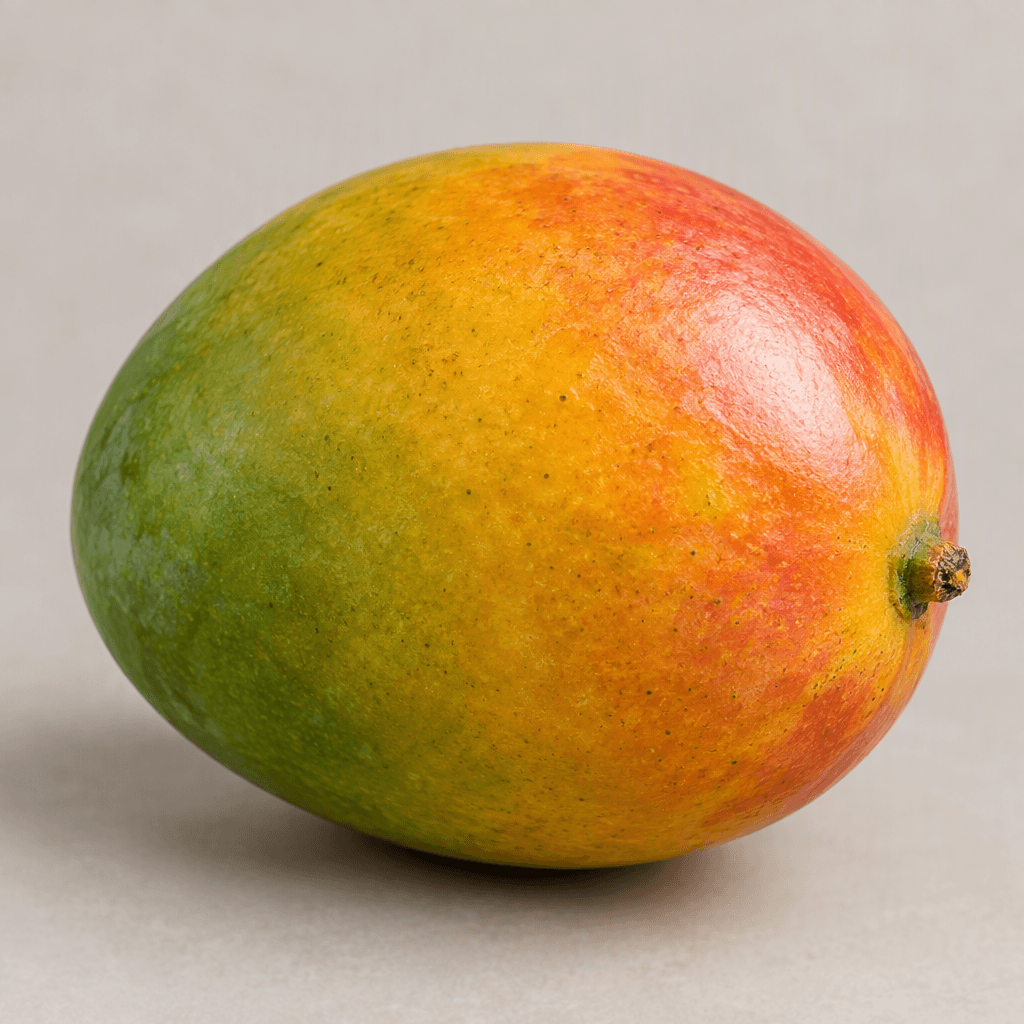
Mango Calories
Vitamin C, fiber, antioxidants
In season: Spring · Summer
CALORIES
GI
POTASSIUM
FIBER
Quick answer
1 piece (medium) of Mango (200 g) has 120 calories. That works out to 60 calories per 100 g. It contains 30 g of carbs, 1.6 g of protein, 0.8 g of fat and 3.2 g of fiber. Its 72.8 mg of Vitamin C covers 81% of the Daily Value. Its glycemic index is 51 (medium), so it raises blood sugar at a moderate pace.
What is Mango?
Mango is a juicy tropical fruit native to South Asia and now grown in warm regions around the world. Its smooth skin may stay green or turn yellow, orange and red as it ripens; inside, the flesh is soft and sweet, with a large flat stone. The flavour is fragrant, often with a gentle tang.
Enjoy it peeled and sliced, or add it to fruit salads, smoothies, yoghurt or breakfast oats. In South Asian cooking, mango also appears in chutneys and savoury dishes, while it is widely eaten fresh in many other places. It provides fibre and vitamin C and is mostly carbohydrate, with about 60 calories per 100 g. Pair it with plain yoghurt or nuts for a more sustaining snack.
Mango Nutrition Facts
Selected: 100 g
60
KCAL / 100G
Carbs
15g
· 5% DV
Protein
0.8g
· 2% DV
Fat
0.4g
· 1% DV
Fiber
1.6g
· 6% DV
DV is the share of the daily value covered, on a 2,000 kcal reference diet.
Calories come from: Carbs 90% · Protein 5% · Fat 5%
Mango Vitamins & Minerals
Vitamins
Vitamin C
36.4mg · 40% DV
Folate
43µg · 11% DV
B6
0.12mg · 7% DV
Vitamin A
54µg · 6% DV
Minerals
Potassium ⭐
168mg · 5% DV
Magnesium
10mg · 2% DV
Phosphorus
14mg · 2% DV
Calcium
11mg · 1% DV
How Nutritious Is Mango?
Nutrient density
High
How many vitamins, minerals and how much fiber this food carries per calorie. A high score means a lot of nutrition for few calories.
Satiety score
Medium
An EatBetter score computed from fiber, protein and calorie density. A high score means staying full longer on the same calories.
Both scores are calculated per 100 g and do not change with the selected portion. The satiety score is EatBetter's own calculation, not a clinical measure.
Mango Glycemic Index
GLYCEMIC INDEX
GLYCEMIC LOAD
Accounts for portion size — a more realistic measure than GI alone.
How to Burn Off Mango
To burn the 60 calories in 100 g:
🚶
Walking (5 km/h)
🏃
Running (8 km/h)
🚴
Cycling
🏊
Swimming
Times are calculated with the MET equation for a 70 kg adult. Actual burn varies with your weight, age and pace.
Is Mango Processed?
NOVA 1
Unprocessed
1. Unprocessed
2. Minimally Processed
3. Processed
4. Ultra-Processed
NOVA classifies foods into 4 groups by industrial processing. NOVA 1 (unprocessed) is the healthiest.
Does Mango Contain Allergens?
No known major allergens
Which Diets Is Mango Good For?
Vegan
✓ Suitable
Vegetarian
✓ Suitable
Gluten-Free
✓ Suitable
Dairy-Free
— Not suitable
Mediterranean
✓ Suitable
Paleo
✓ Suitable
Whole30
— Not suitable
DASH
— Not suitable
Keto
— Not suitable
Low FODMAP
— Not suitable
Mango Fat Profile
SATURATED
0.09g
MONOUNSATURATED
0.14g
POLYUNSATURATED
0.07g
Omega 6:3 ratio 1.5:1
Below the ideal 4:1 — a good omega balance.
Compare Mango
Foods Similar to Mango
Frequently Asked Questions About Mango
How can you tell if a mango is ripe?
A ripe mango gives slightly when gently pressed and often smells sweet near the stem. Skin color is not a reliable test: some ripe mangoes stay green, while others turn yellow or develop a red blush.
How do you cut a mango without hitting the pit?
Stand the mango upright and slice down on either side of its wide, flat pit. Score the flesh of each half into cubes without cutting through the skin, then turn the skin inside out and slice or scoop off the pieces.
Why is my mango stringy?
A mango is often stringy because it belongs to a variety with more fibers around the pit, or because it was picked before fully ripening. Cut the flesh away from the pit and slice across the fibers to make them less noticeable.
Can you eat mango skin?
Yes, mango skin is edible, but many people peel it because it can be tough and bitter. Wash the fruit thoroughly first, and avoid the skin if it irritates your mouth or skin; mango skin can trigger reactions in some people.
Should mangoes be refrigerated?
Refrigerate a mango once it is ripe to slow further softening, and use it within a few days. Keep unripe mangoes at room temperature instead, since chilling them can interfere with normal ripening.
Can you freeze fresh mango?
Yes, fresh mango freezes well. Peel and cut it into chunks, freeze the pieces in a single layer until firm, then transfer them to a sealed freezer bag. Use frozen mango in smoothies or thaw it for cooking.
How do you ripen a mango quickly?
Put a mango in a paper bag at room temperature to speed up ripening. Adding a banana or apple can help because these fruits release ethylene gas. Check it daily and refrigerate the mango once it softens.
Can you eat the mango pit or seed?
No, the hard, fibrous mango pit is not eaten. It contains a seed that is used in some food products after processing, but it is not something to bite into or eat raw like the soft fruit.
Is mango good for weight loss?
Mango can fit into a weight-loss eating plan, and its fiber makes it more filling than many sweets. It does not cause weight loss on its own; choosing a sensible portion instead of a higher-calorie dessert is the practical swap.
Can people with diabetes eat mango?
Yes, people with diabetes can eat mango, but the portion and the rest of the meal affect blood glucose. Follow your individual meal plan, and ask your clinician or dietitian how to fit mango into it if you need personalized guidance.
Have another question about Mango?
Ask the AI nutrition coach — calories, portions, alternatives and more, answered in seconds in the app.

Scan calories with your camera
Instant AI nutrition analysis

Nutrition data compiled from USDA FoodData Central and scientific sources.