

Ready & Packaged Foods
All →Vegetables & Legumes
All →Desserts & Confectionery
All →Meat & Protein
All →Grains & Bakery
All →Beverages
All →Milk & Dairy
All →

Lupin flour Calories
High protein, gluten-free, fiber source
In season: Spring · Summer · Autumn · Winter
CALORIES
GI
POTASSIUM
FIBER
Quick answer
100 g of Lupin flour has 370 calories. It contains 30 g of carbs, 40 g of protein, 10 g of fat and 18 g of fiber. Its 0.8 mg of Copper covers 89% of the Daily Value. Its glycemic index is 15 (low), so it raises blood sugar slowly.
What is Lupin flour?
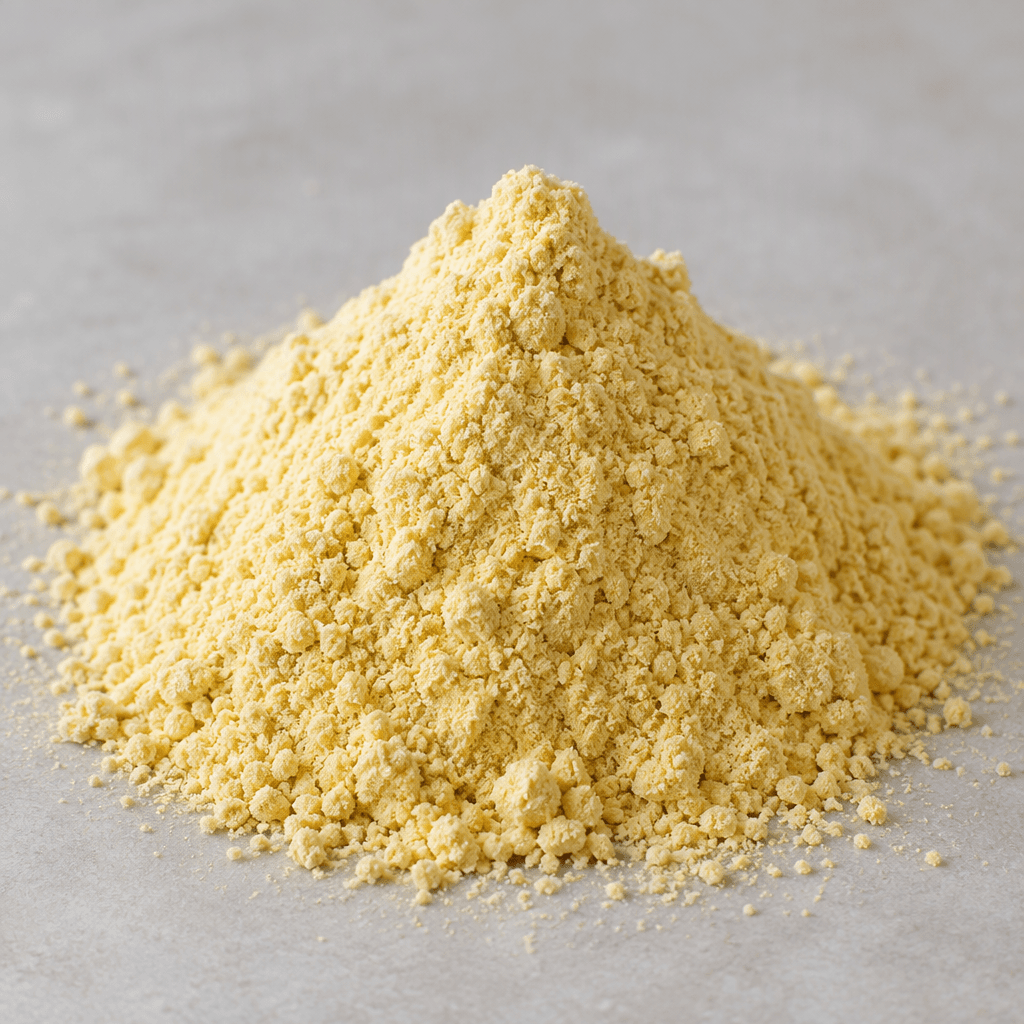
Lupin flour is made by grinding dried lupin seeds into a fine, usually yellow flour. It is used in parts of Europe and the Mediterranean, and has also found a place in gluten-free and lower-carbohydrate baking elsewhere. Its mildly earthy, nutty flavour and dense texture make it noticeable in a recipe rather than a neutral stand-in for wheat flour.
Add it to pancakes, savoury bakes, breads or pasta dough, often blending it with other flours for a lighter texture. It is naturally high in protein and fibre; a 100 g portion provides 40 g of protein. For an easy first try, replace only part of the flour in a familiar recipe, and adjust the liquid if the batter seems too thick.
Lupin flour Nutrition Facts
Selected: 100 g
370
KCAL / 100G
Carbs
30g
· 11% DV
Protein
40g
· 80% DV
Fat
10g
· 13% DV
Fiber
18g
· 64% DV
DV is the share of the daily value covered, on a 2,000 kcal reference diet.
Calories come from: Carbs 32% · Protein 43% · Fat 25%
Lupin flour Vitamins & Minerals
Vitamins
B1
0.4mg · 33% DV
Folate
120µg · 30% DV
Biotin
8µg · 27% DV
B6
0.3mg · 18% DV
Minerals
Copper
1mg · 111% DV
Phosphorus
350mg · 50% DV
Manganese
1mg · 43% DV
Potassium ⭐
1010mg · 30% DV
How Nutritious Is Lupin flour?
Nutrient density
Very high
How many vitamins, minerals and how much fiber this food carries per calorie. A high score means a lot of nutrition for few calories.
Satiety score
High
An EatBetter score computed from fiber, protein and calorie density. A high score means staying full longer on the same calories.
Both scores are calculated per 100 g and do not change with the selected portion. The satiety score is EatBetter's own calculation, not a clinical measure.
Lupin flour Glycemic Index
GLYCEMIC INDEX
GLYCEMIC LOAD
Accounts for portion size — a more realistic measure than GI alone.
How to Burn Off Lupin flour
To burn the 370 calories in 100 g:
🚶
Walking (5 km/h)
🏃
Running (8 km/h)
🚴
Cycling
🏊
Swimming
Times are calculated with the MET equation for a 70 kg adult. Actual burn varies with your weight, age and pace.
Is Lupin flour Processed?
NOVA 2
Minimally Processed
1. Unprocessed
2. Minimally Processed
3. Processed
4. Ultra-Processed
NOVA classifies foods into 4 groups by industrial processing. NOVA 1 (unprocessed) is the healthiest.
Does Lupin flour Contain Allergens?
No known major allergens
Which Diets Is Lupin flour Good For?
Vegan
✓ Suitable
Vegetarian
✓ Suitable
Gluten-Free
✓ Suitable
Dairy-Free
— Not suitable
Mediterranean
✓ Suitable
Paleo
✓ Suitable
Whole30
— Not suitable
DASH
— Not suitable
Keto
✓ Suitable
Low FODMAP
— Not suitable
Lupin flour Fat Profile
SATURATED
1.2g
MONOUNSATURATED
2.4g
POLYUNSATURATED
2.8g
Omega 6:3 ratio 5.5:1
Above the ideal 4:1 (5.5:1).
Compare Lupin flour
Foods Similar to Lupin flour
Frequently Asked Questions About Lupin flour
What is lupin flour made from?
Lupin flour is made by grinding lupin, also called lupini, beans. Food-grade flour is processed for use as an ingredient; do not simply grind raw lupin seeds at home and use them without appropriate processing.
What does lupin flour taste like?
Lupin flour has a mild bean-like flavor, and some products taste distinctly bitter. Pairing it with cocoa or spices, or blending it with a more neutral flour, can make that flavor less noticeable in baked goods.
How do you use lupin flour?
Use lupin flour in pancakes, bread, cookies, and savory bakes, usually blended with other ingredients. Its flavor can stand out in delicate recipes, so replacing only part of the flour is a good way to test how it works.
Can you substitute lupin flour for wheat flour one-to-one?
No, lupin flour usually cannot replace wheat flour one-to-one. It does not form gluten, so it cannot provide the same stretch and structure; try replacing about one-quarter of the flour in a recipe first and adjust from there.
Is lupin flour the same as chickpea flour?
No. Lupin flour comes from lupin beans, while chickpea flour is ground chickpeas. They are both legume flours, but their flavors and baking properties differ, so a direct swap may change the taste and texture of a recipe.
Can you bake bread with lupin flour on its own?
Lupin flour on its own does not make a loaf with the stretchy, risen texture of wheat bread. Because it has no gluten, bread recipes generally combine it with other flours and suitable binding ingredients.
Can you eat lupin flour raw?
It is best not to eat lupin flour raw or taste uncooked batter made with it. Use food-grade flour and cook it as directed in your recipe; appropriate processing is important for lupin ingredients.
Is lupin flour safe for people with peanut allergies?
Not necessarily. Lupin and peanuts are both legumes, and some people with peanut allergy also react to lupin. If you have a peanut allergy, ask your allergy specialist before trying lupin flour.
How should you store lupin flour?
Keep lupin flour in a tightly sealed container in a cool, dry place, away from heat and light. For longer storage after opening, refrigeration or freezing can help preserve its quality; protect it from moisture.
How much lupin flour should you add to a baking recipe?
For a first try, replace about one-quarter of the flour in a recipe with lupin flour. Larger amounts can make baked goods dense or bring out a stronger bean flavor, so adjust gradually and check the batter or dough texture.
Have another question about Lupin flour?
Ask the AI nutrition coach — calories, portions, alternatives and more, answered in seconds in the app.

Scan calories with your camera
Instant AI nutrition analysis

Nutrition data compiled from USDA FoodData Central and scientific sources.