

Ready & Packaged Foods
All →Vegetables & Legumes
All →Desserts & Confectionery
All →Meat & Protein
All →Grains & Bakery
All →Beverages
All →Milk & Dairy
All →

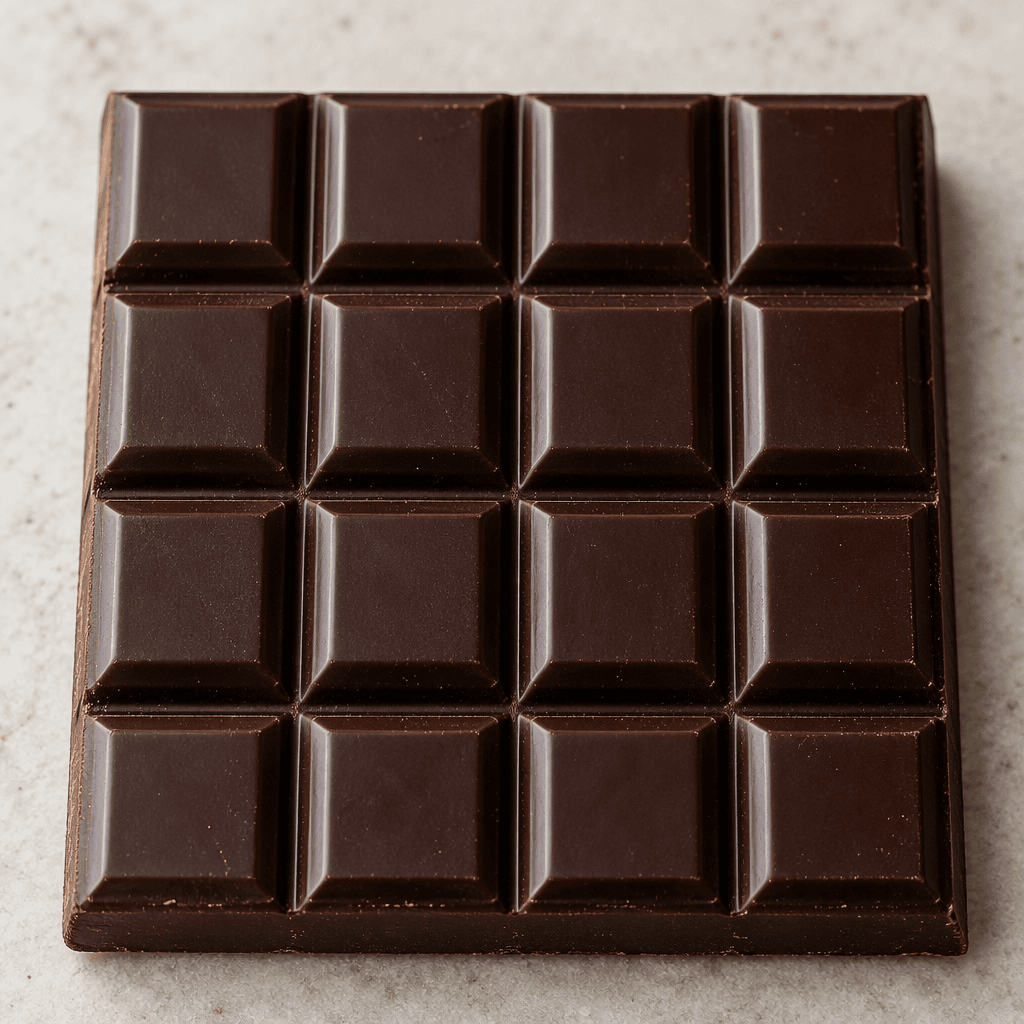
Lindt 80% dark chocolate Calories
High-cocoa dark chocolate with lower sugar
In season: Spring · Summer · Autumn · Winter
CALORIES · 100 G
GI
POTASSIUM · 100 G
FIBER · 100 G
Quick answer
1 piece (small) of Lindt 80% dark chocolate (10 g) has 59 calories. That works out to 592 calories per 100 g. It contains 2.4 g of carbs, 1 g of protein, 5.2 g of fat and 1.3 g of fiber. Its 0.2 mg of Copper covers 19% of the Daily Value. Its glycemic index is 23 (low), so it raises blood sugar slowly.
Lindt 80% dark chocolate Nutrition Facts
Selected: 1 piece (small) · 10 g
59
KCAL / 10G
Carbs
2.4g
· 1% DV
Protein
1g
· 2% DV
Fat
5.2g
· 7% DV
Fiber
1.3g
· 5% DV
DV is the share of the daily value covered, on a 2,000 kcal reference diet.
Calories come from: Carbs 16% · Protein 7% · Fat 77%
Lindt 80% dark chocolate nutrition facts table · 1 piece (small) (10 g)
| Nutrient | Amount | % DV |
|---|---|---|
| Calories | 59 kcal | |
| Total fat | 5.2 g | 7% |
| Saturated fat | 3.1 g | 16% |
| Trans fat | 0 g | |
| Sodium | 2 mg | 0% |
| Total carbohydrate | 2.4 g | 1% |
| Fiber | 1.3 g | 5% |
| Protein | 1 g | 2% |
Calories: Calories measure energy. Average daily need is 2,000 kcal. Excess calories are stored as fat, too few cause weight loss.
Carbs: Your body's primary energy source. The brain runs exclusively on carbs. Daily need: 275g.
Protein: Essential for muscle repair and cell growth. Daily need: 50g. Keeps you full and boosts metabolism.
Fat: Needed for hormone production and vitamin absorption. Daily need: 78g. Limit saturated fats, choose unsaturated.
Fiber: Critical for digestive health and satiety. Daily need: 28g. Stabilizes blood sugar, lowers cholesterol.

Log this food in EatBetter
100,000+ people use it
- Get your daily calorie target
- Snap your meal, log it in seconds
- See every vitamin and mineral

📸 Scan the code to get the app free.

How Many Calories in 1 Small Lindt 80% dark chocolate?
| Serving | Amount | Calories |
|---|---|---|
| 1 piece (small) | 10 g | 59 kcal |
| 1 piece (mini) | 5 g | 30 kcal |
| 2 piece (medium) | 20 g | 118 kcal |
| 1 serving (medium) | 25 g | 148 kcal |
| 1 ounce (medium) | 28 g | 166 kcal |
| 4 piece (large) | 40 g | 237 kcal |
| 1 serving (large) | 50 g | 296 kcal |
| 100 g | 100 g | 592 kcal |
| 1 pack (whole) | 100 g | 592 kcal |
Calculated from 592 calories per 100 g.
Frequently Asked Questions About Lindt 80% dark chocolate
Is Lindt 80% dark chocolate good for you?
Lindt 80% dark chocolate has more cocoa and typically less sugar than milk chocolate, but it is still an energy-dense sweet. A small piece can fit into a balanced eating pattern; it is not a health food or a substitute for other nutritious foods.
Does Lindt 80% dark chocolate have caffeine?
Yes. Lindt 80% dark chocolate contains naturally occurring caffeine from cocoa, as well as theobromine. The amount depends on the serving, so people who are sensitive to stimulants may prefer not to eat it close to bedtime.
Can people with diabetes eat Lindt 80% dark chocolate?
Some people with diabetes can include a small portion of Lindt 80% dark chocolate by counting its carbohydrates; 80% cocoa does not mean sugar-free. If you use glucose-lowering medication or have a specific blood-sugar target, ask your clinician or dietitian about portioning.
Is Lindt 80% dark chocolate keto-friendly?
Lindt 80% dark chocolate still contains carbohydrates and sugar, so it may not fit some ketogenic plans or their daily limits. Check the serving information on your package and count the portion you actually eat.
Why does Lindt 80% dark chocolate taste so bitter?
Lindt 80% dark chocolate tastes intense because cocoa makes up a large share and there is less sugar to soften its bitterness than in milk chocolate. Let a small piece melt slowly, or pair it with fruit or coffee to balance the flavor.
Can you bake with Lindt 80% dark chocolate?
Yes, Lindt 80% dark chocolate works well in brownies, ganache, and chocolate sauces when you want a pronounced cocoa flavor. Because it is less sweet than many baking chocolates, adjust the recipe's sugar to taste rather than assuming a one-for-one flavor match.
How should you store Lindt 80% dark chocolate after opening?
Seal Lindt 80% dark chocolate in its wrapper or an airtight container and keep it in a cool, dry place away from strong odors. Refrigeration can cause condensation or surface bloom, so use it only if the room is too warm and protect it well.
Can dogs eat Lindt 80% dark chocolate?
No. Do not give Lindt 80% dark chocolate to dogs: cocoa contains theobromine, which is toxic to them, and darker chocolate can pose a serious risk. If a dog eats any, contact a veterinarian promptly and share the package details.
What is the difference between Lindt 80% and 70% dark chocolate?
Lindt 80% dark chocolate has a higher stated cocoa percentage than the 70% version, so it generally tastes less sweet and more intensely cocoa-forward. The exact ingredients and nutrition can vary by market, so compare the labels on the packages you are buying.
Can Lindt 80% dark chocolate keep you awake?
It can. The caffeine and theobromine naturally present in Lindt 80% dark chocolate may make some people more alert, especially when eaten in the evening. If you notice disturbed sleep, have it earlier in the day instead.
Lindt 80% dark chocolate Vitamins & Minerals
Vitamins
Folate
3.1µg · 1% DV
B2
0.01mg · 1% DV
B3
0.11mg · 1% DV
Biotin
0.2µg · 1% DV
Minerals
Copper
0.17mg · 19% DV
Manganese
0.2mg · 9% DV
Iron
1.19mg · 7% DV
Magnesium
23mg · 5% DV
Potassium ⭐
72mg · 2% DV
Sodium
2mg · 0% DV
Lindt 80% dark chocolate Glycemic Index
GLYCEMIC INDEX
GLYCEMIC LOAD
Accounts for portion size — a more realistic measure than GI alone.
How to Burn Off Lindt 80% dark chocolate
To burn the 59 calories in 1 piece (small) (10 g):
🚶
Walking (5 km/h)
🏃
Running (8 km/h)
🚴
Cycling
🏊
Swimming
Times are calculated with the MET equation for a 70 kg adult. Actual burn varies with your weight, age and pace.
What is Lindt 80% dark chocolate?
Lindt 80% dark chocolate is a packaged bar made with a high proportion of cocoa. Its flavour is intense and bittersweet, with a firm snap and a smooth, slowly melting texture. Enjoy a small piece on its own, with coffee or tea, or use it shaved or melted in cakes and other desserts. It can also be paired with berries or nuts for a simple after-dinner bite.
Compared with sweeter chocolate, it is lower in sugar and provides fibre, but it is still energy-dense because much of its energy comes from fat. A small piece—about 10 g—is a practical serving when you want the cocoa flavour without a large portion. If adding it to a recipe, you may be able to use less extra sugar.
How Nutritious Is Lindt 80% dark chocolate?
Nutrient density
Medium
How many vitamins, minerals and how much fiber this food carries per calorie. A high score means a lot of nutrition for few calories.
Satiety score
Medium
An EatBetter score computed from fiber, protein and calorie density. A high score means staying full longer on the same calories.
Both scores are calculated per 100 g and do not change with the selected portion. The satiety score is EatBetter's own calculation, not a clinical measure.
Is Lindt 80% dark chocolate Processed?
NOVA 3
Processed
1. Unprocessed
2. Minimally Processed
3. Processed
4. Ultra-Processed
NOVA classifies foods into 4 groups by industrial processing. NOVA 1 (unprocessed) is the healthiest.
Does Lindt 80% dark chocolate Contain Allergens?
Contains these allergens:
Which Diets Is Lindt 80% dark chocolate Good For?
Vegan
— Not suitable
Vegetarian
✓ Suitable
Gluten-Free
✓ Suitable
Dairy-Free
— Not suitable
Mediterranean
✓ Suitable
Paleo
— Not suitable
Whole30
— Not suitable
DASH
— Not suitable
Keto
— Not suitable
Low FODMAP
— Not suitable
Lindt 80% dark chocolate Fat Profile
SATURATED
3.1g
MONOUNSATURATED
1.6g
POLYUNSATURATED
0.19g
Omega 6:3 ratio 18:1
Above the ideal 4:1 (18:1).
Compare Lindt 80% dark chocolate
Foods Similar to Lindt 80% dark chocolate
Have another question about Lindt 80% dark chocolate?
Ask the AI nutrition coach — calories, portions, alternatives and more, answered in seconds in the app.

Scan calories with your camera
Instant AI nutrition analysis

Nutrition data compiled from USDA FoodData Central and scientific sources.