

Ready & Packaged Foods
All →Vegetables & Legumes
All →Desserts & Confectionery
All →Meat & Protein
All →Grains & Bakery
All →Beverages
All →Milk & Dairy
All →

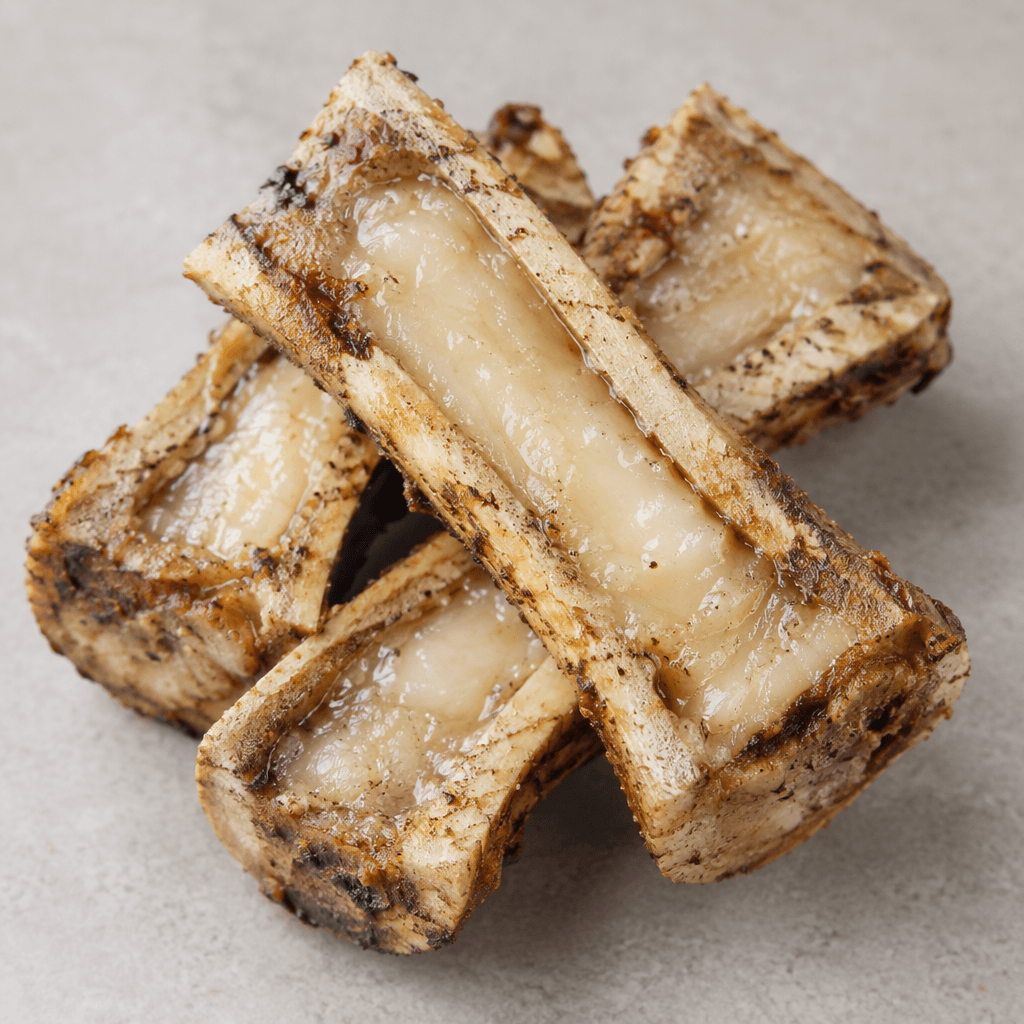
Lamb Marrow Calories
Rich in healthy fats and minerals
In season: Spring · Summer · Autumn · Winter
CALORIES
GI
POTASSIUM
FIBER
Quick answer
1 piece (medium) of Lamb Marrow (20 g) has 154 calories. That works out to 770 calories per 100 g. It contains 0 g of carbs, 1.4 g of protein, 16.6 g of fat and 0 g of fiber. Its 0.2 µg of B12 covers 7% of the Daily Value. Its glycemic index is 0 (low), so it raises blood sugar slowly.
What is Lamb Marrow?
Lamb marrow is the soft, fatty tissue inside lamb bones, used more often as an ingredient than as a standalone cut of meat. It can be simmered with the bones to enrich stock, or roasted in the bone and served as a spread. Roasting gives it a silky texture and a deep, savoury flavour; a squeeze of lemon or fresh herbs can balance its richness. It is particularly high in fat—about 83 g per 100 g—so a little goes a long way. Try it on toast as a small starter, or add a modest amount to broth for a fuller flavour.
Lamb Marrow Nutrition Facts
Selected: 100 g
770
KCAL / 100G
Carbs
0g
· 0% DV
Protein
7g
· 14% DV
Fat
83g
· 106% DV
Fiber
0g
· 0% DV
DV is the share of the daily value covered, on a 2,000 kcal reference diet.
Calories come from: Carbs 0% · Protein 4% · Fat 96%
Lamb Marrow Vitamins & Minerals
Vitamins
B12
0.8µg · 33% DV
B5
0.3mg · 6% DV
B2
0.05mg · 4% DV
B3
0.6mg · 4% DV
Minerals
Iron
2mg · 11% DV
Zinc
1mg · 9% DV
Phosphorus
60mg · 9% DV
Sodium
90mg · 4% DV
How Nutritious Is Lamb Marrow?
Nutrient density
High
How many vitamins, minerals and how much fiber this food carries per calorie. A high score means a lot of nutrition for few calories.
Satiety score
Low
An EatBetter score computed from fiber, protein and calorie density. A high score means staying full longer on the same calories.
Both scores are calculated per 100 g and do not change with the selected portion. The satiety score is EatBetter's own calculation, not a clinical measure.
Lamb Marrow Glycemic Index
GLYCEMIC INDEX
GLYCEMIC LOAD
Accounts for portion size — a more realistic measure than GI alone.
How to Burn Off Lamb Marrow
To burn the 770 calories in 100 g:
🚶
Walking (5 km/h)
🏃
Running (8 km/h)
🚴
Cycling
🏊
Swimming
Times are calculated with the MET equation for a 70 kg adult. Actual burn varies with your weight, age and pace.
Is Lamb Marrow Processed?
NOVA 1
Unprocessed
1. Unprocessed
2. Minimally Processed
3. Processed
4. Ultra-Processed
NOVA classifies foods into 4 groups by industrial processing. NOVA 1 (unprocessed) is the healthiest.
Does Lamb Marrow Contain Allergens?
No known major allergens
Which Diets Is Lamb Marrow Good For?
Vegan
— Not suitable
Vegetarian
— Not suitable
Gluten-Free
✓ Suitable
Dairy-Free
— Not suitable
Mediterranean
✓ Suitable
Paleo
✓ Suitable
Whole30
— Not suitable
DASH
— Not suitable
Keto
✓ Suitable
Low FODMAP
— Not suitable
Lamb Marrow Fat Profile
SATURATED
38g
MONOUNSATURATED
36g
POLYUNSATURATED
3.5g
Omega 6:3 ratio 2.8:1
Below the ideal 4:1 — a good omega balance.
Compare Lamb Marrow
Foods Similar to Lamb Marrow
Frequently Asked Questions About Lamb Marrow
What does lamb marrow taste like?
Lamb marrow tastes rich, buttery and mildly savoury, with a subtle flavour of lamb. Its soft texture becomes almost spreadable when cooked, which is why it is often served on toast or alongside something sharp and fresh.
How do you cook lamb marrow?
Roasting lamb marrow bones is a simple method: place them cut-side up and cook until the marrow is soft and just beginning to bubble. Ask a butcher to split the bones lengthwise so the marrow is easy to reach.
How do you eat lamb marrow?
Scoop cooked lamb marrow from the bone with a small spoon and spread it on toast, or eat it alongside the meat. Parsley, lemon, pickles or a crisp salad add a bright contrast to its rich texture.
Is lamb marrow good for you?
Lamb marrow is very energy-dense and high in fat, so it is best treated as a rich ingredient rather than a large serving of meat. People managing cholesterol or cardiovascular disease can ask a doctor or dietitian what portion suits them.
Can you eat lamb marrow raw?
No, lamb marrow should not be eaten raw. Like other raw animal products, it can carry harmful bacteria; cook it thoroughly and keep raw bones and their juices away from ready-to-eat foods.
How do you get lamb marrow out of the bone?
Ask your butcher for lamb bones split lengthwise, which exposes the marrow and makes it easy to scoop out after cooking. If the bones are cut crosswise, use a small spoon to loosen the softened marrow from each opening.
Can lamb marrow bones be frozen?
Yes, lamb marrow bones can be frozen in an airtight freezer-safe container. Thaw them in the refrigerator before cooking, and do not refreeze raw marrow once it has thawed.
How should you store lamb marrow after cooking?
Refrigerate cooked lamb marrow in a covered container once it has cooled, rather than leaving it at room temperature. Keep it separate from raw meat and use it promptly; discard it if it has been left out for an extended period.
What is the difference between lamb marrow and beef marrow?
Lamb marrow comes from smaller bones and tends to have a milder, more delicate flavour than beef marrow. Both can be roasted and scooped from the bone, but the size of the bone affects how they cook.
What do you serve with roasted lamb marrow?
Serve roasted lamb marrow with toasted sourdough, a parsley-and-lemon salad, or pickled vegetables. Their crispness and acidity balance the marrow’s richness; it also works as a small starter before a more substantial meal.
Have another question about Lamb Marrow?
Ask the AI nutrition coach — calories, portions, alternatives and more, answered in seconds in the app.

Scan calories with your camera
Instant AI nutrition analysis

Nutrition data compiled from USDA FoodData Central and scientific sources.