

Ready & Packaged Foods
All →Vegetables & Legumes
All →Desserts & Confectionery
All →Meat & Protein
All →Grains & Bakery
All →Beverages
All →Milk & Dairy
All →

KitKat Calories
Popular chocolate wafer bar, high sugar and fat
CALORIES
GI
POTASSIUM
FIBER
Quick answer
1 piece (medium) of KitKat (42 g) has 218 calories. That works out to 525 calories per 100 g. It contains 27.3 g of carbs, 3 g of protein, 11.5 g of fat and 0.9 g of fiber. Its 0.1 mg of Copper covers 9% of the Daily Value. Its glycemic index is 70 (high), so it raises blood sugar quickly.
What is KitKat?
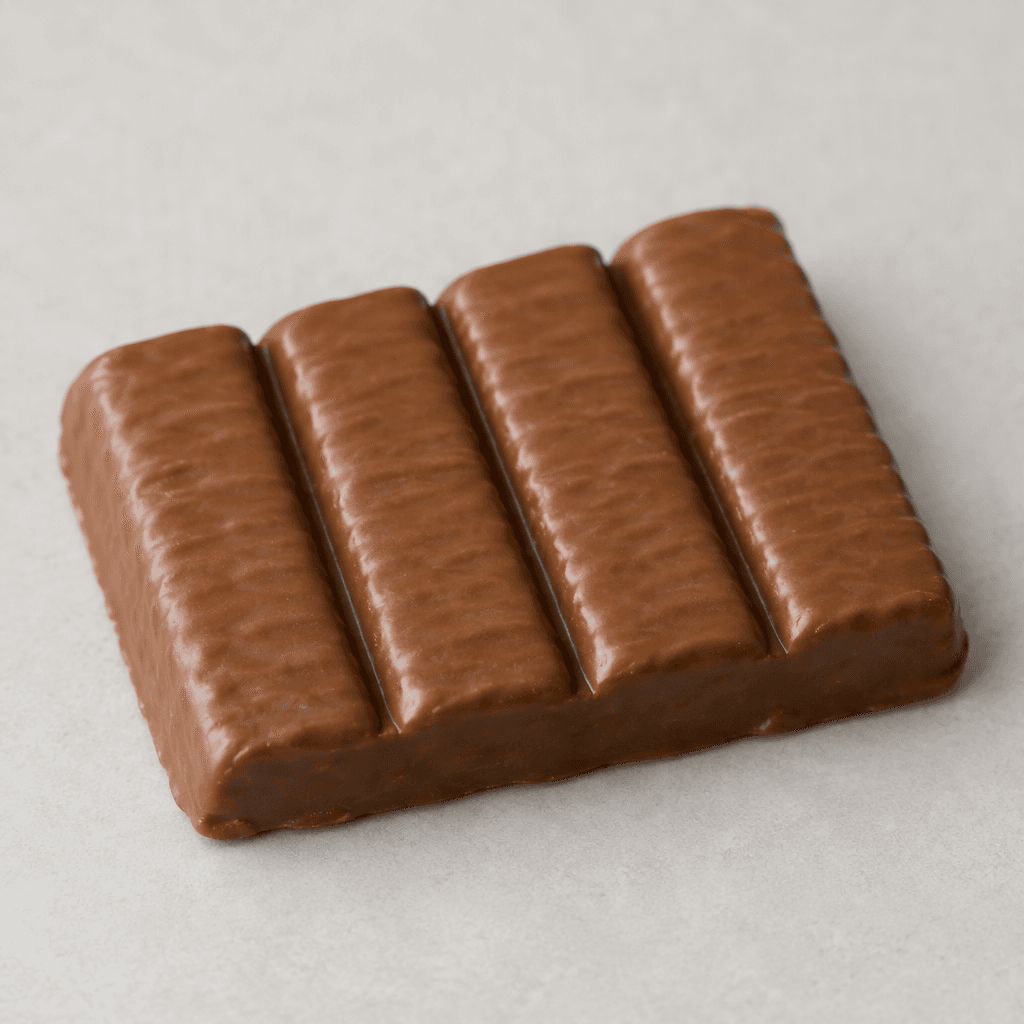
KitKat is a packaged chocolate wafer bar that originated in England. Crisp wafer layers are stacked and coated in chocolate, with grooves dividing the bar into fingers that are easy to snap apart.
Its light crunch and sweet coating make it a familiar grab-and-go treat, often enjoyed with tea or coffee, shared, or tucked into a lunchbox. It is energy-dense, with 525 calories per 100 g, and provides more carbohydrate and fat than protein. For a smaller snack, have one piece with fruit or a hot drink rather than eating several fingers at once.
KitKat Nutrition Facts
Selected: 100 g
525
KCAL / 100G
Carbs
65.7g
· 24% DV
Protein
7.2g
· 14% DV
Fat
27.7g
· 36% DV
Fiber
2.1g
· 8% DV
DV is the share of the daily value covered, on a 2,000 kcal reference diet.
Calories come from: Carbs 49% · Protein 5% · Fat 46%
KitKat Vitamins & Minerals
Vitamins
B2
0.26mg · 20% DV
B12
0.3µg · 13% DV
B1
0.07mg · 6% DV
B5
0.3mg · 6% DV
Minerals
Phosphorus
110mg · 16% DV
Calcium
120mg · 12% DV
Iron
2mg · 11% DV
Magnesium
40mg · 10% DV
How Nutritious Is KitKat?
Nutrient density
Low
How many vitamins, minerals and how much fiber this food carries per calorie. A high score means a lot of nutrition for few calories.
Satiety score
Low
An EatBetter score computed from fiber, protein and calorie density. A high score means staying full longer on the same calories.
Both scores are calculated per 100 g and do not change with the selected portion. The satiety score is EatBetter's own calculation, not a clinical measure.
KitKat Glycemic Index
GLYCEMIC INDEX
GLYCEMIC LOAD
Accounts for portion size — a more realistic measure than GI alone.
How to Burn Off KitKat
To burn the 525 calories in 100 g:
🚶
Walking (5 km/h)
🏃
Running (8 km/h)
🚴
Cycling
🏊
Swimming
Times are calculated with the MET equation for a 70 kg adult. Actual burn varies with your weight, age and pace.
Is KitKat Processed?
NOVA 4
Ultra-Processed
1. Unprocessed
2. Minimally Processed
3. Processed
4. Ultra-Processed
NOVA classifies foods into 4 groups by industrial processing. NOVA 1 (unprocessed) is the healthiest.
Does KitKat Contain Allergens?
Contains these allergens:
Which Diets Is KitKat Good For?
Vegan
— Not suitable
Vegetarian
— Not suitable
Gluten-Free
— Not suitable
Dairy-Free
— Not suitable
Mediterranean
— Not suitable
Paleo
— Not suitable
Whole30
— Not suitable
DASH
— Not suitable
Keto
— Not suitable
Low FODMAP
— Not suitable
KitKat Fat Profile
SATURATED
16.5g
MONOUNSATURATED
7.2g
POLYUNSATURATED
2.1g
Omega 6:3 ratio 40:1
Above the ideal 4:1 (40:1).
Compare KitKat
Foods Similar to KitKat
Frequently Asked Questions About KitKat
What is KitKat made of?
KitKat is made from crisp wafer layers covered in chocolate. The exact recipe varies by product and country, but the classic bar typically includes wheat flour, sugar, cocoa, and milk ingredients.
Where did KitKat originate?
KitKat originated in England, where it was introduced in 1935 as Chocolate Crisp. The name changed to KitKat Chocolate Crisp a few years later, and the brand is now owned by Nestlé.
Does KitKat contain caffeine?
Yes, KitKat contains a small amount of caffeine because it contains cocoa and chocolate. The amount varies by variety, so it is not comparable to a typical cup of coffee as a caffeine source.
How is KitKat different around the world?
KitKat comes in different flavors and formats depending on the country, and recipes can vary too. Japan is especially known for many regional and seasonal flavors, while the familiar chocolate-covered wafer remains the classic version.
How should you store KitKat after opening it?
Keep an opened KitKat in an airtight container in a cool, dry place and eat it while the wafer is still crisp. Avoid leaving it near heat, strong-smelling foods, or direct sunlight.
Can you eat KitKat if it has melted and hardened again?
Usually, yes, if the wrapper stayed intact and the KitKat was only exposed to warmth. The chocolate may look streaky and the wafer may lose some crispness; discard it if the package is damaged or it smells off.
What is the difference between KitKat and KitKat Chunky?
Classic KitKat has several slim wafer fingers joined side by side, while KitKat Chunky is a thicker, single-bar format. Chunky varieties may also have different fillings or coatings depending on the market.
Can you bake with KitKat?
Yes, you can use KitKat in baking by chopping it into pieces for cookies, brownies, or cake toppings. Add it near the end or use it as a topping if you want the wafer to retain more crunch.
Is KitKat suitable for people with diabetes?
KitKat’s sugar and refined carbohydrates can raise blood glucose. Someone with diabetes can consider its portion and timing within their individual meal plan; a dietitian or doctor can advise on personal needs.
Why does KitKat have breakable fingers?
The separate fingers make KitKat easy to break into portions or share. That design also supports the brand’s long-running “Have a break” association, which presents the bar as a snack for taking a short pause.
Have another question about KitKat?
Ask the AI nutrition coach — calories, portions, alternatives and more, answered in seconds in the app.

Scan calories with your camera
Instant AI nutrition analysis

Nutrition data compiled from USDA FoodData Central and scientific sources.