

Ready & Packaged Foods
All →Vegetables & Legumes
All →Desserts & Confectionery
All →Meat & Protein
All →Grains & Bakery
All →Beverages
All →Milk & Dairy
All →

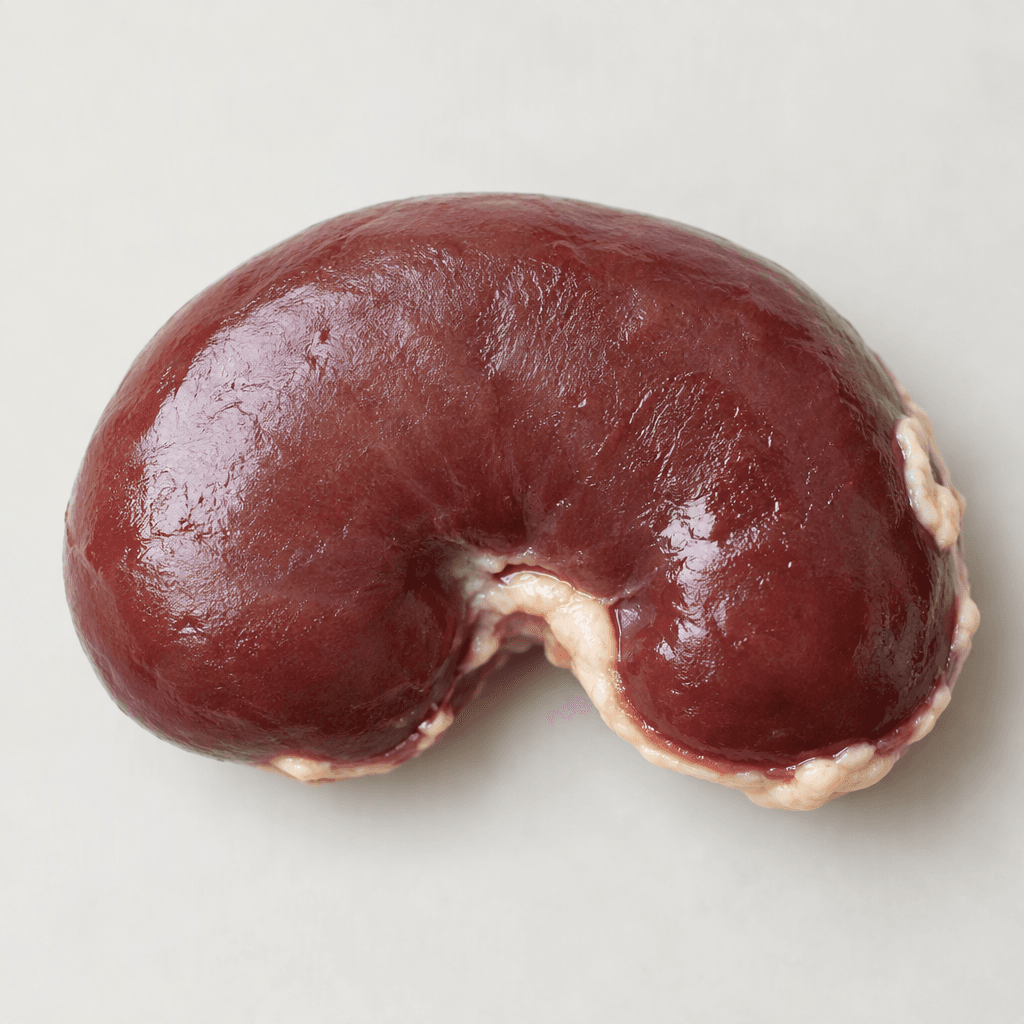
Kidney Calories
Rich in iron and vitamin B12, low-fat protein source
In season: Spring · Summer · Autumn · Winter
CALORIES
GI
POTASSIUM
FIBER
Quick answer
1 piece (medium) of Kidney (120 g) has 118 calories. That works out to 98 calories per 100 g. It contains 0.4 g of carbs, 20.3 g of protein, 3.7 g of fat and 0 g of fiber. Its 32.4 µg of B12 covers 1350% of the Daily Value. Its glycemic index is 0 (low), so it raises blood sugar slowly.
What is Kidney?
Kidney is an edible organ meat, commonly taken from lamb, beef or pork. It is used in many food traditions, from British steak and kidney pie to grilled or stewed preparations elsewhere. Lamb kidneys are small and tender, while larger kidneys are often trimmed and cut before cooking.
Their flavour is savoury and distinctive, with a soft, slightly firm texture when cooked briefly. Serve them grilled, pan-fried with onions, or folded into a pie or stew; in Britain, devilled kidneys are a traditional breakfast or brunch dish. Kidney is a protein-rich choice that also supplies iron and vitamin B12. A squeeze of lemon and fresh herbs can balance its richness, and quick cooking helps keep it tender.
Kidney Nutrition Facts
Selected: 100 g
98
KCAL / 100G
Carbs
0.3g
· 0% DV
Protein
16.9g
· 34% DV
Fat
3.1g
· 4% DV
Fiber
0g
· 0% DV
DV is the share of the daily value covered, on a 2,000 kcal reference diet.
Calories come from: Carbs 1% · Protein 70% · Fat 29%
Kidney Vitamins & Minerals
Vitamins
B12
27µg · 1125% DV
B2
2.8mg · 215% DV
Biotin
16µg · 53% DV
B5
2.1mg · 42% DV
Minerals
Selenium
160µg · 291% DV
Phosphorus
340mg · 49% DV
Iron
6mg · 33% DV
Zinc
3mg · 27% DV
How Nutritious Is Kidney?
Nutrient density
Very high
How many vitamins, minerals and how much fiber this food carries per calorie. A high score means a lot of nutrition for few calories.
Satiety score
Medium
An EatBetter score computed from fiber, protein and calorie density. A high score means staying full longer on the same calories.
Both scores are calculated per 100 g and do not change with the selected portion. The satiety score is EatBetter's own calculation, not a clinical measure.
Kidney Glycemic Index
GLYCEMIC INDEX
GLYCEMIC LOAD
Accounts for portion size — a more realistic measure than GI alone.
How to Burn Off Kidney
To burn the 98 calories in 100 g:
🚶
Walking (5 km/h)
🏃
Running (8 km/h)
🚴
Cycling
🏊
Swimming
Times are calculated with the MET equation for a 70 kg adult. Actual burn varies with your weight, age and pace.
Is Kidney Processed?
NOVA 1
Unprocessed
1. Unprocessed
2. Minimally Processed
3. Processed
4. Ultra-Processed
NOVA classifies foods into 4 groups by industrial processing. NOVA 1 (unprocessed) is the healthiest.
Does Kidney Contain Allergens?
No known major allergens
Which Diets Is Kidney Good For?
Vegan
— Not suitable
Vegetarian
— Not suitable
Gluten-Free
✓ Suitable
Dairy-Free
— Not suitable
Mediterranean
✓ Suitable
Paleo
✓ Suitable
Whole30
— Not suitable
DASH
— Not suitable
Keto
✓ Suitable
Low FODMAP
— Not suitable
Kidney Fat Profile
SATURATED
1g
MONOUNSATURATED
1.2g
POLYUNSATURATED
0.4g
Omega 6:3 ratio 1.5:1
Below the ideal 4:1 — a good omega balance.
Compare Kidney
Foods Similar to Kidney
Frequently Asked Questions About Kidney
How do you cook kidney?
Cook kidney quickly in a hot pan after removing the membrane and firm central tubes. Overcooking makes it tough and dry, so take it off the heat as soon as it is cooked through. Onion, pepper and herbs work well with its strong flavour.
How do you prepare kidney before cooking?
Trim away the outer membrane and any visible fat, then cut the kidney open and remove the firm white tubes in the centre. Rinse it under cold water and pat it dry. These steps improve its texture and help it brown evenly.
What does kidney taste like?
Kidney has a rich, savoury, slightly mineral flavour that is stronger than ordinary muscle meat. Lamb kidney tends to taste more pronounced than beef kidney. Trimming it carefully and avoiding overcooking helps keep the flavour from becoming too strong.
Do you need to soak kidney in milk?
No, soaking kidney in milk is optional, not essential. A short soak can soften its strong flavour, but thorough trimming, rinsing and drying matter more. Discard kidney with an unpleasant, sour smell rather than trying to mask it by soaking.
Why does kidney taste bitter?
Kidney can taste bitter or unusually strong if its central tubes and surrounding tissue have not been removed properly. Careful trimming and rinsing can help. A bitter taste alongside an off smell or slimy surface may indicate spoilage, so do not eat it.
Can you eat kidney rare?
No, kidney should not be eaten raw or rare because raw organ meat can carry harmful bacteria. Cook it thoroughly, and keep raw kidney and its juices away from ready-to-eat foods. Wash your hands and utensils after handling it.
What is the difference between lamb kidney and beef kidney?
Lamb kidney is smaller and usually has a more pronounced flavour, while beef kidney is larger and milder. Both need the membrane and firm central parts trimmed away. Their size affects how quickly they cook, so check doneness rather than relying on one cooking time.
Can you use kidney in steak and kidney pie?
Yes, kidney is a traditional filling for steak and kidney pie, especially in British cooking. Trim and cut it into pieces, then cook it with beef and gravy until tender. Lamb or beef kidney can be used, though the flavour will differ.
How should you store fresh kidney?
Keep fresh kidney covered in the coldest part of the refrigerator, separate from ready-to-eat foods, and cook it promptly. Store cooked kidney in a sealed container in the refrigerator and use it soon; discard it if its smell or texture changes.
Can you freeze kidney?
Yes, kidney freezes well when wrapped tightly or sealed in a freezer-safe container. Trim and portion it before freezing so you can thaw only what you need. Thaw it in the refrigerator and cook it soon after thawing.
Have another question about Kidney?
Ask the AI nutrition coach — calories, portions, alternatives and more, answered in seconds in the app.

Scan calories with your camera
Instant AI nutrition analysis

Nutrition data compiled from USDA FoodData Central and scientific sources.