

Ready & Packaged Foods
All →Vegetables & Legumes
All →Desserts & Confectionery
All →Meat & Protein
All →Grains & Bakery
All →Beverages
All →Milk & Dairy
All →

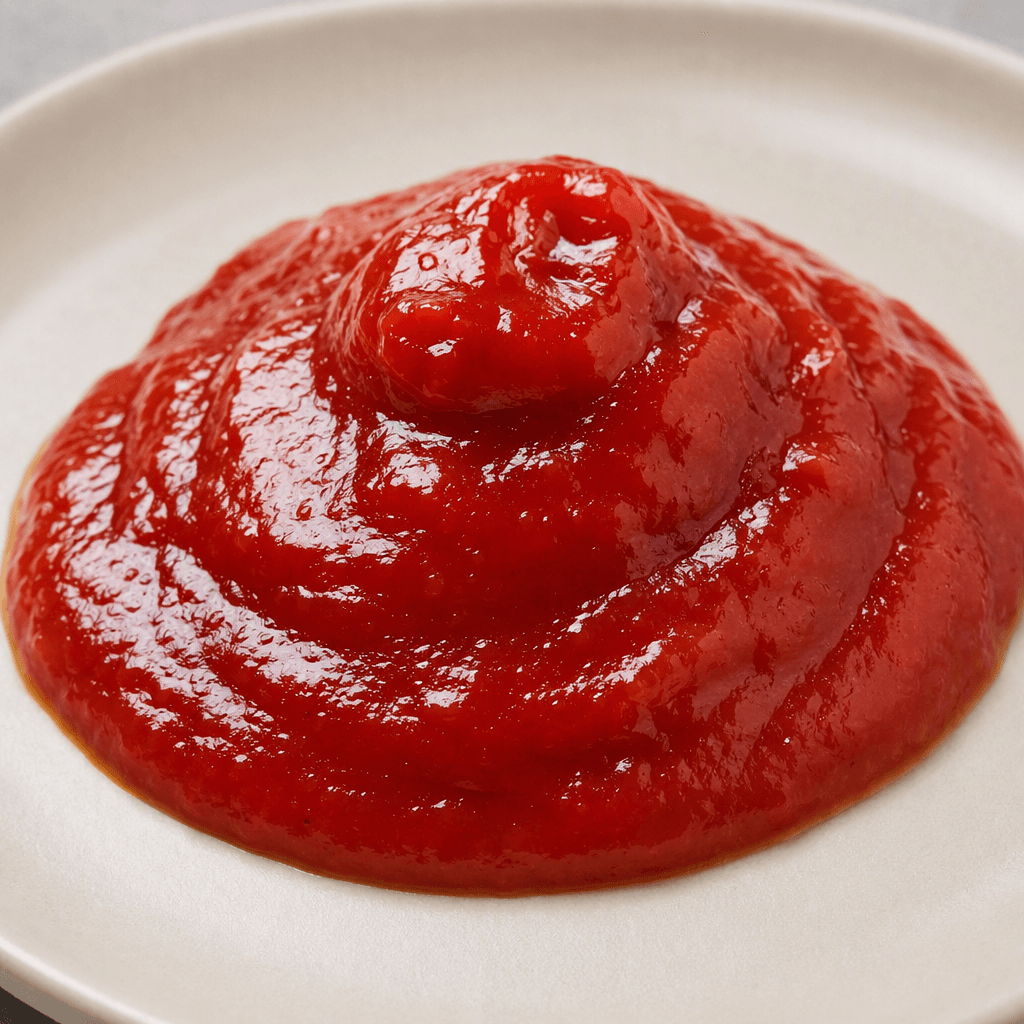
Ketchup Calories
Popular tomato-based condiment, commonly served with fries and burgers.
In season: Spring · Summer · Autumn · Winter
CALORIES
GI
POTASSIUM
FIBER
Quick answer
1 tablespoon (medium) of Ketchup (17 g) has 19 calories. That works out to 110 calories per 100 g. It contains 4.3 g of carbs, 0.2 g of protein, 0 g of fat and 0.2 g of fiber. Its 153 mg of Sodium covers 7% of the Daily Value. Its glycemic index is 55 (medium), so it raises blood sugar at a moderate pace.
What is Ketchup?
Ketchup is a smooth, thick tomato condiment, usually made with vinegar, sugar, salt and spices. The tomato version familiar today became especially popular in the United States, and is now served around the world. Its glossy red appearance and sweet-tangy flavour make it an easy match for savoury foods.
In the US and elsewhere, it commonly accompanies fries, burgers and sandwiches; it is also used as a table sauce at home. Ketchup is low in fat and protein, while much of its energy comes from carbohydrates: it has 25 g per 100 g. A little goes a long way, so serve it on the side or use a modest squeeze when you want the flavour without adding too much to a meal.
Ketchup Nutrition Facts
Selected: 100 g
110
KCAL / 100G
Carbs
25g
· 9% DV
Protein
1.3g
· 3% DV
Fat
0.2g
· 0% DV
Fiber
1g
· 4% DV
DV is the share of the daily value covered, on a 2,000 kcal reference diet.
Calories come from: Carbs 93% · Protein 5% · Fat 2%
Ketchup Vitamins & Minerals
Vitamins
Vitamin A
80µg · 9% DV
Vitamin C
7mg · 8% DV
Biotin
2µg · 7% DV
B6
0.08mg · 5% DV
Minerals
Sodium
900mg · 39% DV
Potassium ⭐
290mg · 9% DV
Magnesium
11mg · 3% DV
Phosphorus
22mg · 3% DV
How Nutritious Is Ketchup?
Nutrient density
Low
How many vitamins, minerals and how much fiber this food carries per calorie. A high score means a lot of nutrition for few calories.
Satiety score
Medium
An EatBetter score computed from fiber, protein and calorie density. A high score means staying full longer on the same calories.
Both scores are calculated per 100 g and do not change with the selected portion. The satiety score is EatBetter's own calculation, not a clinical measure.
Ketchup Glycemic Index
GLYCEMIC INDEX
GLYCEMIC LOAD
Accounts for portion size — a more realistic measure than GI alone.
How to Burn Off Ketchup
To burn the 110 calories in 100 g:
🚶
Walking (5 km/h)
🏃
Running (8 km/h)
🚴
Cycling
🏊
Swimming
Times are calculated with the MET equation for a 70 kg adult. Actual burn varies with your weight, age and pace.
Is Ketchup Processed?
NOVA 3
Processed
1. Unprocessed
2. Minimally Processed
3. Processed
4. Ultra-Processed
NOVA classifies foods into 4 groups by industrial processing. NOVA 1 (unprocessed) is the healthiest.
Does Ketchup Contain Allergens?
No known major allergens
Which Diets Is Ketchup Good For?
Vegan
✓ Suitable
Vegetarian
✓ Suitable
Gluten-Free
✓ Suitable
Dairy-Free
— Not suitable
Mediterranean
✓ Suitable
Paleo
— Not suitable
Whole30
— Not suitable
DASH
— Not suitable
Keto
— Not suitable
Low FODMAP
— Not suitable
Ketchup Fat Profile
SATURATED
0.04g
MONOUNSATURATED
0.03g
POLYUNSATURATED
0.05g
Omega 6:3 ratio 2:1
Below the ideal 4:1 — a good omega balance.
Compare Ketchup
Foods Similar to Ketchup
Frequently Asked Questions About Ketchup
What is ketchup made of?
Ketchup is usually made from tomatoes, vinegar, sugar or another sweetener, salt, and spices. The ingredients are cooked and blended into a smooth sauce; the exact seasoning and sweetness vary by recipe and brand.
Does ketchup contain a lot of sugar?
Many ketchup varieties contain added sugar or another sweetener, in addition to the natural sugars in tomatoes. The amount varies between recipes, so compare ingredient lists if you want a less sweet ketchup.
Does ketchup need to be refrigerated after opening?
Yes, refrigerate ketchup after opening to help preserve its quality and flavor. Close the cap tightly after each use and follow the storage directions on the bottle, since instructions can vary by product.
How long does ketchup last after opening?
Opened ketchup can lose quality over time, so keep it refrigerated and use the guidance on its packaging. Discard it if you notice mold, an unusual smell, or a marked change in color or texture.
How do you make ketchup at home?
To make ketchup at home, simmer tomato purée with vinegar, sugar, salt, and spices until thick, then blend it until smooth. Cool it, transfer it to a clean container, refrigerate it, and use it within a short time.
What is the difference between ketchup and tomato sauce?
Ketchup is typically a thick, sweet-and-tangy condiment seasoned with vinegar and spices. Tomato sauce is usually less sweet and is often used as a cooking ingredient; its flavor and texture depend on the recipe.
Why is ketchup sometimes called catsup?
Catsup is an alternative spelling for ketchup, not a different sauce. Both names refer to a tomato-based condiment, although ketchup is the spelling most commonly used today in many English-speaking countries.
Can you freeze ketchup?
Yes, ketchup can be frozen, but its texture may separate or become watery after thawing. If you freeze it, leave room in an airtight container for expansion, thaw it in the refrigerator, and stir it well before using.
How do you get ketchup stains out of clothes?
Scrape off excess ketchup without rubbing it in, then rinse the fabric from the back with cold water. Apply laundry detergent or a fabric-safe stain remover and wash; avoid heat until the stain is gone.
Can people with diabetes eat ketchup?
Yes, people with diabetes can eat ketchup, but its added sugar contributes to the meal’s carbohydrate total. Keeping the portion modest can help; ask a dietitian or doctor for advice tailored to your eating plan.
Have another question about Ketchup?
Ask the AI nutrition coach — calories, portions, alternatives and more, answered in seconds in the app.

Scan calories with your camera
Instant AI nutrition analysis

Nutrition data compiled from USDA FoodData Central and scientific sources.