

Ready & Packaged Foods
All →Vegetables & Legumes
All →Desserts & Confectionery
All →Meat & Protein
All →Grains & Bakery
All →Beverages
All →Milk & Dairy
All →

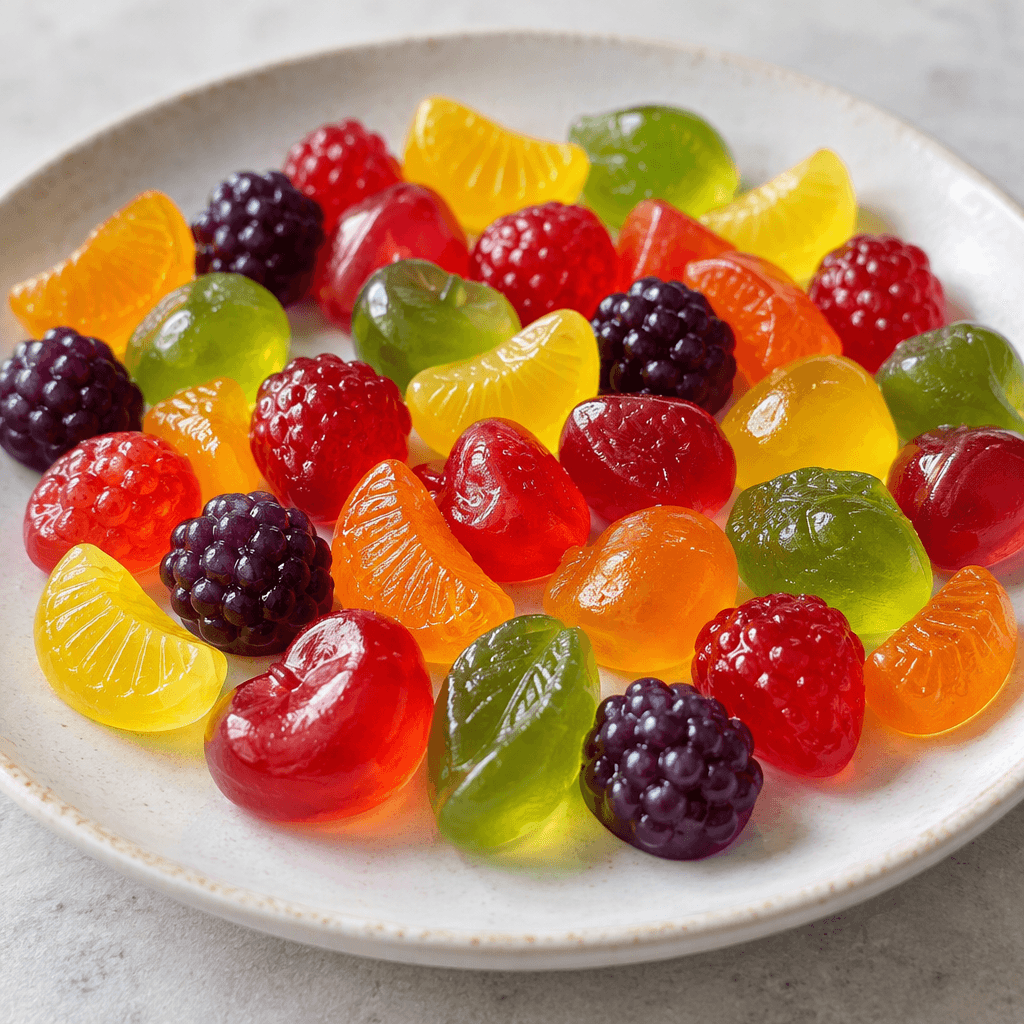
Kent Jelly Calories
Colorful, sweet, gelatin dessert
In season: Spring · Summer · Autumn · Winter
CALORIES · 100 G
GI
POTASSIUM · 100 G
FIBER · 100 G
Quick answer
100 g of Kent Jelly has 70 calories. It contains 16 g of carbs, 1.5 g of protein, 0 g of fat and 0 g of fiber. Its glycemic index is 70 (high), so it raises blood sugar quickly.
Kent Jelly Nutrition Facts
Selected: 100 g
70
KCAL / 100G
Carbs
16g
· 6% DV
Protein
1.5g
· 3% DV
Fat
0g
· 0% DV
Fiber
0g
· 0% DV
DV is the share of the daily value covered, on a 2,000 kcal reference diet.
Calories come from: Carbs 91% · Protein 9% · Fat 0%
Kent Jelly nutrition facts table · 100 g
| Nutrient | Amount | % DV |
|---|---|---|
| Calories | 70 kcal | |
| Total fat | 0 g | 0% |
| Saturated fat | 0 g | 0% |
| Trans fat | 0 g | |
| Sodium | 40 mg | 2% |
| Total carbohydrate | 16 g | 6% |
| Fiber | 0 g | 0% |
| Protein | 1.5 g | 3% |
Calories: Calories measure energy. Average daily need is 2,000 kcal. Excess calories are stored as fat, too few cause weight loss.
Carbs: Your body's primary energy source. The brain runs exclusively on carbs. Daily need: 275g.
Protein: Essential for muscle repair and cell growth. Daily need: 50g. Keeps you full and boosts metabolism.
Fat: Needed for hormone production and vitamin absorption. Daily need: 78g. Limit saturated fats, choose unsaturated.
Fiber: Critical for digestive health and satiety. Daily need: 28g. Stabilizes blood sugar, lowers cholesterol.

Log this food in EatBetter
100,000+ people use it
- Get your daily calorie target
- Snap your meal, log it in seconds
- See every vitamin and mineral

📸 Scan the code to get the app free.

How Many Calories in 1 Kent Jelly?
| Serving | Amount | Calories |
|---|---|---|
| 1 piece (medium) | 100 g | 70 kcal |
| 1 piece (small) | 50 g | 35 kcal |
| 1 serving (small) | 80 g | 56 kcal |
| 100 g | 100 g | 70 kcal |
| 1 cup (medium) | 120 g | 84 kcal |
| 1 serving (medium) | 120 g | 84 kcal |
| 1 piece (large) | 150 g | 105 kcal |
| 1 cup (large) | 180 g | 126 kcal |
| 1 serving (large) | 200 g | 140 kcal |
Calculated from 70 calories per 100 g.
Frequently Asked Questions About Kent Jelly
How do you make Kent Jelly?
Dissolve Kent Jelly in the amount of hot water stated on the packet, stirring until no powder remains. Pour it into a mould or serving dishes, let it cool, then refrigerate until set; changing the water ratio can affect its texture.
Can Kent Jelly be used as a cake glaze?
Yes, Kent Jelly can make a glossy cake topping. Let the mixture cool until slightly thickened before spooning it over chilled fruit or cake; pouring it on while hot may soften cream or shift the decoration.
Can I make Kent Jelly with cold water?
No, cold water usually will not dissolve Kent Jelly powder properly. Dissolve it in hot water as directed first, then cool and refrigerate the mixture so it can set evenly.
How do you get Kent Jelly out of a mould in one piece?
Dip the outside of the Kent Jelly mould briefly in warm water, then invert it over a plate. Keep water out of the jelly and avoid warming the mould for too long, or the edges may begin to melt.
Can Kent Jelly be layered with custard?
Yes, Kent Jelly can be layered with custard once the jelly has set firmly and the custard has cooled. Adding warm custard can melt the jelly and blur the layers, so chill each layer before adding the next.
Which fresh fruit should you avoid putting in Kent Jelly?
Avoid adding fresh kiwi, pineapple or papaya to Kent Jelly before it sets; enzymes in these fruits can interfere with gelling. Canned versions are usually a better choice, or add the fresh fruit after the jelly has firmed.
Does Kent Jelly need to be refrigerated to set?
Yes, Kent Jelly needs chilling after it has been dissolved and cooled. Refrigeration helps it firm up; leaving the mixture on the counter may delay setting and makes it harder to serve safely.
Can you freeze Kent Jelly?
Freezing Kent Jelly is not recommended because thawing can make it watery and damage its springy texture. Keep it chilled in the refrigerator instead, and serve it cold.
How should you store leftover Kent Jelly?
Store leftover Kent Jelly covered in the refrigerator and serve it with a clean utensil. Do not leave it sitting out for extended periods, and eat it promptly, especially if fresh fruit has been mixed in.
Can Kent Jelly be used in a trifle?
Yes, Kent Jelly works well in a trifle as a fruit-and-jelly layer. Let it set before assembling the dessert, or use cooled, thickened jelly carefully so it does not soak the cake or mix into the custard.
Kent Jelly Vitamins & Minerals
Vitamins
B1
0.01mg · 1% DV
B2
0.01mg · 1% DV
B6
0.01mg · 1% DV
Vitamin C
0.5mg · 1% DV
Minerals
Sodium
40mg · 2% DV
Copper
0.01mg · 1% DV
Phosphorus
5mg · 1% DV
Calcium
5mg · 1% DV
Potassium ⭐
2mg · 0% DV
Kent Jelly Glycemic Index
GLYCEMIC INDEX
GLYCEMIC LOAD
Accounts for portion size — a more realistic measure than GI alone.
How to Burn Off Kent Jelly
To burn the 70 calories in 100 g:
🚶
Walking (5 km/h)
🏃
Running (8 km/h)
🚴
Cycling
🏊
Swimming
Times are calculated with the MET equation for a 70 kg adult. Actual burn varies with your weight, age and pace.
What is Kent Jelly?
Kent Jelly is a colourful, sweet jelly dessert sold as a packaged product in Turkey. It is prepared by setting a flavoured mixture into a soft, wobbly dessert, then served chilled. Its bright colours and simple preparation make it a familiar choice for children’s parties and an easy after-meal treat.
Serve it in small bowls or unmould it onto a plate; fresh fruit makes a good accompaniment. Its nutrition is mainly carbohydrate, with 16 g per 100 g and no fat listed. If you want a lighter-feeling dessert, keep the portion modest and pair it with fruit rather than a richer topping.
How Nutritious Is Kent Jelly?
Nutrient density
Low
How many vitamins, minerals and how much fiber this food carries per calorie. A high score means a lot of nutrition for few calories.
Satiety score
Medium
An EatBetter score computed from fiber, protein and calorie density. A high score means staying full longer on the same calories.
Both scores are calculated per 100 g and do not change with the selected portion. The satiety score is EatBetter's own calculation, not a clinical measure.
Is Kent Jelly Processed?
NOVA 3
Processed
1. Unprocessed
2. Minimally Processed
3. Processed
4. Ultra-Processed
NOVA classifies foods into 4 groups by industrial processing. NOVA 1 (unprocessed) is the healthiest.
Does Kent Jelly Contain Allergens?
No known major allergens
Which Diets Is Kent Jelly Good For?
Vegan
— Not suitable
Vegetarian
✓ Suitable
Gluten-Free
— Not suitable
Dairy-Free
— Not suitable
Mediterranean
— Not suitable
Paleo
— Not suitable
Whole30
— Not suitable
DASH
— Not suitable
Keto
— Not suitable
Low FODMAP
— Not suitable
Kent Jelly Fat Profile
SATURATED
0g
MONOUNSATURATED
0g
POLYUNSATURATED
0g
Compare Kent Jelly
Foods Similar to Kent Jelly
Have another question about Kent Jelly?
Ask the AI nutrition coach — calories, portions, alternatives and more, answered in seconds in the app.

Scan calories with your camera
Instant AI nutrition analysis

Nutrition data compiled from USDA FoodData Central and scientific sources.