

Ready & Packaged Foods
All →Vegetables & Legumes
All →Desserts & Confectionery
All →Meat & Protein
All →Grains & Bakery
All →Beverages
All →Milk & Dairy
All →

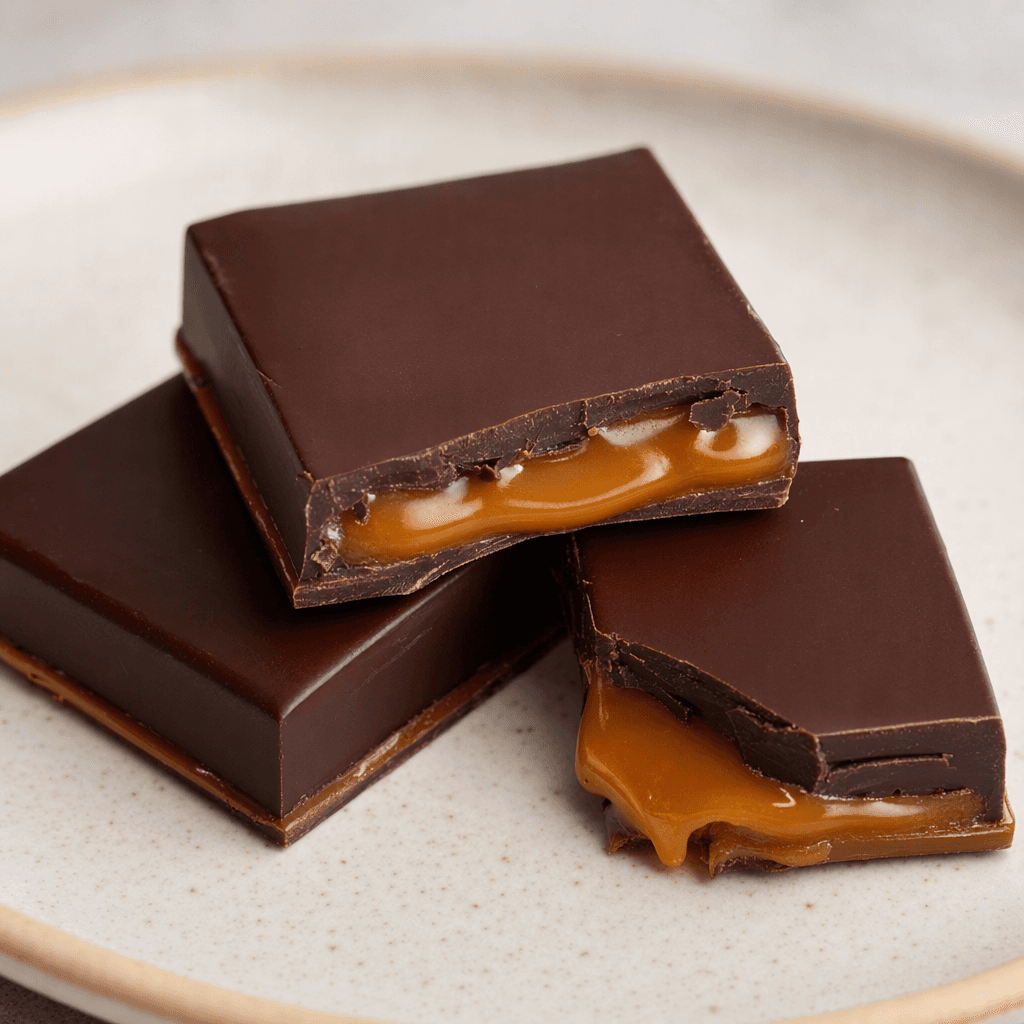
Caramel dark chocolate Calories
Dark chocolate with caramel filling or caramel pieces; energy-dense sweet with sugar and fat.
CALORIES
GI
POTASSIUM
FIBER
Quick answer
1 piece (small) of Caramel dark chocolate (12 g) has 64 calories. That works out to 535 calories per 100 g. It contains 6.8 g of carbs, 0.6 g of protein, 3.8 g of fat and 0.7 g of fiber. Its 0.1 mg of Copper covers 6% of the Daily Value. Its glycemic index is 42 (medium), so it raises blood sugar at a moderate pace.
What is Caramel dark chocolate?
Caramel dark chocolate combines cocoa-forward dark chocolate with either caramel pieces or a soft caramel centre. It is sold as a bar or individual pieces, with a bittersweet taste balanced by caramel’s sweetness; pieces add a little crunch, while a filled version is softer and sometimes gooey.
It is commonly enjoyed a square or two after a meal, with coffee or tea, or as a small sweet treat. The combination of sugar and fat makes it energy-dense, though it also provides some fibre and a little protein. If you want to keep the portion modest, break off a small piece and pair it with unsweetened tea or coffee.
Caramel dark chocolate Nutrition Facts
Selected: 100 g
535
KCAL / 100G
Carbs
56.8g
· 21% DV
Protein
5.2g
· 10% DV
Fat
31.4g
· 40% DV
Fiber
6.1g
· 22% DV
DV is the share of the daily value covered, on a 2,000 kcal reference diet.
Calories come from: Carbs 43% · Protein 4% · Fat 53%
Caramel dark chocolate Vitamins & Minerals
Vitamins
B12
0.18µg · 8% DV
B2
0.09mg · 7% DV
Biotin
2.1µg · 7% DV
B3
0.9mg · 6% DV
Minerals
Manganese
1mg · 43% DV
Iron
4mg · 22% DV
Magnesium
92mg · 22% DV
Phosphorus
155mg · 22% DV
How Nutritious Is Caramel dark chocolate?
Nutrient density
Low
How many vitamins, minerals and how much fiber this food carries per calorie. A high score means a lot of nutrition for few calories.
Satiety score
Medium
An EatBetter score computed from fiber, protein and calorie density. A high score means staying full longer on the same calories.
Both scores are calculated per 100 g and do not change with the selected portion. The satiety score is EatBetter's own calculation, not a clinical measure.
Caramel dark chocolate Glycemic Index
GLYCEMIC INDEX
GLYCEMIC LOAD
Accounts for portion size — a more realistic measure than GI alone.
How to Burn Off Caramel dark chocolate
To burn the 535 calories in 100 g:
🚶
Walking (5 km/h)
🏃
Running (8 km/h)
🚴
Cycling
🏊
Swimming
Times are calculated with the MET equation for a 70 kg adult. Actual burn varies with your weight, age and pace.
Is Caramel dark chocolate Processed?
NOVA 3
Processed
1. Unprocessed
2. Minimally Processed
3. Processed
4. Ultra-Processed
NOVA classifies foods into 4 groups by industrial processing. NOVA 1 (unprocessed) is the healthiest.
Does Caramel dark chocolate Contain Allergens?
Contains these allergens:
Which Diets Is Caramel dark chocolate Good For?
Vegan
— Not suitable
Vegetarian
✓ Suitable
Gluten-Free
✓ Suitable
Dairy-Free
— Not suitable
Mediterranean
— Not suitable
Paleo
— Not suitable
Whole30
— Not suitable
DASH
— Not suitable
Keto
— Not suitable
Low FODMAP
— Not suitable
Caramel dark chocolate Fat Profile
SATURATED
18.7g
MONOUNSATURATED
9.1g
POLYUNSATURATED
1.3g
Omega 6:3 ratio 38.3:1
Above the ideal 4:1 (38.3:1).
Compare Caramel dark chocolate
Foods Similar to Caramel dark chocolate
Frequently Asked Questions About Caramel dark chocolate
What is caramel dark chocolate made of?
Caramel dark chocolate combines cocoa-based dark chocolate with caramel, either as a soft filling or as pieces mixed into the bar. The format varies by product, so the caramel may be visible inside a broken piece or spread through the chocolate.
Is caramel dark chocolate still considered dark chocolate?
Yes, it is still dark chocolate when its chocolate portion is made with cocoa solids and does not use milk chocolate as its base. The caramel adds sweetness and changes the taste, but does not by itself make the chocolate milk chocolate.
Why does caramel dark chocolate sometimes develop a white coating?
A white or grey coating is often chocolate bloom, caused when fat or sugar moves to the surface after temperature changes or moisture exposure. It can affect texture and appearance without meaning the chocolate is spoiled; discard it if it smells or tastes off.
Can you bake with caramel dark chocolate?
Yes, caramel dark chocolate works in brownies, cookies and similar bakes. Its caramel can make the result sweeter and may stay as soft pockets, so chop it into small pieces and consider reducing other added sugar in the recipe.
How should you store caramel dark chocolate after opening?
Keep caramel dark chocolate tightly wrapped in a cool, dry place away from sunlight and strong-smelling foods. Stable storage helps prevent the chocolate from blooming and keeps the caramel from being exposed to moisture or absorbing odours.
Can you freeze caramel dark chocolate?
Yes, you can freeze caramel dark chocolate, but condensation during thawing may affect its surface and texture. Wrap it airtight, thaw it while still wrapped, and let it come to room temperature before opening to reduce moisture settling on the chocolate.
Does caramel dark chocolate contain caffeine?
Yes, caramel dark chocolate contains some caffeine because it is made with cocoa. The amount varies with the chocolate’s cocoa content and serving size, and the caramel does not remove the caffeine already present in the cocoa.
Is caramel dark chocolate healthier than milk chocolate?
Not necessarily: caramel dark chocolate still contains added sugar and fat, and its caramel makes it sweeter than plain dark chocolate. It may have a more pronounced cocoa taste than some milk chocolates, but that alone does not make it a healthier choice.
Does caramel dark chocolate raise blood sugar?
Yes, its sugars and other carbohydrates can raise blood sugar, even though the chocolate is dark. If you have diabetes, how it fits your meal plan depends on your glucose targets and medication, so discuss portions with your clinician or dietitian.
What drinks go well with caramel dark chocolate?
Coffee, black tea and unsweetened herbal tea pair well with caramel dark chocolate. Their roasted or lightly bitter notes balance the caramel’s sweetness; a very sweet drink can make the combination taste overly sugary.
Have another question about Caramel dark chocolate?
Ask the AI nutrition coach — calories, portions, alternatives and more, answered in seconds in the app.

Scan calories with your camera
Instant AI nutrition analysis

Nutrition data compiled from USDA FoodData Central and scientific sources.