

Ready & Packaged Foods
All →Vegetables & Legumes
All →Desserts & Confectionery
All →Meat & Protein
All →Grains & Bakery
All →Beverages
All →Milk & Dairy
All →

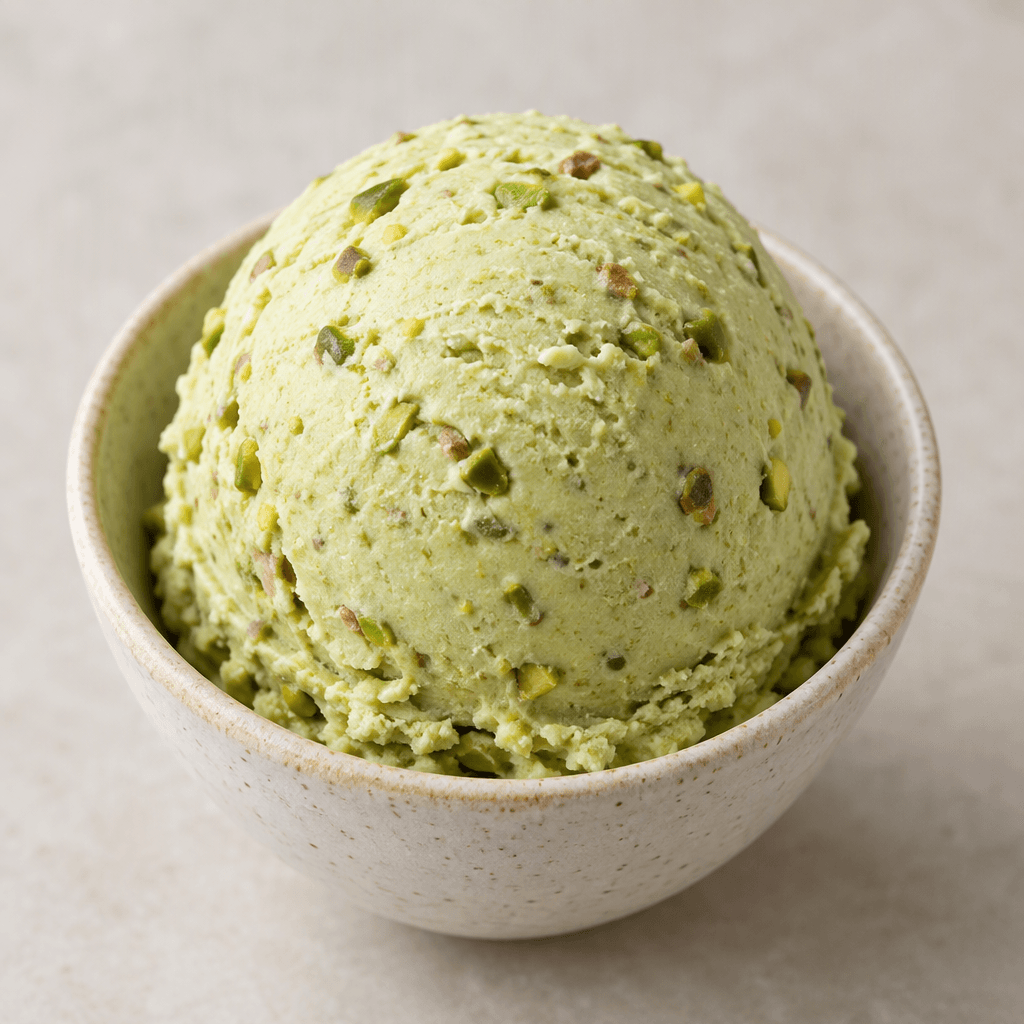
Pistachio ice cream Calories
Pistachio, creamy, sweet, frozen dessert
In season: Summer
CALORIES
GI
POTASSIUM
FIBER
Quick answer
1 cup (medium) of Pistachio ice cream (120 g) has 252 calories. That works out to 210 calories per 100 g. It contains 27.6 g of carbs, 5 g of protein, 13.2 g of fat and 1.4 g of fiber. Its 0.5 µg of B12 covers 20% of the Daily Value. Its glycemic index is 60 (medium), so it raises blood sugar at a moderate pace.
What is Pistachio ice cream?
Pistachio ice cream is a frozen dessert made with a milk or cream base, sugar and pistachios, which may be ground into the mixture or left in small pieces. It is popular in many places, and recipes vary in how pronounced the nut flavour is and how green the finished scoop looks.
You’ll often find it served in a cone or cup, whether as a treat on its own or alongside cake and other desserts. Its texture is usually smooth and creamy, with occasional crunchy bits of pistachio. It provides some protein, but is chiefly a sweet, energy-dense dessert rather than a substantial snack. For a lighter serving, choose a small scoop and enjoy it without extra toppings.
Pistachio ice cream Nutrition Facts
Selected: 100 g
210
KCAL / 100G
Carbs
23g
· 8% DV
Protein
4.2g
· 8% DV
Fat
11g
· 14% DV
Fiber
1.2g
· 4% DV
DV is the share of the daily value covered, on a 2,000 kcal reference diet.
Calories come from: Carbs 44% · Protein 8% · Fat 48%
Pistachio ice cream Vitamins & Minerals
Vitamins
B12
0.4µg · 17% DV
B2
0.15mg · 12% DV
B5
0.5mg · 10% DV
Vitamin A
60µg · 7% DV
Minerals
Phosphorus
75mg · 11% DV
Calcium
90mg · 9% DV
Zinc
1mg · 9% DV
Iron
1mg · 6% DV
How Nutritious Is Pistachio ice cream?
Nutrient density
Medium
How many vitamins, minerals and how much fiber this food carries per calorie. A high score means a lot of nutrition for few calories.
Satiety score
Low
An EatBetter score computed from fiber, protein and calorie density. A high score means staying full longer on the same calories.
Both scores are calculated per 100 g and do not change with the selected portion. The satiety score is EatBetter's own calculation, not a clinical measure.
Pistachio ice cream Glycemic Index
GLYCEMIC INDEX
GLYCEMIC LOAD
Accounts for portion size — a more realistic measure than GI alone.
How to Burn Off Pistachio ice cream
To burn the 210 calories in 100 g:
🚶
Walking (5 km/h)
🏃
Running (8 km/h)
🚴
Cycling
🏊
Swimming
Times are calculated with the MET equation for a 70 kg adult. Actual burn varies with your weight, age and pace.
Is Pistachio ice cream Processed?
NOVA 3
Processed
1. Unprocessed
2. Minimally Processed
3. Processed
4. Ultra-Processed
NOVA classifies foods into 4 groups by industrial processing. NOVA 1 (unprocessed) is the healthiest.
Does Pistachio ice cream Contain Allergens?
Contains these allergens:
Which Diets Is Pistachio ice cream Good For?
Vegan
— Not suitable
Vegetarian
✓ Suitable
Gluten-Free
— Not suitable
Dairy-Free
— Not suitable
Mediterranean
— Not suitable
Paleo
— Not suitable
Whole30
— Not suitable
DASH
— Not suitable
Keto
— Not suitable
Low FODMAP
— Not suitable
Pistachio ice cream Fat Profile
SATURATED
5.5g
MONOUNSATURATED
3.8g
POLYUNSATURATED
0.5g
Omega 6:3 ratio 8:1
Above the ideal 4:1 (8:1).
Compare Pistachio ice cream
Foods Similar to Pistachio ice cream
Frequently Asked Questions About Pistachio ice cream
What is pistachio ice cream made of?
Pistachio ice cream is usually made with milk or cream, sugar, and ground pistachios or pistachio paste. Some recipes add egg yolks for a custard base, while others use stabilizers; the recipe determines how pronounced the nut flavor is.
Does pistachio ice cream contain real pistachios?
Not always. Some pistachio ice cream is made with ground pistachios or pistachio paste, while other versions rely partly or entirely on flavoring. Real-pistachio versions often have a more pronounced nutty taste and may include visible pieces.
Why is pistachio ice cream green?
Pistachios can give pistachio ice cream a naturally pale green hue, but the shade varies with the nuts and recipe. A vivid green color may come from added coloring; authentic pistachio ice cream can also look cream-colored or only faintly green.
How do you make pistachio ice cream at home?
Make pistachio ice cream by blending finely ground pistachios into a milk, cream, and sugar base, then chilling and churning it. Without an ice-cream maker, freeze the mixture in a shallow container and stir it several times as it firms up.
Can you make pistachio ice cream without an ice-cream maker?
Yes. Pour the chilled pistachio ice-cream mixture into a shallow freezer-safe container and stir it thoroughly every so often as it freezes. This breaks up ice crystals and produces a smoother result, though a machine usually gives a more even texture.
What is the difference between pistachio ice cream and pistachio gelato?
Pistachio gelato is typically churned with less air and served slightly warmer than pistachio ice cream, so it feels denser and its flavor can seem more concentrated. Recipes vary, but both get their characteristic taste from pistachios or pistachio paste.
How should you store pistachio ice cream after opening?
Keep pistachio ice cream tightly covered in the freezer and return it promptly after serving. Pressing a piece of parchment or plastic wrap against the surface can help limit air exposure and freezer burn; avoid repeatedly leaving the tub out to soften.
Can melted pistachio ice cream be refrozen?
Pistachio ice cream that has only softened briefly and is still very cold can be refrozen, though its texture may become icy. If it melted completely and sat at room temperature for a prolonged period, discard it rather than refreezing.
Is pistachio ice cream the same as spumoni?
No. Pistachio ice cream is a single flavor, while spumoni is a layered or molded Italian dessert traditionally combining several flavors, often including pistachio, chocolate, and cherry, with additions such as nuts or candied fruit.
Does pistachio ice cream go with chocolate?
Yes. Chocolate pairs well with pistachio ice cream because its bitterness balances the nut’s rich, slightly sweet flavor. Try it with dark-chocolate shavings or a small drizzle of chocolate sauce so the topping does not overwhelm the pistachio.
Have another question about Pistachio ice cream?
Ask the AI nutrition coach — calories, portions, alternatives and more, answered in seconds in the app.

Scan calories with your camera
Instant AI nutrition analysis

Nutrition data compiled from USDA FoodData Central and scientific sources.