

Ready & Packaged Foods
All →Vegetables & Legumes
All →Desserts & Confectionery
All →Meat & Protein
All →Grains & Bakery
All →Beverages
All →Milk & Dairy
All →

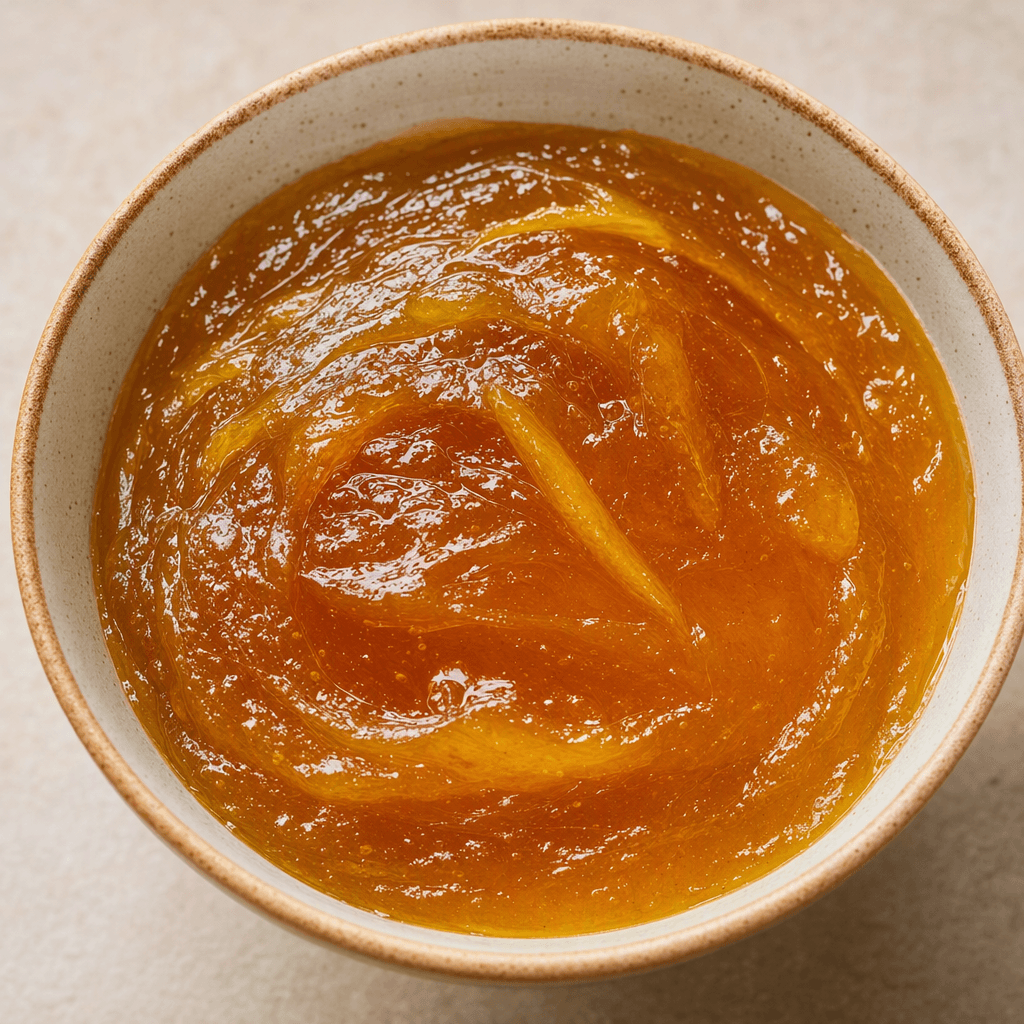
Honey jam Calories
Sweet, thick jam made from honey and sugar
In season: Spring · Summer · Autumn · Winter
CALORIES
GI
POTASSIUM
FIBER
Quick answer
1 tablespoon (medium) of Honey jam (20 g) has 61 calories. That works out to 305 calories per 100 g. It contains 16 g of carbs, 0.1 g of protein, 0 g of fat and 0 g of fiber. Its glycemic index is 65 (high), so it raises blood sugar quickly.
What is Honey jam?
Honey jam is a thick, spoonable sweet spread made with honey and sugar rather than fruit. Its glossy amber colour and smooth texture resemble a set honey spread, while its flavour is richly sweet and honey-forward.
It can be spread on toast, bread or pancakes, or served with biscuits and a cup of tea; a little butter or unsweetened yoghurt can balance its sweetness. Honey jam is mostly carbohydrate, with 80 g per 100 g. A thin spread is usually enough, especially if you are pairing it with other sweet breakfast foods.
Honey jam Nutrition Facts
Selected: 100 g
305
KCAL / 100G
Carbs
80g
· 29% DV
Protein
0.4g
· 1% DV
Fat
0g
· 0% DV
Fiber
0.2g
· 1% DV
DV is the share of the daily value covered, on a 2,000 kcal reference diet.
Calories come from: Carbs 100% · Protein 0% · Fat 0%
Honey jam Vitamins & Minerals
Vitamins
B2
0.02mg · 2% DV
B1
0.01mg · 1% DV
B3
0.1mg · 1% DV
B5
0.05mg · 1% DV
Minerals
Calcium
6mg · 1% DV
Phosphorus
4mg · 1% DV
Potassium ⭐
30mg · 1% DV
Iron
0mg · 0% DV
How Nutritious Is Honey jam?
Nutrient density
Low
How many vitamins, minerals and how much fiber this food carries per calorie. A high score means a lot of nutrition for few calories.
Satiety score
Low
An EatBetter score computed from fiber, protein and calorie density. A high score means staying full longer on the same calories.
Both scores are calculated per 100 g and do not change with the selected portion. The satiety score is EatBetter's own calculation, not a clinical measure.
Honey jam Glycemic Index
GLYCEMIC INDEX
GLYCEMIC LOAD
Accounts for portion size — a more realistic measure than GI alone.
How to Burn Off Honey jam
To burn the 305 calories in 100 g:
🚶
Walking (5 km/h)
🏃
Running (8 km/h)
🚴
Cycling
🏊
Swimming
Times are calculated with the MET equation for a 70 kg adult. Actual burn varies with your weight, age and pace.
Is Honey jam Processed?
NOVA 3
Processed
1. Unprocessed
2. Minimally Processed
3. Processed
4. Ultra-Processed
NOVA classifies foods into 4 groups by industrial processing. NOVA 1 (unprocessed) is the healthiest.
Does Honey jam Contain Allergens?
No known major allergens
Which Diets Is Honey jam Good For?
Vegan
— Not suitable
Vegetarian
✓ Suitable
Gluten-Free
— Not suitable
Dairy-Free
— Not suitable
Mediterranean
— Not suitable
Paleo
— Not suitable
Whole30
— Not suitable
DASH
— Not suitable
Keto
— Not suitable
Low FODMAP
— Not suitable
Honey jam Fat Profile
SATURATED
0g
MONOUNSATURATED
0g
POLYUNSATURATED
0g
Compare Honey jam
Foods Similar to Honey jam
Frequently Asked Questions About Honey jam
What is honey jam?
Honey jam is a thick, spoonable sweet spread made with honey and sugar. Unlike fruit jam, its defining flavor comes from honey rather than cooked fruit, and recipes may vary in how firm or glossy the spread becomes.
Is honey jam made with fruit?
Usually, fruit is not needed to make honey jam; honey and sugar provide its sweetness and base. Some recipes may add fruit or other flavorings, but those are variations rather than an essential part of the spread.
Why is honey jam thicker than honey?
Honey jam is thicker because sugar is added and the mixture is heated until it reaches a spreadable consistency. Plain honey stays fluid or slowly crystallizes, while honey jam is prepared to hold its shape better on bread or a spoon.
How do you eat honey jam?
Spread honey jam on toast, biscuits, or pancakes, or serve a small spoonful with plain yogurt. Its concentrated sweetness pairs well with mild or tangy foods, so it can also be served alongside cheese.
Can honey jam be used as a cake filling?
Yes, honey jam can work as a cake or pastry filling, especially between layers that can support a thick spread. Use a thin layer: its sweetness is concentrated, and a generous amount may make the dessert overly sweet.
Does honey jam crystallize?
Yes, honey jam can develop sugar crystals over time, particularly as it cools or is stored in changing temperatures. Crystals alone do not mean it has spoiled; gently warming the closed jar in warm water can soften it.
Does honey jam need to be refrigerated after opening?
Not always. Keep honey jam tightly sealed and use a clean, dry spoon; refrigerate homemade batches after opening, especially if the recipe includes water or other ingredients. For a commercially made jar, follow its storage directions.
Can honey jam replace honey in recipes?
Sometimes, but honey jam also contains added sugar and may be thicker than honey, so it can change both sweetness and texture. It works best in spreads or fillings; for baking, reduce other sweeteners and adjust the liquid if needed.
What does honey jam taste like?
Honey jam tastes distinctly honey-like, with a fuller sweetness than plain honey because sugar is added. Its flavor and texture depend on how it is made, but it is generally smooth, glossy, and easy to spread.
Can babies under 12 months eat honey jam?
No. Honey jam contains honey, which should not be given to babies younger than 12 months because of the risk of infant botulism. Cooking or mixing it into another food does not make it suitable for infants.
Have another question about Honey jam?
Ask the AI nutrition coach — calories, portions, alternatives and more, answered in seconds in the app.

Scan calories with your camera
Instant AI nutrition analysis

Nutrition data compiled from USDA FoodData Central and scientific sources.