

Ready & Packaged Foods
All →Vegetables & Legumes
All →Desserts & Confectionery
All →Meat & Protein
All →Grains & Bakery
All →Beverages
All →Milk & Dairy
All →

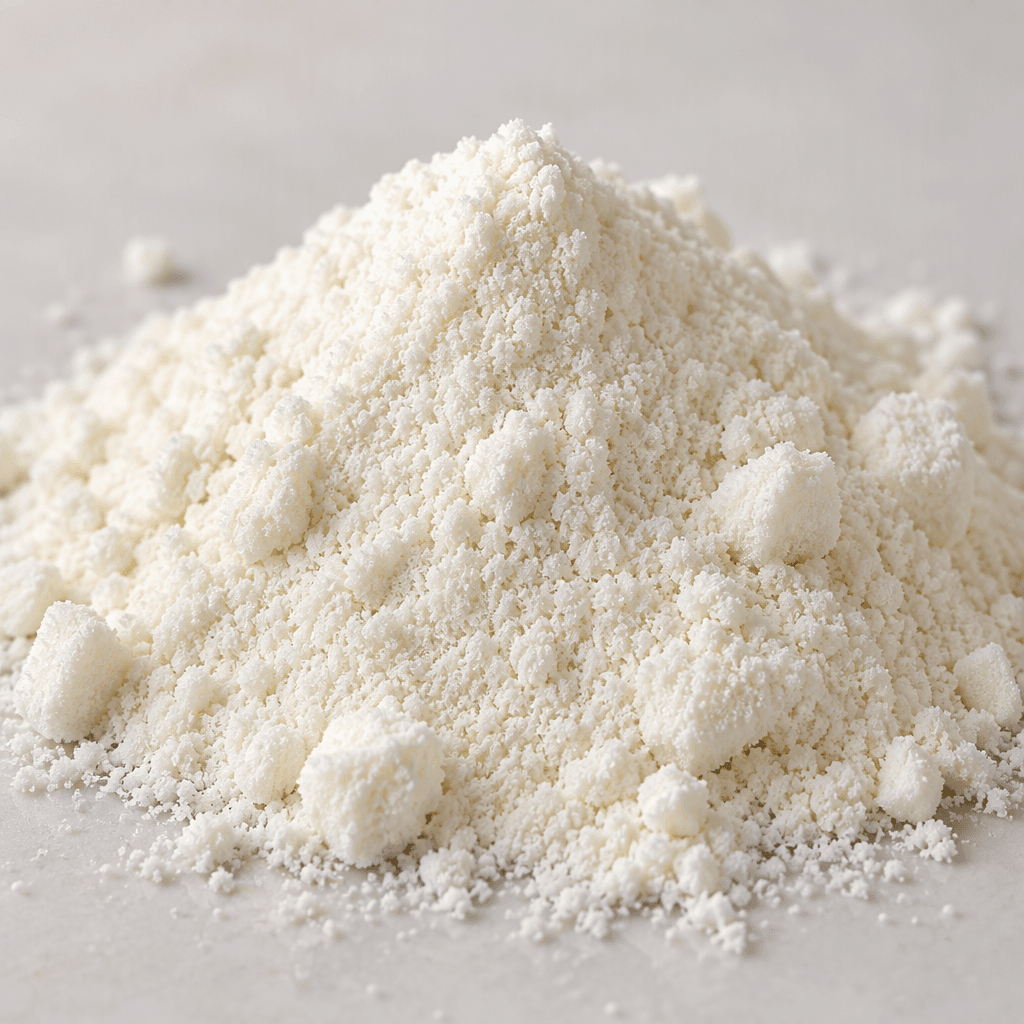
Coconut milk powder Calories
Plant-based milk alternative, lactose-free, rich in healthy fats
In season: Spring · Summer · Autumn · Winter
CALORIES
GI
POTASSIUM
FIBER
Quick answer
2 tablespoon (medium) of Coconut milk powder (15 g) has 99 calories. That works out to 660 calories per 100 g. It contains 3.6 g of carbs, 0.9 g of protein, 9.3 g of fat and 1.1 g of fiber. Its 0.3 mg of Manganese covers 12% of the Daily Value. Its glycemic index is 45 (low), so it raises blood sugar slowly.
What is Coconut milk powder?
Coconut milk powder is made by drying coconut milk into a fine powder. Stirred into water, it makes a coconut drink; it can also be added straight to recipes for richness. It is associated with tropical cuisines where coconuts are common, and is now sold internationally as a convenient pantry ingredient.
Its flavour is sweet and distinctly coconutty, while reconstituted powder gives dishes a creamy texture. Use it in smoothies, coffee, desserts, soups and curries, or mix it with water when a recipe calls for coconut milk. It is energy-dense and high in fat: 100 g contains 62 g of fat. A little can add plenty of flavour and body, so start with a modest amount; whisking it first with warm water helps prevent clumps.
Coconut milk powder Nutrition Facts
Selected: 100 g
660
KCAL / 100G
Carbs
24g
· 9% DV
Protein
6g
· 12% DV
Fat
62g
· 79% DV
Fiber
7g
· 25% DV
DV is the share of the daily value covered, on a 2,000 kcal reference diet.
Calories come from: Carbs 14% · Protein 4% · Fat 82%
Coconut milk powder Vitamins & Minerals
Vitamins
B3
0.9mg · 6% DV
B1
0.05mg · 4% DV
B5
0.2mg · 4% DV
Biotin
1µg · 3% DV
Minerals
Manganese
2mg · 87% DV
Selenium
10µg · 18% DV
Iron
3mg · 17% DV
Potassium ⭐
530mg · 16% DV
How Nutritious Is Coconut milk powder?
Nutrient density
Medium
How many vitamins, minerals and how much fiber this food carries per calorie. A high score means a lot of nutrition for few calories.
Satiety score
Medium
An EatBetter score computed from fiber, protein and calorie density. A high score means staying full longer on the same calories.
Both scores are calculated per 100 g and do not change with the selected portion. The satiety score is EatBetter's own calculation, not a clinical measure.
Coconut milk powder Glycemic Index
GLYCEMIC INDEX
GLYCEMIC LOAD
Accounts for portion size — a more realistic measure than GI alone.
How to Burn Off Coconut milk powder
To burn the 660 calories in 100 g:
🚶
Walking (5 km/h)
🏃
Running (8 km/h)
🚴
Cycling
🏊
Swimming
Times are calculated with the MET equation for a 70 kg adult. Actual burn varies with your weight, age and pace.
Is Coconut milk powder Processed?
NOVA 3
Processed
1. Unprocessed
2. Minimally Processed
3. Processed
4. Ultra-Processed
NOVA classifies foods into 4 groups by industrial processing. NOVA 1 (unprocessed) is the healthiest.
Does Coconut milk powder Contain Allergens?
No known major allergens
Which Diets Is Coconut milk powder Good For?
Vegan
✓ Suitable
Vegetarian
✓ Suitable
Gluten-Free
✓ Suitable
Dairy-Free
— Not suitable
Mediterranean
✓ Suitable
Paleo
✓ Suitable
Whole30
— Not suitable
DASH
— Not suitable
Keto
— Not suitable
Low FODMAP
— Not suitable
Coconut milk powder Fat Profile
SATURATED
55g
MONOUNSATURATED
3g
POLYUNSATURATED
0.4g
Omega 6:3 ratio 15:1
Above the ideal 4:1 (15:1).
Compare Coconut milk powder
Foods Similar to Coconut milk powder
Frequently Asked Questions About Coconut milk powder
How do you make coconut milk from coconut milk powder?
Mix coconut milk powder with water to make coconut milk. The right ratio varies by brand, so follow the package directions; blending the powder with a little warm water first helps make a smooth mixture.
Can you use coconut milk powder instead of canned coconut milk?
Yes, but adjust the liquid in the recipe. Canned coconut milk already contains water, while powder is concentrated; reduce some of the recipe’s other liquid and mix the powder with water if the dish needs a pourable consistency.
Can coconut milk powder be used in coffee?
Yes, coconut milk powder can add a creamy texture and coconut flavor to coffee. Stir it into a little warm water first, then add that mixture to your cup; adding the dry powder straight to coffee can leave clumps.
What is the difference between coconut milk powder and coconut cream powder?
Coconut milk powder and coconut cream powder are not always interchangeable: cream powder is generally formulated to make a richer, thicker mixture. Product recipes differ, so use the one specified when a dish depends on a particular consistency.
How do you use coconut milk powder in curry?
Coconut milk powder works well in curry. Stir it into warm water or broth before adding it to the pan, or mix it into the simmering sauce gradually; this makes it easier to control the curry’s thickness and coconut flavor.
Why does coconut milk powder clump in cold water?
Coconut milk powder can clump in cold water because its fat-rich particles do not disperse as easily at low temperatures. Whisk it into a small amount of warm water first, then add cold water if you need a chilled drink.
How should you store coconut milk powder after opening?
Store coconut milk powder in a tightly sealed, dry container in a cool cupboard, away from heat and sunlight. Moisture can make it clump and affect its quality, so use a dry spoon and close the container promptly.
Can coconut milk powder be used in baking?
Yes, coconut milk powder can be added to cakes, muffins, and other baked goods for coconut flavor and richness. Add it to the dry ingredients, or dissolve it in the recipe’s liquid first if you want a more even mixture.
Is coconut milk powder healthy?
Coconut milk powder can be a convenient way to add coconut flavor to food, but it is concentrated and high in fat. Use it as an ingredient rather than assuming that a plant-based product is automatically a low-fat choice.
Is coconut milk powder the same as coconut flour?
No, coconut milk powder and coconut flour are made for different uses. Coconut milk powder is used to make coconut milk or enrich sauces and drinks, while coconut flour is a dry baking ingredient that absorbs liquid differently.
Have another question about Coconut milk powder?
Ask the AI nutrition coach — calories, portions, alternatives and more, answered in seconds in the app.

Scan calories with your camera
Instant AI nutrition analysis

Nutrition data compiled from USDA FoodData Central and scientific sources.