

Ready & Packaged Foods
All →Vegetables & Legumes
All →Desserts & Confectionery
All →Meat & Protein
All →Grains & Bakery
All →Beverages
All →Milk & Dairy
All →

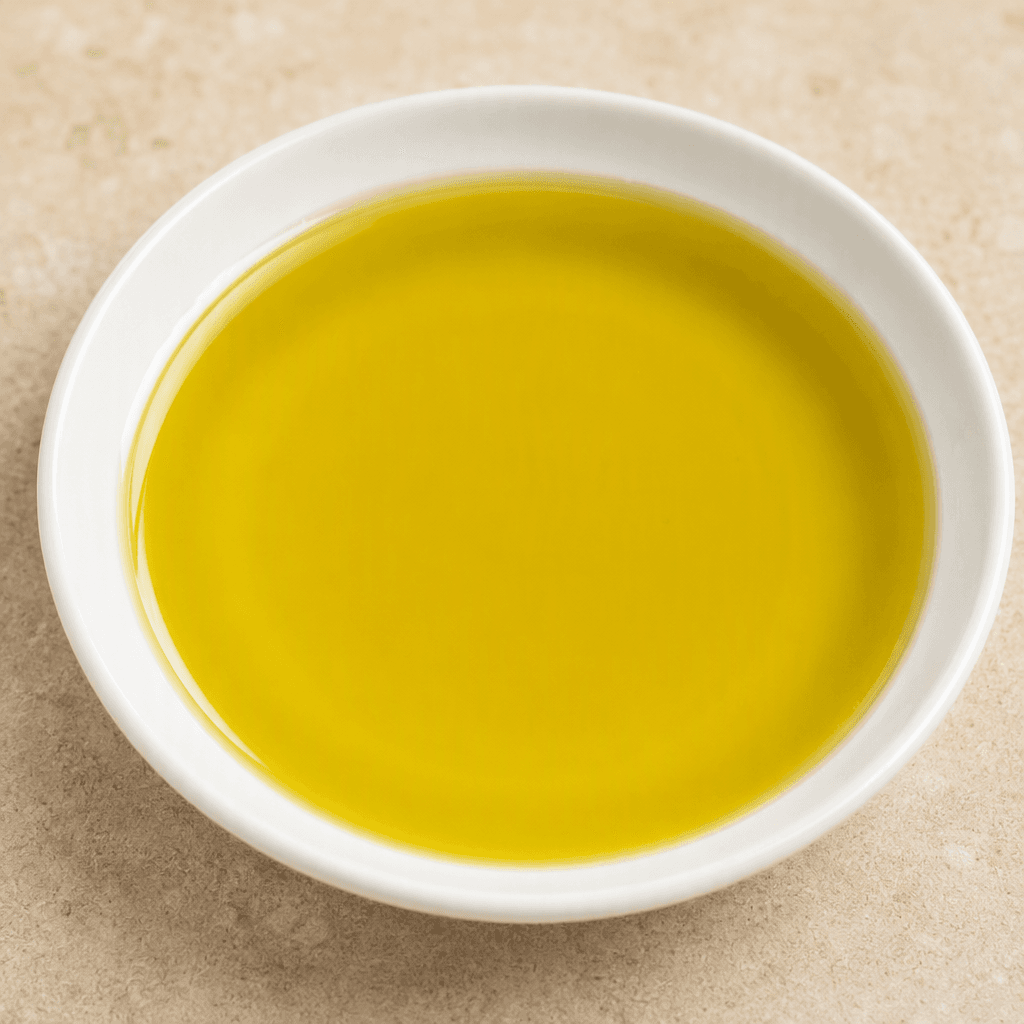
Olive oil Calories
Healthy monounsaturated fat, antioxidants, source of vitamin E
In season: Spring · Summer · Autumn · Winter
CALORIES
GI
POTASSIUM
FIBER
Quick answer
1 tablespoon (medium) of Olive oil (14 g) has 119 calories. That works out to 884 calories per 100 g. It contains 0 g of carbs, 0 g of protein, 13.5 g of fat and 0 g of fiber. Its 1.9 mg of Vitamin E covers 13% of the Daily Value. Its glycemic index is 0 (low), so it raises blood sugar slowly.
What is Olive oil?
Olive oil is made from olives and is a staple of cooking across the Mediterranean, from southern Europe to North Africa and the Middle East. Its flavour can be grassy and peppery or mild and fruity, depending on the olives and how the oil is made.
Use it in dressings, drizzle it over vegetables, or serve it with bread for dipping; it also works well for sautéing and roasting. In many English-speaking kitchens, it is an easy way to bring a Mediterranean flavour to everyday meals. Olive oil is almost entirely fat, mostly monounsaturated, and provides vitamin E. Because it is energy-dense, a measured drizzle is often enough, especially when dressing a salad or finishing a dish.
Olive oil Nutrition Facts
Selected: 100 g
884
KCAL / 100G
Carbs
0g
· 0% DV
Protein
0g
· 0% DV
Fat
100g
· 128% DV
Fiber
0g
· 0% DV
DV is the share of the daily value covered, on a 2,000 kcal reference diet.
Calories come from: Carbs 0% · Protein 0% · Fat 100%
Olive oil Vitamins & Minerals
Vitamins
Vitamin E
14.4mg · 96% DV
Vitamin K
60.2µg · 50% DV
Vitamin A
0.1mg · 0% DV
B1
0mg · 0% DV
Minerals
Iron
1mg · 6% DV
Calcium
1mg · 0% DV
Magnesium
0mg · 0% DV
Zinc
0mg · 0% DV
How Nutritious Is Olive oil?
Nutrient density
Medium
How many vitamins, minerals and how much fiber this food carries per calorie. A high score means a lot of nutrition for few calories.
Satiety score
Low
An EatBetter score computed from fiber, protein and calorie density. A high score means staying full longer on the same calories.
Both scores are calculated per 100 g and do not change with the selected portion. The satiety score is EatBetter's own calculation, not a clinical measure.
Olive oil Glycemic Index
GLYCEMIC INDEX
GLYCEMIC LOAD
Accounts for portion size — a more realistic measure than GI alone.
How to Burn Off Olive oil
To burn the 884 calories in 100 g:
🚶
Walking (5 km/h)
🏃
Running (8 km/h)
🚴
Cycling
🏊
Swimming
Times are calculated with the MET equation for a 70 kg adult. Actual burn varies with your weight, age and pace.
Is Olive oil Processed?
NOVA 2
Minimally Processed
1. Unprocessed
2. Minimally Processed
3. Processed
4. Ultra-Processed
NOVA classifies foods into 4 groups by industrial processing. NOVA 1 (unprocessed) is the healthiest.
Does Olive oil Contain Allergens?
No known major allergens
Which Diets Is Olive oil Good For?
Vegan
✓ Suitable
Vegetarian
✓ Suitable
Gluten-Free
✓ Suitable
Dairy-Free
— Not suitable
Mediterranean
✓ Suitable
Paleo
✓ Suitable
Whole30
— Not suitable
DASH
— Not suitable
Keto
✓ Suitable
Low FODMAP
— Not suitable
Olive oil Fat Profile
SATURATED
14g
MONOUNSATURATED
73g
POLYUNSATURATED
11g
Omega 6:3 ratio 14:1
Above the ideal 4:1 (14:1).
Compare Olive oil
Foods Similar to Olive oil
Frequently Asked Questions About Olive oil
Is olive oil healthy?
Yes, olive oil provides mostly unsaturated fats and antioxidant compounds. Using it in place of saturated fats such as butter can fit a heart-conscious eating pattern; adding it on top of your usual fats is different.
Can you fry with olive oil?
Yes, olive oil can be used for frying. Avoid heating it until it smokes, since overheated oil loses its pleasant flavor and can form unwanted compounds.
What is the difference between extra-virgin olive oil and regular olive oil?
Extra-virgin olive oil is mechanically extracted and retains its characteristic flavor and aroma. Regular olive oil is generally refined olive oil blended with some virgin oil, so it has a milder taste.
Does olive oil go bad?
Yes, olive oil can turn rancid as it oxidizes over time. A stale, waxy or crayon-like smell and taste can signal that it has lost freshness; color alone cannot tell you whether it has spoiled.
How should you store olive oil?
Store olive oil tightly sealed in a cool, dark place. Keep it away from sunlight, heat and the stove, since light and warmth speed up oxidation.
Does olive oil freeze?
Yes, olive oil can become cloudy or solid when chilled, and that alone does not mean it is fake or spoiled. Leave it at room temperature and it will become liquid again.
Can you use olive oil instead of butter in baking?
Yes, olive oil can replace melted butter in many cakes, quick breads and muffins. It gives baked goods a different flavor and texture, and it does not work the same way as solid butter in recipes that rely on creaming.
Does olive oil help with weight loss?
Olive oil is not a weight-loss aid, and consuming more than you need can contribute to weight gain. Using a measured amount in place of another fat can help you control how much you add to meals.
Is drinking olive oil on an empty stomach beneficial?
No special benefit from drinking olive oil on an empty stomach has been established. Use it in food instead; taking it by itself may cause nausea or digestive discomfort for some people.
Why does olive oil taste bitter or peppery?
A mildly bitter taste or peppery throat sensation can be normal in olive oil, especially in fresh extra-virgin oils with more polyphenols. A stale, waxy bitterness is different and may indicate rancidity.
Have another question about Olive oil?
Ask the AI nutrition coach — calories, portions, alternatives and more, answered in seconds in the app.

Scan calories with your camera
Instant AI nutrition analysis

Nutrition data compiled from USDA FoodData Central and scientific sources.